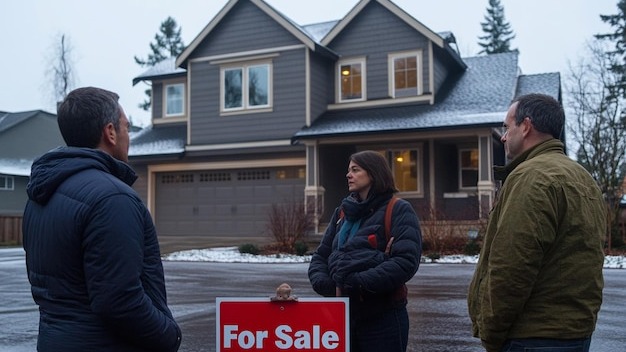
U.S. home sales fell sharply in early 2026 as elevated mortgage rates and steep prices pushed buyers to the sidelines. Existing-home sales dropped 8.4% in January to a seasonally adjusted annual rate of 3.91 million units, hitting the lowest level in more than two years. New-home sales also edged lower at the end of 2025, adding to signs that affordability pressures are weighing on demand.
Existing-Home Sales Hit a Two-Year Low
The January decline in existing-home sales was the sharpest monthly drop the market has recorded in over two years. Sales fell to a seasonally adjusted annual rate of 3.91 million units, a pace not seen since late 2023. That 8.4% slide from the prior month signals that the combination of financing costs and high asking prices is doing more than slowing activity; it is actively shrinking the pool of willing and able buyers. The pullback underscores how central borrowing costs have become to housing decisions.
The retreat is not simply a seasonal blip. Elevated mortgage rates have persisted long enough to reshape buyer behavior, encouraging many households to stay put rather than trade a lower-rate mortgage for a significantly higher one. Owners who locked in cheaper loans earlier in the decade are reluctant to list, reducing the flow of fresh inventory even as demand cools. At the same time, many households that might have entered the market a year ago have chosen to wait, hoping for lower rates or price corrections that have yet to arrive in any meaningful way. The result is a market where listings sit longer, transaction volumes contract, and the traditional spring selling season faces an unusually high bar to deliver a meaningful rebound.
New-Home Sales Slipped Before the Year Ended
The weakness was already visible in the new-construction market before 2026 began. New single-family home sales came in at a seasonally adjusted annual rate of 745,000 in December 2025, a 1.7% decline from November’s pace of 758,000, according to the joint release from the U.S. Census Bureau and the U.S. Department of Housing and Urban Development. While the percentage drop was modest compared to the existing-home plunge, it extended a pattern of cooling demand that builders had been tracking through the second half of the year. After leaning on incentives and aggressive marketing to maintain sales in 2024 and early 2025, many builders entered the new year facing slower traffic and a more cautious buyer base.
The median price for a new home stood at $414,400 in December, a figure that illustrates why first-time buyers in particular are struggling to gain a foothold. At current mortgage rates, monthly payments on a median-priced new home consume a far larger share of household income than historical norms would suggest is sustainable, especially when combined with property taxes, insurance, and maintenance. Builders have responded not by slashing sticker prices but by layering on incentives such as rate buydowns, upgrades, and closing-cost assistance, tactics that preserve headline pricing while effectively lowering the cost of entry for individual transactions. These strategies help keep reported prices elevated, but they also highlight how much financial engineering is now required to make new construction pencil out for typical households.
Inventory Climbs as Demand Stalls
One of the clearest signs that the market has tilted in favor of patience over urgency is the growing stockpile of unsold new homes. Inventory reached 472,000 units in December, enough to cover 7.6 months of supply at the current sales pace, based on the same Census Bureau data. A balanced market typically carries between four and six months of supply, so the current figure suggests builders are completing homes faster than buyers are absorbing them. The overhang is especially challenging in markets where developers ramped up construction in anticipation of continued strong demand.
That surplus creates a subtle but important dynamic heading into spring. Builders sitting on finished or near-finished inventory face carrying costs, including interest on construction loans, property taxes, and maintenance, and those expenses accumulate the longer homes remain unsold. As the months of supply number drifts further above equilibrium, pressure mounts to sweeten deals to move product. Yet most large publicly traded homebuilders have signaled they would rather protect margins through targeted concessions than cut base prices, which would ripple through comparable sales data and potentially erode the value of homes already under contract. For buyers, this means the best opportunities may come not from visibly lower list prices but from negotiated financing packages that reduce the effective cost of borrowing, such as temporary rate buydowns or generous closing-cost credits.
Affordability Squeeze Hits Hardest at the Entry Level
The affordability gap is not distributed evenly. Higher-income buyers with substantial equity from a previous sale or significant savings can absorb elevated rates more easily, treating the cost as temporary and planning to refinance later if and when rates decline. Entry-level and first-time buyers face a different calculation entirely. With median new-home prices above $414,400 and existing-home prices similarly elevated in many markets, the down payment alone represents years of savings for a household earning the national median income. Layer on monthly payments inflated by today’s elevated rates, and the math simply does not work for a large segment of would-be owners, especially those also contending with student loans, childcare costs, or rising rents.
Broader federal housing data on affordability and housing conditions underscore how difficult the current environment is for low- and moderate-income households. Government-backed loan programs can reduce down payment requirements, but they do not eliminate the burden of high monthly payments driven by elevated rates and prices. The practical effect is a two-speed market: move-up buyers and cash-rich investors continue to transact, while younger and lower-income households are locked out, widening the homeownership gap along generational and income lines. Over time, that divide can reinforce broader wealth disparities, because home equity remains a primary vehicle for long-term asset building for many American families.
What Spring 2026 Could Look Like for Buyers
The conventional wisdom holds that spring brings a seasonal uptick in both listings and sales as weather improves and families plan moves around the school calendar. That pattern may still hold in 2026, but the scale of the rebound is likely to be muted unless mortgage rates decline meaningfully from current levels. A drop from roughly 7% to the mid-6% range would lower monthly payments by a few hundred dollars on a median-priced home, enough to pull some sidelined buyers back into the market but probably not enough to trigger a broad surge in activity. Many households will continue to weigh the trade-off between stretching their budgets to buy now and remaining renters in hopes of a more favorable rate environment later.
A more pressing question is whether builders will shift strategy as inventory continues to accumulate and the months of supply figure remains elevated. The 7.6-month supply recorded in December is already above comfortable levels, and if sales remain sluggish through the first quarter, that number will climb further, especially in communities where construction pipelines are still robust. Builders with heavy exposure to entry-level product may have no choice but to offer deeper rate buydowns, larger closing-cost packages, or even modest base-price reductions in select markets where competition from resale listings is intensifying. For prospective buyers, that could translate into a spring season defined less by bidding wars and more by negotiation, with the best deals emerging in subdivisions where unsold inventory is highest and builders are most motivated to clear their books before the next wave of projects comes online.
More From The Daily Overview
*This article was researched with the help of AI, with human editors creating the final content.

Elias Broderick specializes in residential and commercial real estate, with a focus on market cycles, property fundamentals, and investment strategy. His writing translates complex housing and development trends into clear insights for both new and experienced investors. At The Daily Overview, Elias explores how real estate fits into long-term wealth planning.

