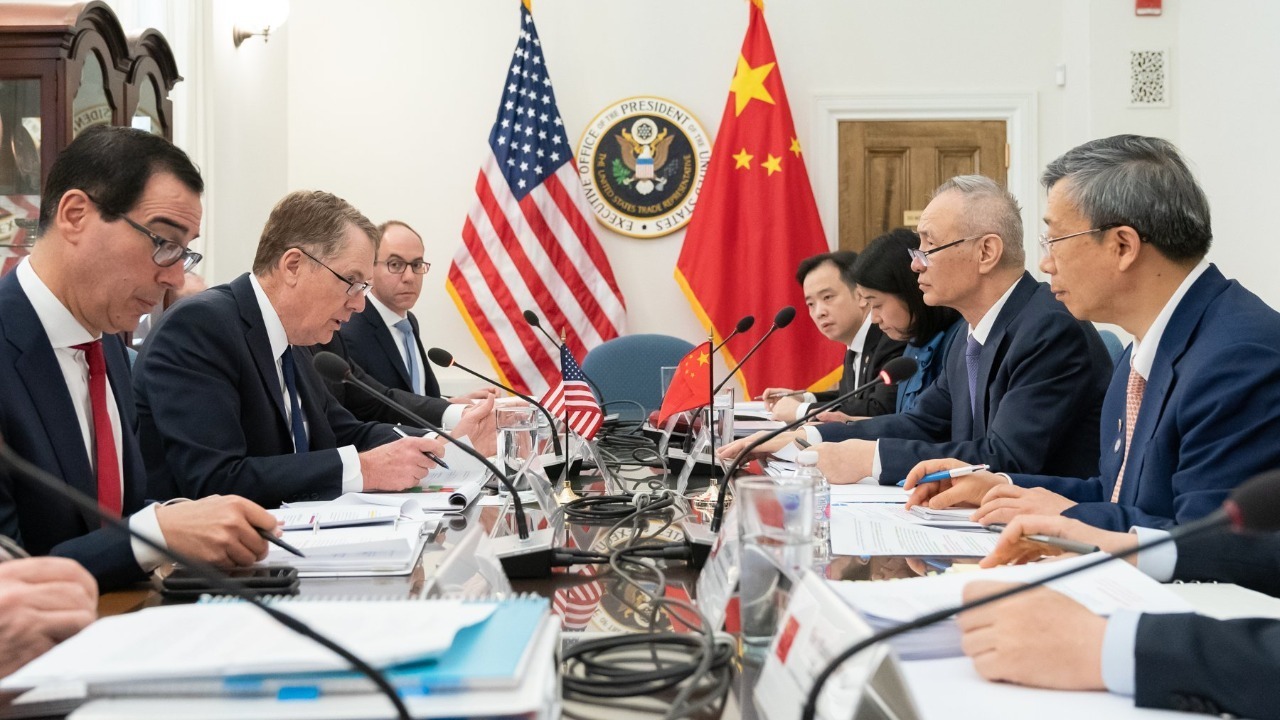
Washington’s latest warnings about Chinese lending are not just another skirmish in a long-running rivalry, they are a signal that the structure of global finance itself is shifting in ways many borrowers do not fully see. As Beijing expands a web of opaque rescue loans and infrastructure credit, U.S. officials are increasingly framing those flows as a systemic risk that can trap vulnerable economies in cycles of dependency and silence.
I see a growing gap between how these loans are sold to governments as lifelines and how they function once crises hit, and that gap is now central to U.S. diplomacy, domestic politics and academic debate. The alarm is not only about China’s power, it is about who writes the rules when debt distress spreads from one capital to the next.
Washington’s new focus on China’s “emergency lender” role
U.S. officials have sharpened their criticism of Beijing’s role as a quiet crisis financier, arguing that China’s emergency lending is reshaping how sovereign rescues work without the transparency that usually comes with International Monetary Fund or Paris Club programs. The concern is that a growing share of distressed countries now turn first to Chinese state banks for short-term balance-of-payments support, often under confidentiality clauses that obscure the true scale and cost of the help. That pattern, highlighted in recent U.S. briefings, underpins the warning that China is no longer just a builder of ports and power plants but a pivotal, and largely hidden, player in global financial stability, a point underscored in reporting on the global concern surrounding these loans.
At the heart of the U.S. message is a call for sunlight. Officials have pressed Beijing to disclose the terms, maturities and collateral arrangements of its crisis facilities, arguing that without that information, other creditors and multilateral institutions cannot design realistic restructuring packages. That push has intensified as analysts document a surge in what they describe as “secretive emergency loans” from Chinese state institutions to governments facing currency shortages or looming defaults, a trend that has prompted Washington to demand greater transparency from Beijing’s lenders.
Warnings to allies collide with America’s own borrowing from China
Even as U.S. diplomats urge partners to steer clear of Chinese credit, the United States itself remains deeply entangled with Beijing as a major financier. American officials have privately and publicly advised governments in Asia, Africa and Latin America to limit exposure to Chinese state banks, arguing that the loans can be expensive, politically conditioned and hard to restructure once trouble hits. Those cautions have been relayed in bilateral meetings and multilateral forums, where Washington has framed Chinese lending as a strategic vulnerability for countries that sign on to large infrastructure or energy projects backed by state-owned institutions in Beijing, a stance reflected in reports that the U.S. has warned others to avoid such financing.
The awkward twist is that, by some measures, the United States is itself one of the largest recipients of Chinese lending, a fact that complicates the moral clarity of Washington’s message. Analyses of cross-border positions show that Chinese entities hold substantial volumes of U.S. government and corporate debt, even as American officials caution smaller economies against deepening their own financial ties to Beijing. That contradiction has been highlighted in coverage noting that the U.S. has urged others to shun Chinese state banks while simultaneously ranking as the biggest recipient of such flows, a theme echoed in regional commentary that the United States has warned others to avoid loans from Chinese banks while relying heavily on Chinese capital itself.
Debt traps, leverage and the politics of transparency
Behind the U.S. alarm is a broader debate over whether Chinese lending creates “debt traps” that Beijing can later exploit for strategic gain. American officials point to cases where governments have struggled to service large project loans, arguing that the combination of high debt burdens and opaque renegotiations can give China outsized leverage over critical infrastructure, natural resources or diplomatic positions. That narrative has gained traction in policy circles as more countries confront the reality that their biggest bilateral creditor is not a Western government or multilateral institution but a cluster of Chinese state banks whose contracts are shielded from public scrutiny, a pattern that has drawn scrutiny in business coverage of how the U.S. has warned others about these risks.
China rejects the “debt trap” label, arguing that its loans respond to borrower demand and that Western critics are trying to contain its rise rather than solve genuine development problems. Yet the secrecy around many of the contracts, including clauses that subordinate other creditors or pledge future export revenues, makes it difficult for outside observers to test either side’s claims. Researchers who have tried to map the full scale of Chinese overseas lending describe a fragmented landscape of policy banks, commercial lenders and ad hoc rescue packages that often sit outside traditional reporting frameworks, a complexity that has been dissected in academic work on China’s global lending and its implications for financial governance.
Global markets react as Beijing’s role in crises grows
Financial markets are starting to price in the reality that any future wave of sovereign defaults will be negotiated not just in Washington, Paris and Brussels but also in Beijing. Bondholders and ratings agencies now track Chinese exposure as a key variable in assessing how quickly a distressed country can reach a restructuring deal, and on what terms. When Chinese state banks extend short-term currency swaps or bridge loans to keep a government current on its external obligations, that can buy time but also complicate the incentives for a comprehensive workout, a dynamic that has been flagged in market commentary on the growing role of Chinese emergency support.
For Washington, this is not just a question of influence but of systemic risk. U.S. officials worry that if Chinese rescue lending continues to expand in the shadows, it could mask the true extent of global sovereign stress until a sudden stop forces multiple countries into crisis at once. That concern has filtered into political debate and local coverage, where lawmakers and commentators have cited Beijing’s opaque credit lines as a reason to bolster U.S.-backed alternatives and to scrutinize how American institutions themselves interact with Chinese finance, a tension reflected in regional reporting that has amplified the alarm over China’s loans and their potential to unsettle markets.
Competing visions for development and financial literacy
At a deeper level, the clash over Chinese loans is also a clash over development models and financial literacy in the global South. U.S. officials and allied experts argue that borrowers need clearer tools to evaluate the long-term costs of different financing options, from concessional multilateral loans to commercial bonds and Chinese state-backed credit. That argument has spurred calls for more technical assistance, standardized disclosure and training programs that help finance ministries, parliaments and civil society groups scrutinize the fine print of large infrastructure and emergency lending deals, an agenda that dovetails with academic and policy efforts to build capacity around global economic governance and debt management.
China, for its part, presents its loans as a faster, less conditional alternative to Western-backed institutions, emphasizing speed of delivery and respect for national sovereignty over domestic policy reforms. That pitch resonates in countries frustrated with lengthy IMF negotiations or governance-linked conditions, and it helps explain why Beijing’s credit has become so embedded in the financial architecture of emerging markets. As the United States raises the volume on its warnings and pushes for more transparency, the real test will be whether borrowers see greater openness and diversified options as in their own interest, or whether they continue to view Chinese finance as the most practical route to keep projects moving and crises at bay, a choice that will shape how the current global concern over these loans ultimately plays out.
More From TheDailyOverview
- Dave Ramsey warns to stop 401(k) contributions
- 11 night jobs you can do from home (not exciting but steady)
- Small U.S. cities ready to boom next
- 19 things boomers should never sell no matter what

Grant Mercer covers market dynamics, business trends, and the economic forces driving growth across industries. His analysis connects macro movements with real-world implications for investors, entrepreneurs, and professionals. Through his work at The Daily Overview, Grant helps readers understand how markets function and where opportunities may emerge.

