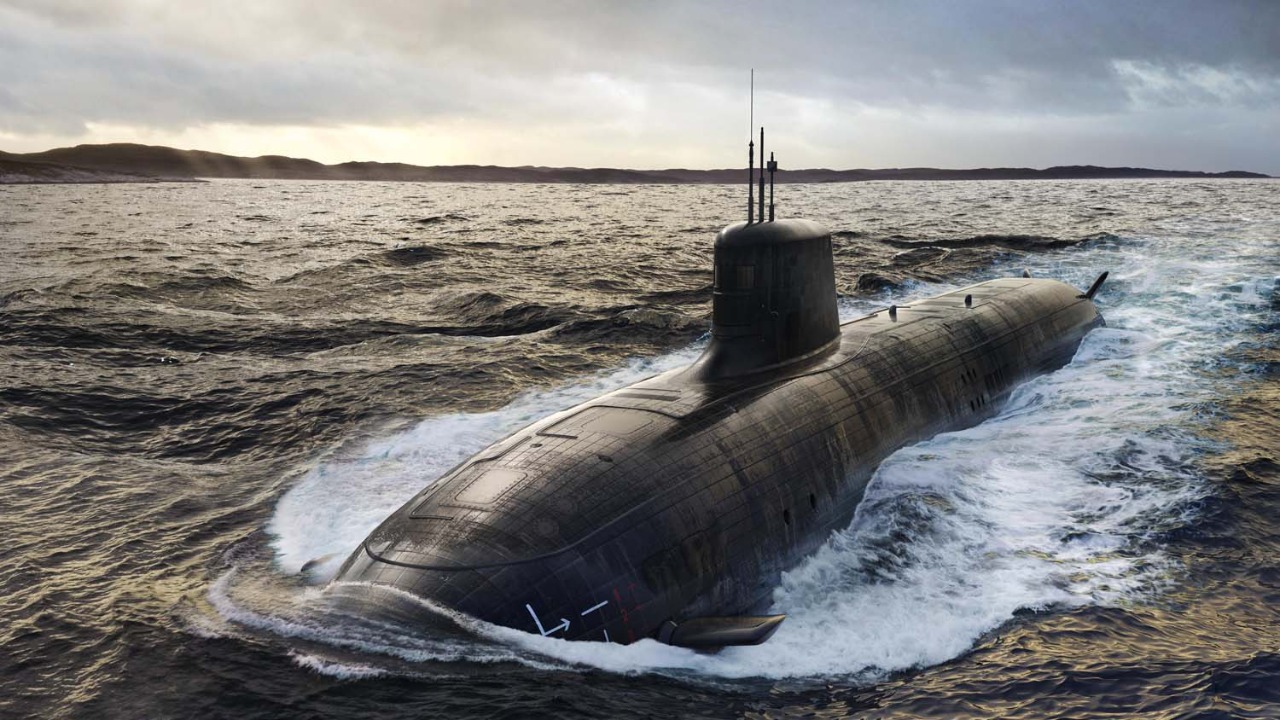
Ukraine has opened a new chapter in naval warfare, claiming to have crippled a high‑value Russian submarine with an explosive underwater drone in the Black Sea. The strike, which Kyiv describes as the first successful combat use of such a system against a submarine in port, signals how relatively cheap robotic craft are starting to threaten some of the most expensive assets in modern fleets.
By targeting a vessel reportedly worth hundreds of millions of dollars inside a heavily defended harbor, Ukrainian planners aimed not just to damage metal but to rewrite the risk calculus for Russia’s navy and for coastal states watching the conflict. I see this as a test case for how uncrewed systems, data and ingenuity can offset traditional advantages in tonnage and firepower.
The covert strike on Novorossiysk
Ukraine’s domestic security service, the SBU, says the operation unfolded in the Russian Black Sea port of Novorossiysk, where a Russian submarine used to launch cruise missiles was sitting at its berth. According to Ukraine’s domestic security service, the SBU, the boat was struck below the waterline by an explosive‑laden uncrewed underwater vehicle that slipped past harbor defenses in the Black Sea to reach Novorossiysk. The Security Service of Ukraine later framed the mission as a unique special operation, saying its underwater drones destroyed a Russian submarine used to launch cruise missiles, a claim it reiterated when The Security Service of Ukraine (SBU) said its underwater drones had carried out the attack even as Russian officials denied any damage.
Ukrainian officials have stressed that the target was not just any vessel but a key node in Russia’s long‑range strike architecture, reportedly valued at up to $500 million by Ukrainian commentators, although one widely shared description of the same class of Russian submarine put the figure at $400 million. In public messaging, Ukraine’s Security Service highlighted that its “Sub Sea Babies,” a family of Ukrainian underwater drones, had hit a Russian submarine worth up to that amount, underscoring the asymmetry between the relatively low cost of the robotic craft and the value of the Russian asset they were designed to neutralize. I read that emphasis as deliberate, a way to show domestic and foreign audiences that each successful strike can erase years of Russian shipbuilding investment.
Evidence from space and the battle over the narrative
In the days after the blast, commercial satellite imagery became a central piece of the story, offering outside observers a way to test the competing claims from Kyiv and Moscow. High‑resolution pictures of Novorossiysk showed clear damage at a Russian naval facility, with scorch marks and disturbed infrastructure visible around a berth where a submarine had been moored, as well as other signs of disruption in the port, details that matched Ukrainian assertions that an underwater drone had detonated near a high‑value target, according to satellite images of the Russian naval base. While Russia insisted that no ships or submarines were damaged, the visible blast patterns around the pier suggested at minimum a serious incident that Moscow preferred not to acknowledge.
Ukraine’s political leadership quickly framed the strike as a historic first, arguing that an armed uncrewed underwater vehicle had, for the first time in military history, successfully attacked a submarine in port. Alexander Kamyshin, an adviser to Ukrainian President Volodymyr Zelenskyy, posted on X that the attack was the first time an underwater drone had hit a submarine on such a massive scale, a claim that aligned with the SBU’s description of a unique operation and was later echoed in Alexander Kamyshin‘s public comments. At the same time, analysts noted that while the imagery and Ukrainian statements strongly supported the narrative of a successful hit, independent confirmation of the exact level of damage to the Russian submarine remained contested, with Moscow’s blanket denial standing in sharp contrast to the visual evidence from space.
“Sub Sea Babies” and a new playbook for the Black Sea
Behind the headlines is a quiet technological race, and Ukraine’s “Sub Sea Babies” are at the center of it. These Ukrainian underwater drones are designed to operate at depth, carry significant explosive payloads and navigate complex harbor environments, giving Kyiv a way to threaten Russian ships even inside ports that were once considered sanctuaries. Ukraine’s Security Service has described how its underwater drones hit a Russian submarine in the port of Novorossiysk on Dec. 15, presenting the mission as a game‑changing naval operation in which Ukraine’s Security Service said its underwater drones hit a Russian submarine in the port of Novorossiysk, and later emphasized that the same family of “Sub Sea Babies” had already pushed the Russian Black Sea Fleet eastward from Crimea. That combination of stealth, range and explosive power is what allowed a relatively small platform to threaten a vessel that would normally be protected by layers of anti‑submarine defenses.
Military analysts have started to describe the Sub Sea Baby Strike as a strategic inflection point in Black Sea Naval Warfare, arguing that, for the first time in modern conflict, uncrewed underwater systems have been used not just for reconnaissance or mine countermeasures but as primary strike weapons against a submarine in port. One detailed assessment framed Ukraine’s Sub Sea Baby Strike as a Strategic Inflection Point in Black Sea Naval Warfare, noting that, for the first time in military history, an underwater drone had been used in this way and that the operation could force navies to rethink how they protect high‑value assets, a view captured in the analysis of Ukraine’s Sub Sea Baby Strike: A Strategic Inflection Point in Black Sea Naval Warfare. I see that shift as part of a broader pattern in the war, where Ukraine has repeatedly used uncrewed systems, from surface drones to long‑range quadcopters, to offset Russia’s numerical advantage in conventional platforms.
Why Ukraine calls it a world‑first
Kyiv has been explicit about the symbolic value of the Novorossiysk operation, presenting it as a world‑first underwater drone strike on a submarine that could reshape naval doctrine. Ukraine’s Ministry of Defence has said that an armed uncrewed underwater vehicle successfully attacked a Russian submarine, describing the mission as a landmark moment in naval warfare and stressing that the strike had been successfully carried out against a Russian target in port, a framing reflected in the claim that Ukraine claims world‑first underwater drone strike on Russian submarine. Ukraine Claims World’s First Underwater Drone Attack On Russian Submarine, with officials arguing that no previous conflict has seen an uncrewed underwater vehicle used in this way against a submarine, a narrative that has been reinforced by detailed reporting on how Ukraine Claims World First Underwater Drone Attack On Russian Submarine.
Ukraine’s Security Service has repeated that its underwater drones hit a Russian submarine in Novorossiysk, presenting video snippets of the approach and impact to bolster its case and to show domestic audiences that the country’s own engineers can field cutting‑edge systems. One shipping‑industry account noted that Ukraine claims an underwater drone attack on a Russian submarine and shared a Video of the strike, while also recording that Russia insisted no ships or submarines were damaged, a contrast that highlights how information warfare now runs in parallel with kinetic operations, as seen in the report that Ukraine claims underwater drone attack on Russian submarine (Video). For Ukraine, the “world‑first” label is not just about bragging rights, it is a way to signal to partners and adversaries that the country is at the forefront of integrating uncrewed systems into high‑end warfare.
Strategic shockwaves for Russia’s navy and beyond
The Novorossiysk strike fits into a broader pattern of Ukrainian operations that target Russia’s most sophisticated platforms, from aircraft to warships, in order to chip away at Moscow’s ability to project power. Ukrainian forces struck Russia’s sole Il‑38N reconnaissance aircraft and, in the same campaign of precision attacks, Ukraine hit a Russian submarine with drones in Novorossiysk, with Ukraine’s security services presenting the operation as another unique blow against Russian capabilities, as described in the account that The Security Service of Ukraine (SBU) carried out another unique strike. A related repost highlighted that Ukraine’s Security Service said its underwater drones hit a Russian submarine in Novorossiysk, reinforcing the message that Kyiv can reach deep into what Russia once considered safe rear areas, a point captured in the note that Ukraine’s Security Service said its underwater drones had again struck a Russian target.
For Russia’s navy, the implications are stark. If a relatively small fleet of Ukrainian underwater drones can threaten submarines and surface combatants inside ports like Novorossiysk, then the cost of keeping high‑value assets close to the front rises sharply, potentially forcing Moscow to disperse ships to more distant bases or accept higher risk. Ukraine has already used a mix of surface and underwater drones to push the Russian Black Sea Fleet eastward from Crimea, and the Security Service of Ukraine has portrayed the Novorossiysk operation as part of a series of unique strikes that show how modern warfare is shifting toward uncrewed systems, a theme echoed in the description that The Security Service of Ukraine (SBU) carried out another unique operation using drones. I expect navies far beyond the Black Sea to study this episode closely, not only to harden their own ports but also to explore how similar systems might be integrated into their arsenals, because the message from Novorossiysk is clear: in the age of underwater drones, even a $500 million submarine is no longer safe at its moorings.
More From TheDailyOverview

Grant Mercer covers market dynamics, business trends, and the economic forces driving growth across industries. His analysis connects macro movements with real-world implications for investors, entrepreneurs, and professionals. Through his work at The Daily Overview, Grant helps readers understand how markets function and where opportunities may emerge.

