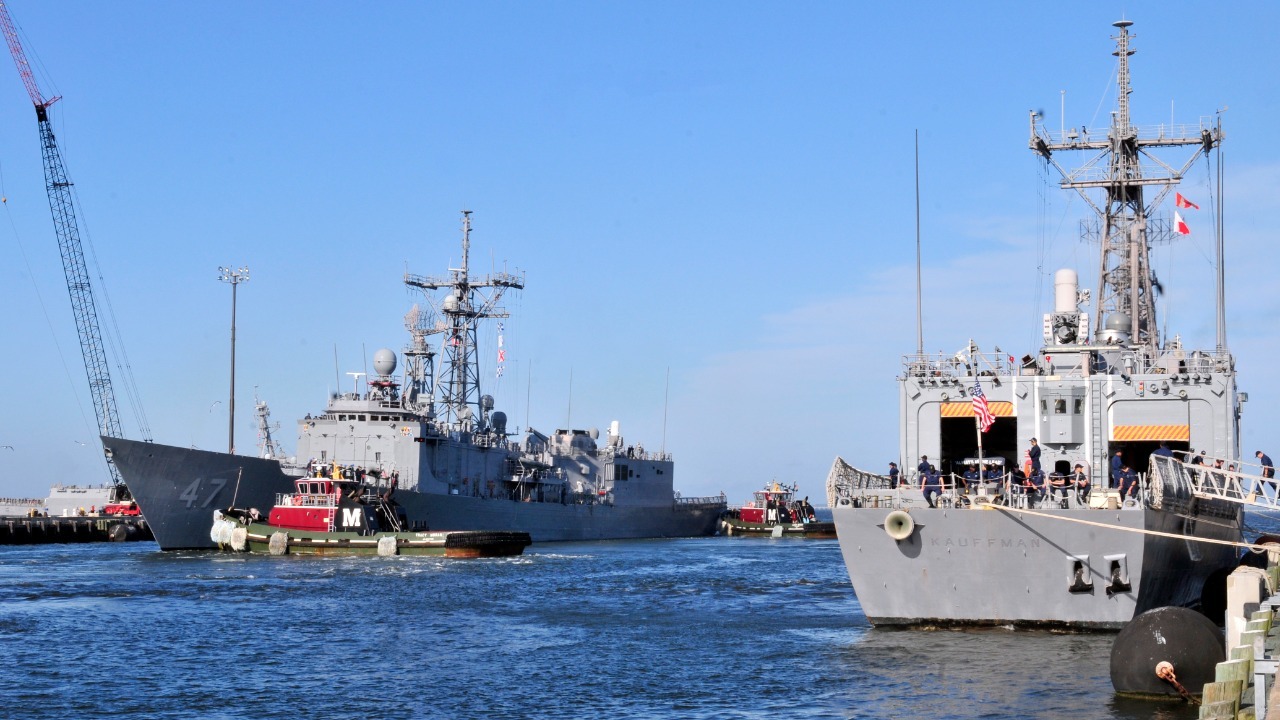
US commandos have carried out a rare high seas raid, intercepting a cargo vessel in the Indian Ocean and seizing what officials say were sophisticated missile components worth roughly 5 million dollars and destined for Iran’s arsenal. The shipment, traced back to Chinese suppliers, highlights how covert maritime networks are feeding Tehran’s long‑range strike capabilities even as Washington tries to choke off that flow. I see this operation as a vivid snapshot of a wider contest over who controls the pipelines of advanced weaponry in one of the world’s most volatile regions.
Details emerging from multiple security reports indicate that the boarding was not an isolated stunt but part of a broader US campaign to disrupt the partnership between Chinese manufacturers and Iran’s missile program. The raid, involving a Special Forces team, unfolded quietly on the open ocean, yet its implications reach from Beijing and Tehran to Gulf capitals and the White House.
The covert raid in the Indian Ocean
According to defense briefings, U.S. special forces boarded a vessel in the Indian Ocean and seized Chinese dual‑use components that investigators linked directly to Iran’s missile program. The ship, identified in maritime tracking data as the MV Honestar, was operating under one of its previous names and flags, a common tactic for vessels that shuttle sensitive cargo along gray shipping routes. By striking in international waters, US planners signaled that they were willing to reach deep into contested sea lanes to stop what they viewed as a critical transfer of technology.
Operational accounts describe a tightly choreographed boarding, with a Special Forces detachment fast‑roping from helicopters while a US Navy vessel provided overwatch. Once on deck, the team secured the crew, swept the ship, and moved quickly to the containers that intelligence had flagged as suspicious. Inside, they found precision‑machined parts, guidance electronics, and other hardware that weapons analysts say can be integrated into advanced ballistic and cruise missiles, a haul that US officials privately value at around 5 million dollars in potential battlefield impact. The decision to seize the cargo but allow the ship to continue, as noted in coverage of the Intercepts Ship Carrying Chinese Missile Components, suggests Washington wanted to send a warning without triggering a broader shipping crisis.
Tracing the trail from China to Iran
Intelligence officials say the intercepted cargo originated with Chinese suppliers that specialize in so‑called dual‑use technology, equipment that can serve civilian industries but also slot neatly into weapons systems. The vessel itself had sailed from ports linked to China, then moved along commercial routes that have become familiar to sanctions‑busters moving sensitive goods toward the Gulf. In one detailed account, a reporter identified the ship as the Honestar and described how it relied on a web of shell companies and reflagging to obscure its ownership and cargo history, a pattern that has become a hallmark of clandestine logistics for sanctioned states.
US and regional analysts argue that this is not a one‑off smuggling run but part of a structured supply chain that connects Chinese manufacturers to Iranian front companies and, ultimately, to missile depots inside the Islamic Republic. A report by Israa Gamal described how U.S. Special Forces, acting on targeted intelligence, seized Chinese cargo bound for Iran’s missile program and noted that the same vessel had previously been used to transport oil to Iran, underscoring how commercial shipping is repurposed for covert arms transfers. In that account, Israa Gamal highlighted how the operation fit into a pattern of US efforts to track and disrupt these networks before the cargo ever reaches Iranian ports.
Iran’s expanding missile stockpile and strategic aims
The urgency behind the raid becomes clearer when set against Iran’s rapidly expanding missile arsenal. An Israeli journalist reported that Iran has reconstituted its missile stockpile to around 2,000 “heavy” missiles, a figure that alarms regional militaries already within range of Iranian launch sites. Those weapons, which include both ballistic and cruise systems, give Tehran the ability to threaten critical infrastructure, oil facilities, and military bases across the Middle East. From my perspective, every intercepted shipment of guidance kits or propulsion components is therefore not just a legal enforcement action but a direct attempt to slow the growth of a stockpile that is already substantial.
Iranian planners, for their part, see missiles as a core pillar of deterrence and power projection, especially as their conventional air force ages and remains constrained by sanctions. Reports on the raid emphasize that the seized components were tailored for systems that could extend the range and accuracy of Iran’s arsenal, tightening the pressure on rivals and complicating US force posture in the region. The broader context, captured in regional security updates on Iran, is that Tehran has invested heavily in both production and import of missile technology, using foreign partners to fill gaps in advanced materials and electronics that domestic industry cannot yet supply at scale.
Washington’s expanding maritime campaign
The Honestar operation is part of a wider pattern of US maritime actions that stretch from the Caribbean to the Indian Ocean. Earlier this month, President Donald Trump publicly confirmed that US forces had seized an oil tanker off the coast of Venezuela, framing it as a move to prevent the country from becoming an “oil colony” for foreign powers. That seizure, while focused on energy rather than missiles, reflects the same willingness to use naval power to enforce sanctions and disrupt what Washington sees as malign economic and military networks. In both cases, the United States is asserting a right to act far from its own shores when it believes strategic balances are at stake.
In the Middle East, the tempo of such operations has clearly increased. One detailed account described how US forces stormed a cargo ship traveling from China to Iran, describing the incident as the latest reported instance of a US interdiction targeting Tehran’s supply lines. Another report on how US forces intercept Iran‑bound military shipments from China noted that the cargo had Chinese origins and was part of a rare but growing pattern of direct raids. From my vantage point, these actions amount to a de facto maritime containment strategy, one that relies on intelligence‑driven strikes at specific ships rather than blanket blockades that would roil global trade.
Global stakes and the risk of escalation
The interception of Chinese missile components bound for Iran carries risks that extend well beyond the seized containers. Beijing is likely to bristle at any implication that its companies are knowingly arming a sanctioned missile program, and Tehran will see the raid as yet another attempt to strangle its strategic capabilities at sea. One detailed narrative, citing Benedict Smith US Reporter, described how a US special operations team seized a shipment of military equipment from a vessel with Chinese links that was heading toward Iran, underlining how sensitive this triangle has become. The same account noted that the operation unfolded in the afternoon GMT, a reminder that these actions are timed and calibrated not only for tactical advantage but also for political signaling back in Washington and allied capitals. In that context, the report that US special ops intercepted Chinese military shipment heading to Iran is more than a description of a raid, it is a marker of how openly this contest is now being waged.
There is also the question of how long such interdictions can remain “rare.” One analysis framed the Honestar seizure as a rare raid, but also placed it alongside other incidents in which Ukraine said it had hit Russian ships accused of carrying weapons, suggesting that contested cargoes are becoming a flashpoint in multiple theaters. Coverage of how the US intercepts Iran‑bound military shipments from China noted that the cargo had Chinese origins and that the operation was unusual, yet it also hinted that similar missions may follow as Washington refines its intelligence picture. Another detailed account, titled “US Intercepts Chinese Ship Bound for Iran, Seizes Missile Components,” noted that, According to The Telegraph, the ship was ultimately allowed to continue its voyage after the cargo was removed, a compromise that tries to balance enforcement with the need to avoid a broader shipping crisis. For now, the US appears committed to this calibrated approach, but each new boarding raises the odds of a miscalculation that could drag more players into open confrontation.
What the Honestar raid signals about the next phase
For me, the Honestar operation crystallizes a shift in how Washington is willing to police the flow of advanced weaponry. Rather than relying solely on sanctions lists and diplomatic pressure, US planners are increasingly prepared to send Special Forces teams onto the decks of foreign‑linked ships in contested waters. A detailed report on how U.S. special forces seized Chinese cargo tied to Iran’s missile program described how the boarding in the Indian Ocean and the confiscation of dual‑use components were executed with precision, then folded into a broader narrative of deterrence. Another account, focusing on how US forces stormed a cargo ship traveling from China to Iran, framed the incident as part of a series of interdictions that have become a signature of President Donald Trump’s more muscular maritime policy.
At the same time, the raid underscores the limits of what such operations can achieve on their own. Iran’s missile stockpile, now estimated at around 2,000 heavy systems, will not be dismantled by seizing a single 5 million dollar shipment, and Chinese manufacturers have shown a capacity to reroute exports through new intermediaries when old channels are exposed. Reports that US forces intercept Iran‑bound military shipments from China, and that they have seized Chinese cargo bound for Iran’s missile program, suggest that Washington is playing a long game of cat and mouse across the world’s sea lanes. The question, as I see it, is whether this strategy can meaningfully slow the growth of Iran’s capabilities without tipping the region into a broader confrontation that neither side claims to want.
More From TheDailyOverview

Grant Mercer covers market dynamics, business trends, and the economic forces driving growth across industries. His analysis connects macro movements with real-world implications for investors, entrepreneurs, and professionals. Through his work at The Daily Overview, Grant helps readers understand how markets function and where opportunities may emerge.

