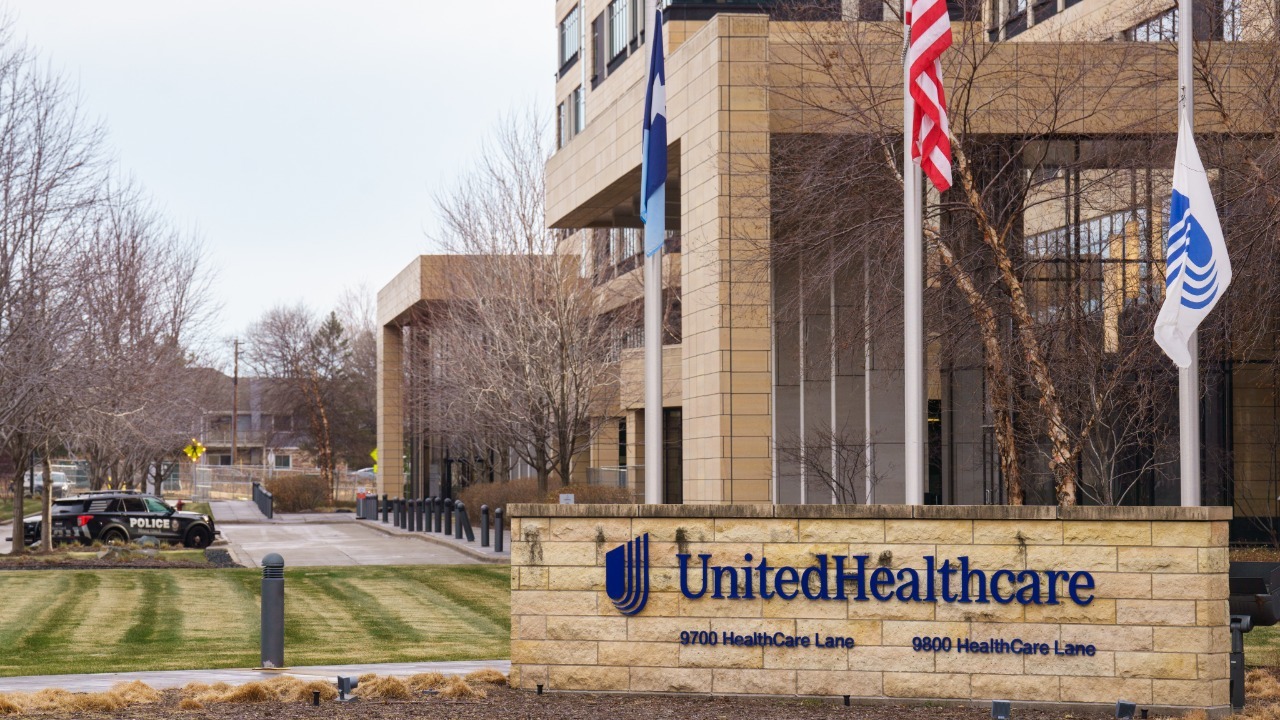
UnitedHealth’s decision to remove roughly 1 million seniors from its Medicare Advantage plans marks one of the most sweeping retrenchments in the program’s modern history, reshaping coverage for older Americans who had come to rely on the company’s scale and stability. The move crystallizes how rising medical costs, tighter government payments, and strategic business choices are converging on the people least able to absorb sudden changes in their health insurance.
As I look at the available reporting, the scale of the cuts, the concentration in certain regions, and the ripple effects on hospitals and competitors all point to a structural shift rather than a one-off adjustment. The story here is not only that a million seniors are losing a familiar card in their wallets, but that the basic bargain of Medicare Advantage is being stress-tested in real time.
The largest Medicare Advantage retrenchment in decades
The headline figure is stark: UnitedHealth is dropping about 1,000,000 seniors from its Medicare Advantage offerings, a scale that makes this the company’s largest contraction in the program in decades and one of the biggest single-year pullbacks by any insurer. I read this as a clear signal that the insurer is recalibrating its risk and cost exposure after years of aggressive growth in private Medicare plans, which had turned UnitedHealth into a dominant force in the market. Reporting on the decision describes a broad culling of plans that UnitedHealth judged as financially unsustainable or strategically misaligned, rather than a narrow tweak at the margins, which underscores how deliberate and far-reaching the shift is for older enrollees who had assumed their coverage would remain stable.[1]
What makes this retrenchment especially consequential is that it lands in a Medicare Advantage landscape where enrollment has surged and many seniors now experience private plans as the default version of Medicare. UnitedHealth has been a central driver of that trend, so when it pulls back at this magnitude, the disruption is amplified across counties and provider networks that had oriented themselves around its contracts. The reporting notes that the company framed the cuts as part of a broader portfolio review, but the sheer number of affected seniors, combined with the characterization as the biggest cut in decades, suggests a turning point in how one of the country’s largest insurers views the balance between growth and sustainability in Medicare Advantage.[1]
Why UnitedHealth is pulling back on seniors’ coverage
UnitedHealth’s explanation for the mass disenrollment centers on rising medical costs, tighter reimbursement, and the need to prune plans that no longer pencil out, and I see those factors as part of a broader recalibration across the Medicare Advantage industry. Insurers have been warning that higher utilization of hospital care, more expensive drugs, and updated federal payment formulas are squeezing margins on plans that once looked comfortably profitable. In that context, UnitedHealth’s move to shed about 1,000,000 seniors from specific products reads less like an isolated corporate decision and more like a leading indicator of how large carriers intend to protect earnings by exiting markets or benefit designs that no longer meet their internal thresholds.[1]
The company has also pointed to quality metrics and network performance as reasons to streamline its offerings, arguing that concentrating members in fewer, stronger plans will ultimately improve care. I interpret that rationale as a blend of genuine concern about plan performance and a strategic effort to steer seniors into products that give UnitedHealth more control over costs and provider relationships. The reporting indicates that the dropped seniors are being encouraged to consider alternative UnitedHealth plans or traditional Medicare, but the underlying message is that the insurer is no longer willing to carry a long tail of marginal offerings in an environment where every percentage point of medical loss ratio matters.[1]
Who is losing coverage and where the impact is sharpest
The 1,000,000 seniors losing their current UnitedHealth Medicare Advantage plans are not spread evenly across the country, and the geographic concentration of the cuts is one of the most important, and underappreciated, parts of the story. Based on the reporting, the company has targeted specific regions and counties where its plans were underperforming financially or where network arrangements had become too costly, leaving some local markets facing a sudden vacuum in private Medicare options. I read this as a strategic triage, with UnitedHealth prioritizing areas where it can maintain scale and negotiating leverage, while pulling back from communities where the economics have turned against it.[1]
Within those regions, the seniors most affected tend to be people who had chosen plans with lower premiums or richer supplemental benefits, such as dental or vision coverage, that are now proving expensive to sustain. The reporting describes enrollees who are being told that their current plan will not be offered next year and that they must either pick a different UnitedHealth product, switch to another insurer, or move back to traditional Medicare. I see a particular vulnerability for older adults with complex conditions who have built long-standing relationships with specific doctors or hospitals inside UnitedHealth’s networks, because even when alternative coverage exists on paper, the practical reality of changing plans can mean losing access to familiar providers or facing new prior authorization hurdles.[1]
How seniors are being forced to navigate the fallout
For the seniors on the receiving end of these letters, the policy logic behind UnitedHealth’s decision is far less pressing than the immediate question of how to maintain uninterrupted care. The reporting describes beneficiaries who are now scrambling during the Medicare open enrollment window to compare new plan options, check whether their cardiologist or oncologist is in network, and calculate how changes in premiums, deductibles, and drug formularies will affect their budgets. I see this as a particularly heavy lift for older adults with limited internet access or cognitive challenges, who may struggle to parse the fine print of plan brochures while also managing chronic illnesses that leave little bandwidth for bureaucratic problem-solving.[1]
UnitedHealth and federal officials have emphasized that affected seniors are not being left uninsured, since they retain the right to enroll in other Medicare Advantage plans or revert to traditional Medicare with a standalone Part D prescription drug plan. In practice, though, the reporting suggests that some markets have limited alternative options, and even where choices exist, switching can trigger new utilization management rules, different copay structures, and potential gaps in supplemental benefits like gym memberships or transportation assistance. I read the situation as a stress test of the consumer-choice model that underpins Medicare Advantage, revealing how quickly that promise can feel hollow when a dominant insurer exits and leaves older patients to navigate a maze of new coverage rules on a tight deadline.[1]
What this signals for Medicare Advantage’s future
UnitedHealth’s decision to cut about 1,000,000 seniors from its Medicare Advantage plans is not happening in isolation, and I see it as a bellwether for how the entire sector may evolve in the next few years. Other large insurers have already signaled that they are reviewing their own portfolios in light of rising costs and regulatory scrutiny, and the reporting suggests that more targeted exits and benefit reductions are likely as companies chase sustainable margins. If the country’s largest Medicare Advantage player is willing to walk away from this many enrollees in one cycle, it sends a clear message that scale alone is no longer a guarantee of stability for seniors who sign up for private Medicare coverage.[1]
At the policy level, the episode raises hard questions about how much volatility older Americans should be expected to absorb in a program that is marketed as a stable alternative to traditional Medicare. I read the reporting as a warning that without stronger guardrails on plan exits, and more robust support for beneficiaries who are forced to switch, the promise of coordinated, affordable care through Medicare Advantage will be increasingly undercut by abrupt corporate decisions. For now, the 1,000,000 seniors losing their UnitedHealth plans are the most visible face of that tension, but the underlying pressures that drove this cut suggest that many more enrollees could find themselves in similar positions as insurers continue to redraw the map of private Medicare coverage.[1]
More From TheDailyOverview
- Dave Ramsey warns to stop 401(k) contributions
- 11 night jobs you can do from home (not exciting but steady)
- Small U.S. cities ready to boom next
- 19 things boomers should never sell no matter what

Nathaniel Cross focuses on retirement planning, employer benefits, and long-term income security. His writing covers pensions, social programs, investment vehicles, and strategies designed to protect financial independence later in life. At The Daily Overview, Nathaniel provides practical insight to help readers plan with confidence and foresight.

