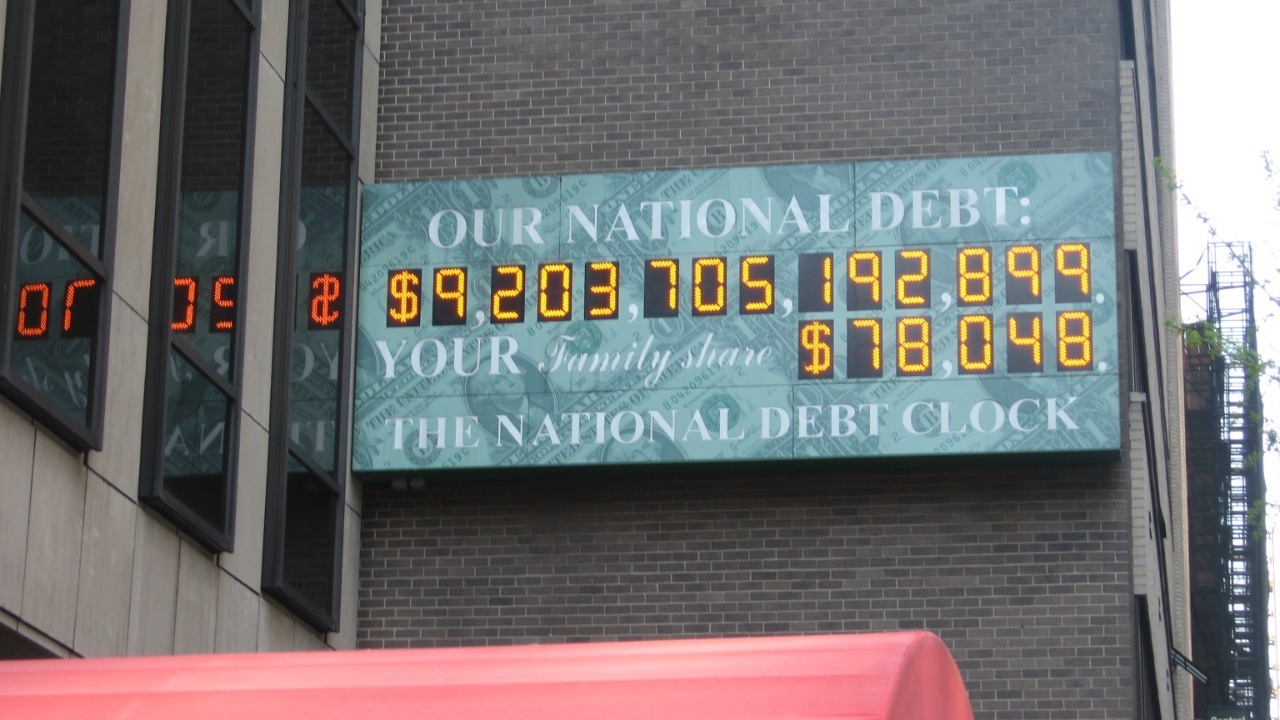
The United States is heading into a decade in which federal debt is projected to swell to levels that would have seemed unthinkable a generation ago. Nonpartisan forecasters now expect the total to reach $64 trillion within ten years, even as President Donald Trump backs policies that expand the gap between what Washington spends and what it collects. The numbers point to a basic tension: a White House promising more, and a federal balance sheet already stretched by higher interest costs and persistent deficits.
That collision between political ambition and fiscal math is not abstract. The national debt already stands at $38 trillion, and the deficit for fiscal 2026, Trump’s first full budget year, is expected to be 5.8 percent of the economy. From that outlook, three big questions emerge: how much of the coming surge is baked in, how much is being driven by Trump’s policy choices, and how long global investors will keep financing a trajectory that official analysts already describe as not sustainable.
Debt racing toward $64 trillion
Federal debt is forecast to climb to $64 trillion over the coming decade, a projection that reflects both structural pressures and new policy choices in Washington. That figure, drawn from a recent budget outlook, implies that borrowing will continue to grow faster than the tax base even if economic growth stays on track. The same analysis finds that Trump’s agenda is widening the deficit, as tax and spending decisions tilt toward larger shortfalls rather than restraint, a pattern that compounds over time when interest is added on top of every new dollar borrowed. In practical terms, the government is stacking future obligations on top of an already record-high starting point.
Warning signs are already visible in the current balance sheet. The national debt totals $38 trillion, and nonpartisan analysts describe the fiscal trajectory as not sustainable given the path of borrowing and interest costs. One detailed forecast from budget specialists projects that federal debt will reach $64 trillion in a decade and notes that Trump-backed policies are a key driver of that rise. Taken together, those numbers send a straightforward message: without a change in course, the United States is locking in a decade of record borrowing that leaves less room to respond to future shocks.
Trump’s agenda and a widening deficit
The debt path is not only the result of demographic trends or legacy programs; it is also being shaped by current policy. Analysts who have reviewed Trump’s tax and spending plans find that they increase the deficit rather than reduce it, adding to the projected climb toward $64 trillion in debt. That assessment reflects choices to expand or extend costly measures without matching offsets on the revenue side, even as interest payments absorb a growing share of federal resources. In effect, the administration is betting that economic growth and political support will hold up even as the government leans more heavily on borrowing.
Independent budget experts have linked this policy direction to the long-run outlook for debt, warning that Trump’s approach widens the deficit compared with a baseline path. The same Politico analysis estimates that the annual deficit will rise by hundreds of billions of dollars over the next several years as tax cuts and higher spending flow through the system, helping push the total debt toward $64 trillion. That serves as a reminder that the numbers are not destiny; they are the product of choices that could, in principle, be reversed or redesigned, but for now are pointing in the opposite direction.
CBO’s warning on deficits and interest costs
The Congressional Budget Office has added its own caution to the mix, projecting that federal deficits and debt will worsen over the next decade. In its latest budget and economic outlook, the CBO, a nonpartisan federal agency, concludes that the fiscal path is not sustainable because borrowing keeps growing faster than the economy. That judgment hinges in part on the cost of servicing the debt: the agency expects a surge in interest costs, with average rates running 0.4 percentage points higher than previously anticipated. Higher rates mean that every additional dollar of debt becomes more expensive to carry, even if other parts of the budget stay constant.
The CBO’s projections also show how Trump’s first full budget year fits into that story. The agency estimates that the deficit for fiscal 2026, which it identifies as President Donald Trump’s first full fiscal year in office, will be about 5.8 percent of gross domestic product. That is a large gap at a time when the economy is not in crisis, and it comes on top of the existing $38 trillion debt stock identified in the CBO outlook. Taken together, those pieces point to a clear pattern: the government is borrowing heavily in normal times, while facing higher interest rates that the agency expects will, on average, add 0.4 percentage points to the cost of money.
Politics, policy and the view from Capitol Hill
The fiscal debate is unfolding in a very visible setting. Earlier this year, the U.S. Capitol building was seen on Jan. 12, 2026, a familiar backdrop for fights over spending bills and debt limits. The image, captured by Francis Chung and credited to POLITICO, reflects more than symbolism; it is the place where lawmakers decide whether to accept or resist the debt trajectory now described by analysts. Members of Congress have to weigh the appeal of tax cuts and new programs against the warnings coming from the CBO and other forecasters about long-term risks.
Political incentives, however, still tilt toward short-term gains. Trump’s policies that widen the deficit are popular with some constituencies precisely because they promise benefits without immediate tax increases. The projected rise to $64 trillion in debt is, by contrast, an abstract future cost that is easier for elected officials to discount. That leaves a gap between the clarity of the budget math and the reluctance of political actors to confront it head-on, a gap that helps explain why the CBO’s description of an unsustainable trajectory has not yet translated into a broad shift in policy.
What the next decade could look like
If the current path holds, the next ten years are likely to feature rising interest bills, repeated fights over borrowing authority, and less room for new initiatives. The CBO’s expectation that interest rates will average 0.4 percentage points higher than in its earlier outlook suggests that debt service will eat up a larger share of federal spending, especially as the total stock climbs toward $64 trillion. One reasonable prediction is that, by the early 2030s, interest payments will crowd out some discretionary programs, forcing lawmakers to choose between trimming popular items and accepting even larger deficits. Another is that any future downturn will trigger sharper debates over how much more the government can safely borrow when the starting point is already $38 trillion in debt and rising.
There is also a risk that investors will eventually demand a higher premium to hold U.S. debt if they come to doubt the political system’s willingness to adjust course. The CBO has already flagged the current fiscal trajectory as not sustainable, language that reflects concern about debt growing faster than the economy over a long horizon. Reporting in Fortune notes that the national debt has reached $38 trillion and highlights the agency’s warning that higher interest costs could add pressure each year. Much of the coverage so far has framed the issue as a distant problem, but the combination of a 5.8 percent deficit in a non-crisis year, a $38 trillion starting debt, and forecasts of $64 trillion within ten years suggests the adjustment may arrive sooner, and more abruptly, than many in power are prepared to admit.
More From The Daily Overview
*This article was researched with the help of AI, with human editors creating the final content.

Grant Mercer covers market dynamics, business trends, and the economic forces driving growth across industries. His analysis connects macro movements with real-world implications for investors, entrepreneurs, and professionals. Through his work at The Daily Overview, Grant helps readers understand how markets function and where opportunities may emerge.

