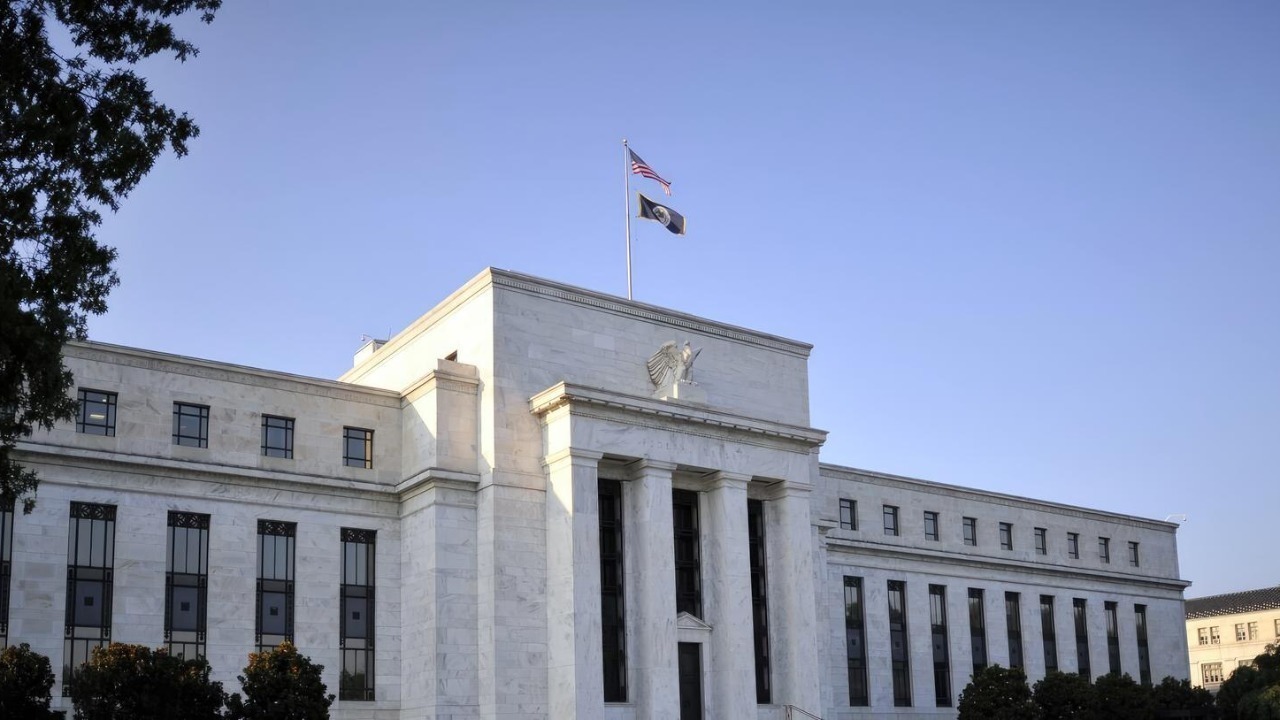
The Federal Reserve just held interest rates steady while describing the economy in terms that, even a year ago, would have sounded aspirational. Growth is solid, unemployment is stabilizing, and inflation, while still slightly above target, is close enough to the 2% goal that the dreaded recession scenario looks increasingly unlikely. For anyone who spent 2023 and 2024 bracing for a hard landing, the current data tells a different story, one where the U.S. economy may actually be threading the needle between cooling prices and sustained expansion.
Growth Stayed Strong While Prices Cooled
The soft landing thesis rests on a simple but historically rare combination: inflation falling toward target without a corresponding collapse in output or employment. The data from mid-2025 provides the clearest evidence yet that this combination is holding. According to the Bureau of Economic Analysis, real GDP grew at a 3.8% annual rate in the second quarter of 2025, a figure that reflected upward revisions in the annual update. That kind of growth would be impressive in any environment, but it becomes especially significant when paired with the inflation numbers from the same period, which show price pressures easing rather than intensifying.
The headline PCE price index for Q2 2025 came in at 2.1%, barely above the Fed’s stated 2% target, while the core PCE price index registered 2.6% in the same release. Because core inflation strips out volatile food and energy prices, the gap between headline and core suggests that underlying price pressures were still present but moderating. The direction of travel matters more than any single quarter’s reading. An economy expanding at nearly 4% while headline inflation sits just a tenth of a percentage point above the central bank’s goal is not supposed to happen, at least not according to traditional models that treat growth and disinflation as opposing forces. The fact that it is happening now is what gives the soft landing narrative real substance instead of wishful thinking.
The Fed Holds Steady at a Critical Moment
The Federal Open Market Committee’s January 28, 2026 statement reads like a report card for an economy that has exceeded expectations without obviously overheating. Policymakers described activity as expanding at a “solid pace” and noted that unemployment showed “some signs of stabilization,” language that marks a shift from the concerns about rapid labor-market cooling that surfaced in parts of 2024. Inflation, meanwhile, was characterized as “somewhat elevated,” an acknowledgment that price growth remains above the 2% longer-run objective but no longer commands the crisis-level attention it did when readings were double or triple that target.
The decision to hold the federal funds rate at 3.50% to 3.75% reflects a deliberate wait-and-see posture. Cutting too soon could reignite price pressures, particularly if consumer spending accelerates further on the back of real income gains. Holding too long, by contrast, risks tipping the economy into an unnecessary slowdown as higher borrowing costs eventually weigh on housing, business investment, and state and local finances. The Fed’s language suggests it believes the current stance is restrictive enough to keep inflation on a downward path but not so tight that it chokes off the expansion. That is the essence of the soft landing: monetary policy calibrated precisely enough to let growth continue while prices converge toward target. Whether the committee can maintain that balance through 2026 will depend on variables it cannot fully control, from energy markets to geopolitical shocks and global trade disruptions.
Consumer Spending and Investment Tell the Same Story
Beyond the headline GDP and inflation figures, the underlying composition of growth matters for judging how durable the current expansion might be. The Treasury Department’s recent economic update for its Borrowing Advisory Committee offered a window into late-2025 activity, noting that real consumer spending was running near a 2.5% annualized pace in October and November. Household outlays growing at that rate are neither recessionary nor exuberant. Instead, they point to a middle ground in which families are still willing to spend, helped by a labor market that has cooled from the breakneck job gains of 2022 but has not deteriorated enough to force widespread belt-tightening.
The same Treasury communication highlighted equipment shipments and investment tied to artificial intelligence and data-center construction as important contributors to recent activity. This is where the soft landing narrative becomes more interesting—and potentially more sustainable. When a meaningful share of growth comes from productivity-enhancing capital investment rather than from consumer credit or one-off fiscal stimulus, the economy may be laying the groundwork for an expansion that can run longer without generating the kind of inflationary overheating that forces abrupt policy reversals. The comparison to the late-1990s technology boom is tempting: that period also featured strong growth with moderate inflation, driven in part by business spending on computing and internet infrastructure. Yet the lesson from that era is not that tech-led expansions must end in disaster; it is that asset valuations can overshoot reality even when the underlying productivity story is real. The challenge today is to capture the efficiency gains from AI-driven investment without inflating a speculative bubble that leaves the broader economy exposed when sentiment turns.
What Could Still Go Wrong
The biggest risk to the soft landing may not be a single dramatic shock but a gradual accumulation of pressures that the current data does not fully capture. The Fed’s own language hints at this tension. Describing inflation as “somewhat elevated” while holding rates steady is an implicit admission that the job is not finished. Core PCE at 2.6% in mid-2025 was moving in the right direction, but a prolonged plateau at that level, rather than continued convergence toward 2%, would eventually force policymakers to choose between tolerating above-target inflation and tightening further into an expansion that is already maturing. Either path carries costs: the former risks unmooring expectations, while the latter risks squeezing interest-sensitive sectors at a time when some households and firms have already refinanced at higher rates.
There is also a timing question that only incoming data can resolve. The next major marker arrives on February 20, 2026, when the BEA will release its advance estimate of fourth-quarter 2025 GDP. That report will show whether the momentum visible in the Treasury’s late-2025 consumer spending figures translated into another quarter of above-trend growth or whether activity decelerated as tighter financial conditions continued to filter through. A sharp slowdown would not automatically mean the soft landing has failed—after all, some cooling is precisely what the Fed has been trying to engineer—but it would shift the debate toward whether rate cuts should have come earlier. A strong print, on the other hand, could revive concerns that demand remains too hot for inflation to glide all the way back to target without additional restraint.
Staying on Target May Be Harder Than Getting There
The dominant assumption in much current commentary is that the hard part is over, that inflation has been effectively beaten and the economy simply needs to coast into a benign equilibrium. That framing underestimates the difficulty of what comes next. The hard part of a soft landing is not approaching the target; it is staying there in the face of shocks, political pressures, and shifting global conditions. The late-1990s expansion, often held up as a model of non-inflationary growth, ultimately succumbed not to runaway prices but to financial imbalances and a loss of discipline in markets that had convinced themselves the business cycle had been tamed. The lesson for today’s policymakers is that success can breed its own vulnerabilities if it encourages complacency about risks that do not show up immediately in headline inflation or unemployment.
For now, the evidence from growth, prices, and spending supports the idea that the United States is closer to a soft landing than at any point since the inflation surge began. Real output is expanding at a healthy clip, price increases have slowed to near the Fed’s goal, and consumers and businesses are still spending and investing in ways that hint at future productivity gains. Yet the landing is not complete until inflation is firmly anchored around target and the expansion proves resilient to the inevitable bumps ahead. That will require the Fed to keep calibrating policy with humility, resisting both the urge to declare victory too soon and the temptation to chase every wiggle in the data. It will also require investors, businesses, and households to recognize that a stable, moderate-growth environment is not a prelude to the next boom, but the destination itself. If they can live with that, the economy’s improbable glide path might just hold.
More From The Daily Overview
*This article was researched with the help of AI, with human editors creating the final content.

Grant Mercer covers market dynamics, business trends, and the economic forces driving growth across industries. His analysis connects macro movements with real-world implications for investors, entrepreneurs, and professionals. Through his work at The Daily Overview, Grant helps readers understand how markets function and where opportunities may emerge.

