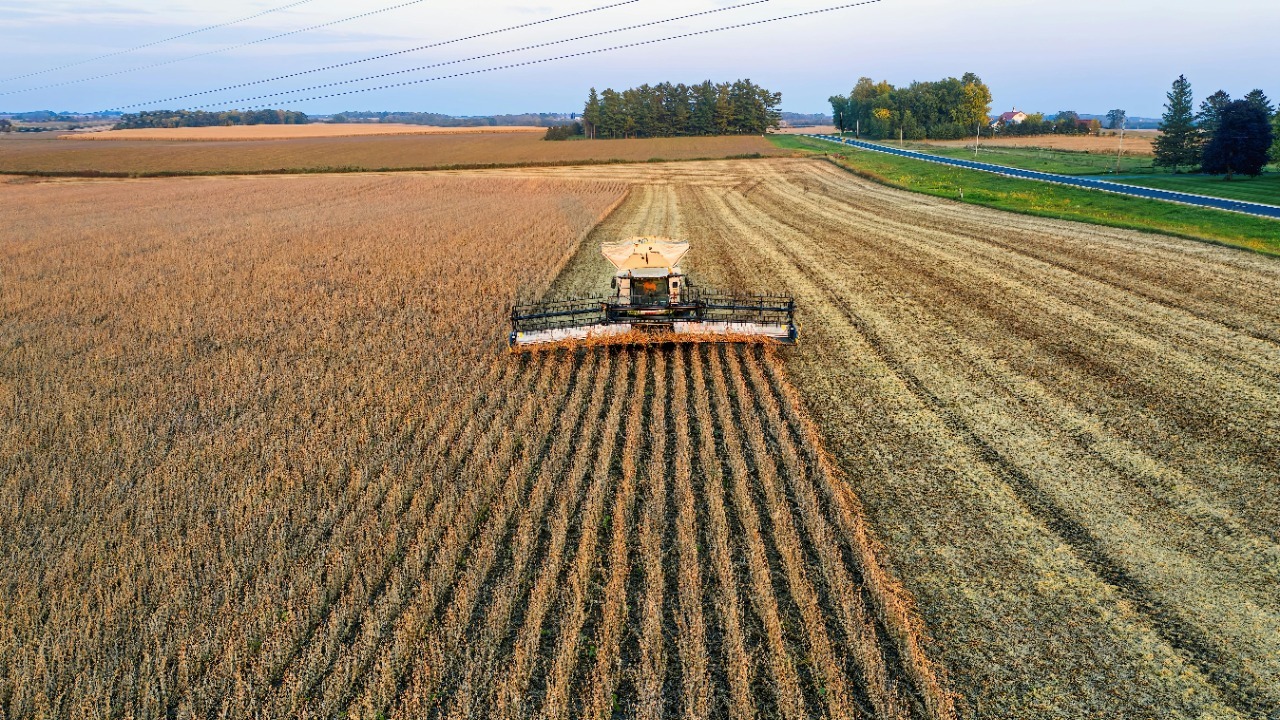
The United States is heading into a new growing season with its farm belt under mounting strain, as higher costs collide with weaker margins and shrinking payrolls. Behind the familiar images of combines and grain bins, balance sheets are fraying, rural jobs are disappearing and lenders are growing more cautious about keeping producers afloat.
What looks from a distance like a cyclical downturn is, up close, a grinding squeeze that is forcing some operators out of business and pushing others to slash investment and labor. The result is a farm economy that still feeds the world but is increasingly fragile at home.
Margins vanish as input costs stay stubbornly high
At the center of the stress is a simple equation: the cost of putting a crop in the ground has climbed faster than the price farmers receive when they haul it to the elevator. Analysts tracking the sector describe a widening gap between revenue and expenses as production costs, especially fertilizer, remain elevated for another year of punishing input bills, a trend underscored in recent farm data. For row-crop producers in particular, that means planting decisions are increasingly about limiting losses rather than chasing profits.
Those pressures are expected to persist into the new season, with forecasts that production costs will stay high even as grain prices soften. A separate outlook notes that production costs, particularly fertilizer, are set to remain elevated for yet another year, locking in a cost structure that leaves little room for error. For farmers who already burned through cash reserves during previous tough seasons, that is a dangerous starting point.
Fertilizer, interest and the anatomy of an “unprofitable crop”
When I talk to producers, the conversation quickly turns to the line items they cannot escape. Fertilizer prices are projected to range from 10 to 15 percent higher than last year, a jump that will be difficult to offset with incremental efficiency gains, according to a 2026 outlook. Even with some easing in interest rates, the cost of servicing debt taken on during the last run-up in borrowing costs continues to eat into working capital.
That combination has turned what used to be a marginally profitable enterprise into what federal officials now bluntly describe as an Unprofitable Crop for many row-crop farmers. The U.S. Department of Agriculture has warned that lower commodity prices, layered on top of elevated input costs, will keep margins thin or negative for a significant share of producers, a view echoed in other Department of Agriculture assessments.
Bankruptcies, denied loans and disappearing jobs
The financial strain is no longer theoretical, it is showing up in court dockets and bank offices. Farm bankruptcies are rising, with Chapter 12 filings up nearly 36 percent as more operations run out of options. For some operators, particularly row-crop farmers, time has already run out, with U.S. court records showing 293 farmers or farm operations seeking protection, a figure that, while still a tiny portion of U.S. producers, signals deep stress at the margins.
Lenders are responding by tightening the spigot. More farmers are being denied operating loans as banks brace for potential defaults, a shift that is documented in recent loan data. The ripple effects extend beyond the farm gate, with job cuts spreading through equipment dealerships, grain handlers and rural service businesses that depend on farm spending, a pattern described in more detail in regional reports.
“Astronomically high” inputs and the human toll across the farm belt
Across the U.S. farm belt, the numbers translate into hard choices about labor and investment. One veteran reporter described how the story of rising costs and vanishing jobs “sat heavy” while documenting families under pressure, noting that the strain is visible Across the region. That sentiment is echoed in a separate Huffstutter post that underscores how quickly a run of bad years can erode generational businesses.
Producers themselves are blunt about what they are facing. “The inputs are going to be astronomically high,” American Soybean Association president Scott Metzger warned, adding that it is going to cost more to grow crops in the United States than in rival grain producing countries. That assessment, repeated in another American Soybean Association account, captures the competitive disadvantage that high domestic input costs can create, especially when global markets are already saturated.
Trade uncertainty, cautious optimism and what comes next
Layered on top of the cost squeeze is a murky outlook for trade and prices. Farmers heading into 2026 are confronting uncertain export demand and volatile crop prices, even as beef remains a rare bright spot in the protein sector, according to trade coverage. Many producers are entering this season expecting a belt tightening period, a view reinforced in additional Farmers interviews that highlight how cautious the mood has become.
Yet there are glimmers of guarded optimism from analysts who see the possibility of a floor under the downturn. A survey of specialists suggests the Farm Economy could Stabilize this year, with fewer experts expecting conditions to worsen further, a point highlighted by Tyne Morgan. That does not erase the damage already done, but it suggests that if input costs ease and trade flows hold, the cracks in the farm economy might stop widening, even if they do not quickly close.
More From TheDailyOverview

Silas Redman writes about the structure of modern banking, financial regulations, and the rules that govern money movement. His work examines how institutions, policies, and compliance frameworks affect individuals and businesses alike. At The Daily Overview, Silas aims to help readers better understand the systems operating behind everyday financial decisions.

