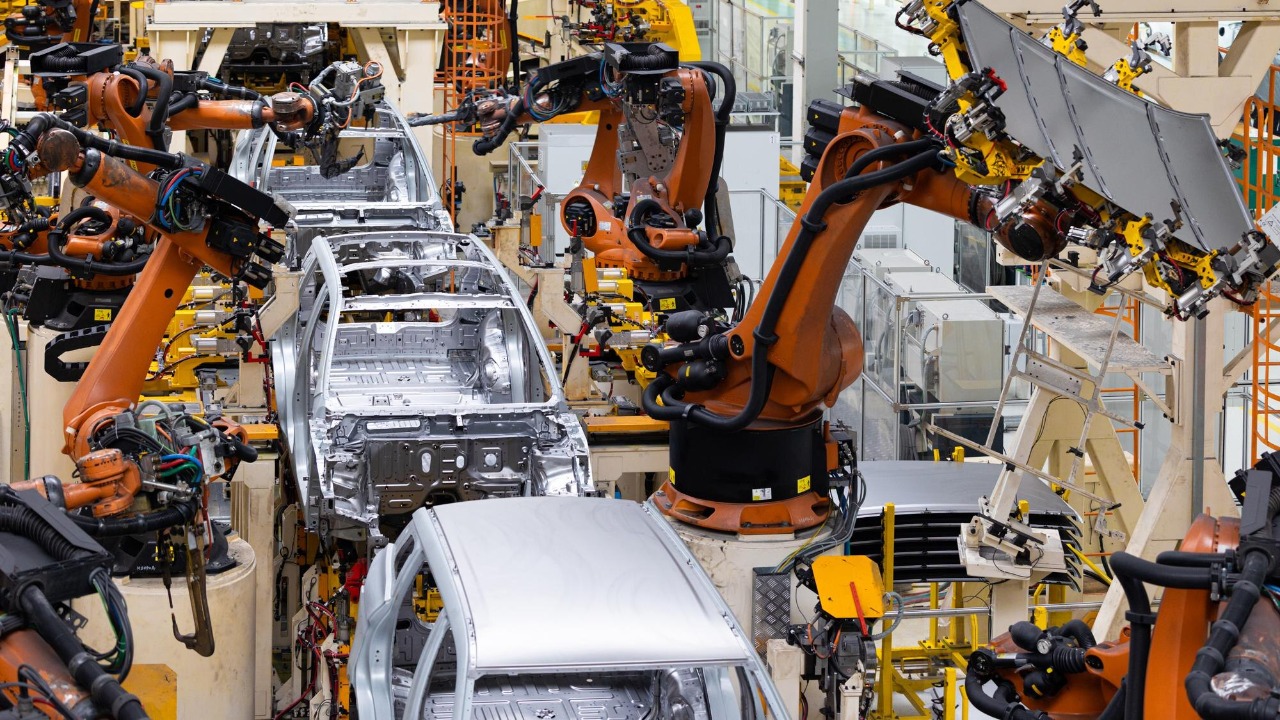
U.S. factories ended the autumn on a weaker footing, with fresh data showing that the manufacturing downturn intensified in Nov as new orders, production and sentiment all slipped further into contraction territory. The slump, now deeply entrenched, is rippling through supply chains that stretch from Midwestern metal shops to coastal electronics plants, raising new questions about how long the broader economy can keep expanding while its industrial core is under strain.
Instead of stabilizing, the sector’s key gauges deteriorated again, pointing to a climate of tariff uncertainty, rising input costs and cautious customers that is weighing on investment and hiring plans. I see a picture of an industrial base still adjusting to shifting trade rules and higher borrowing costs, with little sign yet that the worst of the slowdown is behind it.
Factory gauges flash deeper contraction
The clearest signal that the slump has deepened is the behavior of the main purchasing manager indexes that track factory activity. The ISM, formally The ISM, reported that its headline manufacturing PMI fell to 48.2 in Nov, down from 48.7 in October, keeping the index below the neutral threshold of 50 that separates expansion from contraction. A separate reading from ISM’s Manufac survey shows the U.S. manufacturing sector shrinking for the ninth consecutive month in Nov, underscoring how persistent the weakness has become even as other parts of the economy hold up. I read those figures as evidence that factories are not just slowing, they are stuck in a prolonged downturn that is proving harder to shake than many executives expected earlier this year.
Behind the headline numbers, the details are equally sobering. Measures of new orders, production and employment all point to a sector that is still losing momentum, with the ISM’s Manufac data highlighting that the contraction has now stretched across most major subsectors. According to one summary of the latest survey, the U.S. manufacturing sector saw its ninth straight month of contraction in Nov, even as some components like supplier deliveries and inventories showed modest improvement, and the overall index of manufacturing sentiment grew 3.5 points to 48.9 percent, a level that still signals contraction but at a slightly slower pace, as reflected in the ISM data. When I line up those readings with anecdotal reports from factory managers, the throughline is clear: demand is softer, backlogs are thinner and hiring plans are being trimmed rather than expanded.
Tariff uncertainty and rising costs squeeze demand
Policy uncertainty is amplifying the cyclical slowdown. Manufacturers are still grappling with shifting trade rules and higher input prices that make it harder to plan capital spending or lock in long term contracts. Reporting on the latest factory surveys notes that Tariff Uncertainty and Rising Costs Pressure Factory Demand, with executives citing both the direct impact of higher import duties and the indirect drag from customers delaying orders while they wait for clarity on future trade policy, a dynamic captured in the latest Key Takeaways. I hear the same refrain in conversations with plant managers who say they are reluctant to commit to new equipment when they cannot be sure what their materials will cost six months from now.
President Trump has defended the tariffs as necessary to protect domestic manufacturing, arguing that short term pain is a price worth paying to rebuild industrial capacity at home. Economists, however, have warned that the current mix of duties and retaliation is imposing an immediate tax on factories that rely on imported components, while also inviting trading partners to target U.S. exports in politically sensitive sectors. That tension is evident in the latest data, where factory activity in Nov weakened again even as the administration maintains that its trade strategy will ultimately benefit producers, a contrast highlighted in coverage of how Trump has framed the tariffs. From my vantage point, the numbers suggest that whatever long term gains may come from reshoring, the near term effect of tariff uncertainty and rising costs is to chill demand rather than spark a manufacturing renaissance.
Surveys show broad weakness, not a collapse
Even as the ISM indexes point to contraction, the broader survey landscape paints a more nuanced picture of the industrial economy. Economic analysts tracking multiple gauges note that the picture remains mixed: S&P Global’s U.S. Manufacturing PMI BEAT expectations in Nov but still dipped compared with earlier in the year, signaling that conditions are weak rather than catastrophic. I interpret that divergence as a sign that some export oriented and high tech manufacturers are holding up better than commodity producers, even as both groups report pressure on margins and hiring.
Other sentiment indicators echo that cautious tone. Manufacturing sentiment worsened in Nov according to New data from the Institute of Supply Management, which is flashing a fresh warning about a deeper slowdown in factory activity and investment, as summarized by a Sr. Editor at LinkedIn News who tracks industrial trends for a broad professional audience, a perspective captured in the latest Editor briefing. At the same time, consumer confidence in Nov dropped and financial markets have scaled back expectations of aggressive rate hikes next year, developments that could eventually ease pressure on interest sensitive sectors but have not yet translated into a rebound in factory orders, as reflected in the way But the latest surveys describe the outlook. From where I sit, that combination of weak but not collapsing indicators suggests a grinding slowdown rather than a sudden cliff, which can be just as painful for companies that have to manage costs quarter after quarter.
Sector by sector, the pain is uneven
Behind the national averages, the slump is playing out very differently across industries and regions. Some of the hardest hit segments are those most exposed to global trade and capital spending cycles, such as makers of electrical equipment, appliances and industrial machinery that depend on large corporate and infrastructure projects. The ISM’s breakdown of its PMI components shows that categories tied to export orders and long lived goods have been under particular strain, a pattern that aligns with reports that electrical equipment, appliances and related products are feeling the brunt of weaker global demand and increased global uncertainty, as highlighted in the latest PMI commentary. When I talk to executives in those sectors, they describe a pipeline of projects that is still active but increasingly delayed, with customers stretching out timelines and renegotiating terms.
Other corners of manufacturing are faring somewhat better, though they are hardly booming. Auto plants building high demand models like hybrid versions of the Ford F-150 and Toyota RAV4 report steadier orders, helped by consumers who still have jobs and access to credit, even if they are more price sensitive than they were a year ago. On the manufacturing front, the past year has been a tough one for this economic sector as a whole, and Various measurements of industrial output, capacity utilization and freight volumes have been pointing toward a less than favorable environment, according to an On the sector forecast. I see that unevenness as a reminder that while headline indexes are useful, the lived reality of the slump depends heavily on what a factory makes and where it sells.
What the slump means for jobs and the broader economy
The deepening downturn in manufacturing is not yet dragging the entire economy into recession, but it is reshaping the labor market and investment climate in ways that matter beyond the factory floor. New data from the Institute of Supply Management and other surveys indicate that job growth has increased significantly in services even as manufacturing sentiment worsened in Nov, suggesting that employers are still hiring in areas like health care, logistics and software while trimming or freezing headcount in plants, a contrast highlighted in the Institute of Supply Management focused coverage. From my perspective, that split helps explain why overall unemployment remains low even as communities that depend heavily on factories feel a sharper pinch.
Looking ahead, the key question is whether the industrial slump stabilizes or spills over into broader weakness. Analysts who follow the industrial sector closely argue that if tariffs remain in place and borrowing costs stay elevated, manufacturers will keep deferring capital expenditures, which in turn could weigh on productivity and wage growth over time. At the same time, some forecasters see room for stabilized growth if trade tensions ease and interest rates plateau, pointing to signs that inventories are being worked down and that order books could start to refill once customers regain confidence, a cautiously optimistic view reflected in the latest industrial sector forecast that still acknowledges a less than favorable environment for now, as described in the industrial-sector forecast. Until those conditions shift, I expect factory managers to keep running lean, watching every new order and every policy headline for hints that the worst of the slump in Nov and beyond is finally starting to lift.
More From TheDailyOverview
- Tennessee loses $2.6B megafactory and faces major layoffs
- Retired But Want To Work? Try These 18 Jobs for Seniors That Pay Weekly
- What to do with your pennies after the U.S. stops minting them
- Home Depot CEO warns of a troubling customer trend in stores

Grant Mercer covers market dynamics, business trends, and the economic forces driving growth across industries. His analysis connects macro movements with real-world implications for investors, entrepreneurs, and professionals. Through his work at The Daily Overview, Grant helps readers understand how markets function and where opportunities may emerge.

