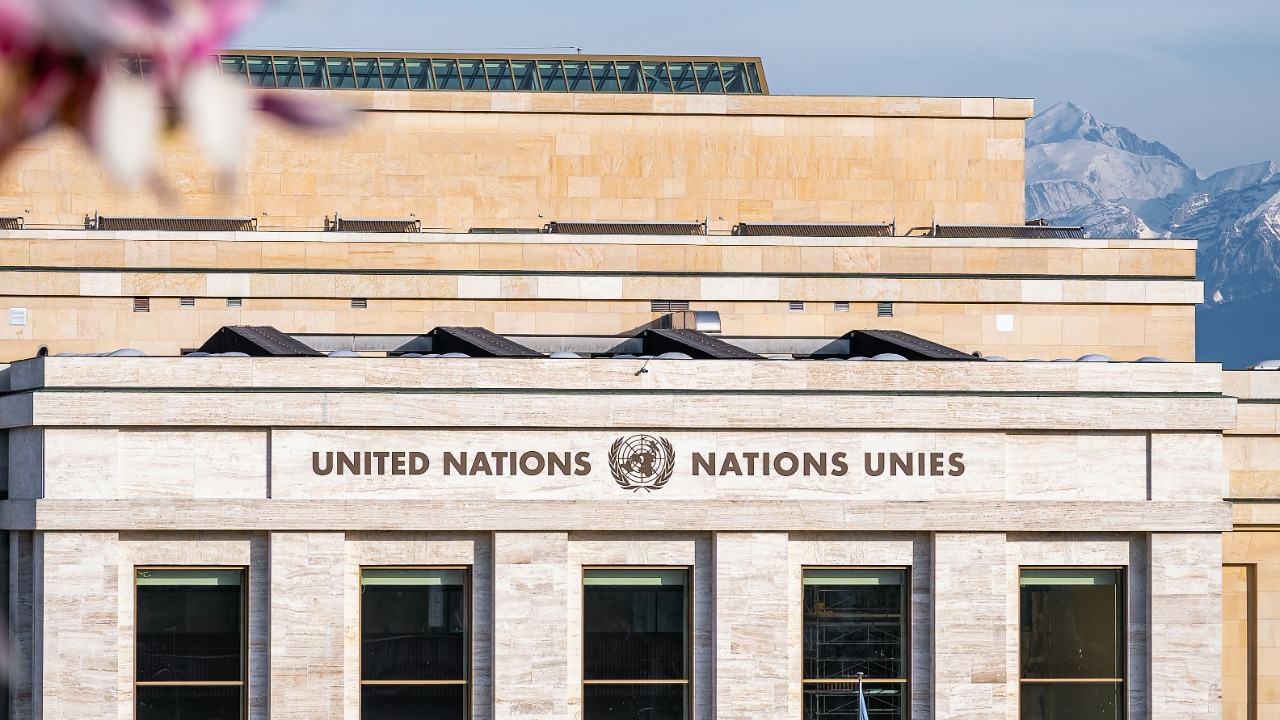
The United States is preparing to send a large new wave of taxpayer money to the United Nations, reversing a period of withheld dues and deep cuts that pushed the world body toward a budget crisis. The move will not only start chipping away at arrears that run into the billions, it will also lock in fresh annual payments that shape how American power is projected abroad.
At stake is more than a bookkeeping fix. The decision to restart substantial transfers to New York and Geneva will determine whether Washington uses its leverage to reshape the United Nations or simply stabilizes an institution that has been warning of fiscal collapse while still depending heavily on U.S. cash.
The scale of what Washington owes
For all the political heat around foreign aid, the basic math is stark: more than 95% of what is owed to the regular U.N. budget is owed by the United States, a backlog put at $2.19 billion. U.N. officials have warned that this shortfall has forced the organization to raid reserves, delay reimbursements to troop contributors, and slow hiring across its network of missions and agencies. Earlier this year, the U.N. secretary general went further, saying the global body was at risk of fiscal collapse because The United States owed nearly $2.2 billion in overdue and current assessments at the beginning of the year.
The arrears are only part of the picture. On top of the regular budget debt, the U.S. also owes another $2.4 billion for current and past peacekeeping missions and $43.6 m for international tribunals, a figure also listed as $43.6 million. When I add those obligations to the regular budget arrears, it becomes clear that Washington’s unpaid tab is not a rounding error but a structural strain on an institution that still relies on the United States as its single largest financial backer.
The initial “down payment” and what it covers
Against that backdrop, the administration is now preparing an initial transfer that officials describe as a significant down payment on what is owed. U.S. Ambassador to the United Nations Mike Waltz has said You will “certainly see an initial tranche of money very shortly,” calling it a substantial step toward meeting annual obligations and clearing arrears, a message he has repeated in multiple public appearances. In one interview, Waltz framed the move as a “significant … down payment on our annual” commitments, signaling that the White House wants to show momentum even if the first check only covers a fraction of the total debt, a stance reflected in his comments quoted in Waltz said.
The money will be drawn from a broader spending package that President Trump has already signed, which includes $3.1 billion for U.S. dues to the U.N. and other international organizations. Waltz has said You will see that first tranche in a matter of weeks, describing it as both a financial and political signal that Washington is reengaging with the institution after a period of cuts and withheld payments, a point underscored in his remarks cited in Waltz.
How Congress unlocked the money
The shift is rooted in a broader change on Capitol Hill. After a year in which foreign aid was sharply reduced, Congress has now passed a $50 billion foreign aid bill that restores funding for a wide range of international programs, from security assistance to Egypt, Israel and Taiwan to contributions for multilateral institutions. That package sits alongside a separate global health measure worth $9.42 billion, which the House and Senate agreed to and the President signed into law, even though it is lower than the $12.4 originally proposed for those programs.
Within that broader spending landscape, the fiscal year 2026 State, Foreign Operations, and Related Programs bill, often referred to as SFOPS, invests $46.2 billion in accounts that cover everything from embassy security to contributions to international organizations. A companion summary for National Security, Department of State, and Related Programs shows how lawmakers have tried to balance domestic priorities with overseas commitments, including the line items that will finance the new U.N. payments, as laid out in the document on National Security.
From cuts and threats to conditional engagement
The new money comes after a period of sharp retrenchment. Earlier this year, reporting showed that The United States was cutting its contributions to U.N. humanitarian programs, leaving gaps in aid operations that respond to conflicts and disasters worldwide and prompting warnings that such reductions could “undermine American interests and values,” a concern detailed in a UPI account. Those cuts followed an earlier decision by Trump to slash funding and warn U.N. agencies to “adapt, shrink or die,” even as the U.S. pledged $2 billion for U.N. humanitarian aid to maintain its status as the world’s largest humanitarian donor, a dual message captured in a PBS report.
That mix of pressure and partial support has now evolved into what looks like conditional engagement. Waltz has tied the new payments to expectations of reform, saying the Congressional spending bill reflects both a recognition of the U.N.’s importance and a demand for changes in how it operates, a theme that appears in his comments quoted in progress on reforms. In practice, that means Washington is not simply turning the taps back on, it is trying to use the promise of billions in taxpayer cash to push for budget discipline, more transparency, and a sharper focus on core security and humanitarian mandates.
Why the U.N. still depends on U.S. money
Even after years of tension, the structural dependence runs both ways. The United Nations remains the world’s principal forum for deliberating on peace and security, and its fiscal architecture still leans heavily on a handful of major contributors, with The United Nations’ own budget documents showing how assessed and voluntary contributions from wealthy states underpin everything from peacekeeping to development programs, a pattern analyzed in a CFR overview. The United States, as the largest single contributor, has long used that position to argue for management reforms and to resist automatic increases in its share of the bill.
At the same time, Washington’s own foreign policy toolkit is built around institutions that it helped design and still largely funds. The foreign aid bill that restored Foreign assistance after Trump’s earlier cuts was justified in part on the argument that the U.S. is stronger on the world stage when it invests in alliances and multilateral bodies. From that vantage point, paying down U.N. arrears is less about charity and more about maintaining influence in an institution where rivals like China and Russia are eager to fill any vacuum left by American retrenchment.
How the money fits into the wider U.S. budget
For taxpayers, the obvious question is how these billions fit into the broader federal ledger. The SFOPS allocation of $46.2 billion for State, Foreign Operations, and Related Programs is a small slice of overall U.S. spending, but within that slice, contributions to the U.N. compete with bilateral aid, security assistance, and development finance. The separate $9.42 billion global health package, for example, will fund programs on HIV, tuberculosis, and pandemic preparedness, some of which are channeled through U.N. agencies and some through independent initiatives like the Global Fund and Gavi.
Those choices are made in a political climate where skepticism of multilateral spending remains strong. Trump’s earlier push to cut foreign aid, documented in coverage of his 2025 budget moves, still shapes debates inside Congress, even as lawmakers have now approved a $50 billion package that restores much of what was lost. In that sense, the decision to send billions to the U.N. is part of a broader recalibration of how much the United States is willing to spend to shape the international order it helped build.
What comes next for U.S.–U.N. relations
Looking ahead, the key question is whether this initial payment marks a sustained shift or a one off gesture. Waltz, who as Ambassador is at the center of these negotiations, has suggested that the administration wants to move quickly, with his office indicating that You will see a first transfer within weeks and that the goal is to put U.S. funding back on a more predictable footing, a timeline echoed in coverage that notes the payment could arrive by the start of Feb, as referenced in Published Sun. U.N. officials, for their part, have signaled that even a partial payment would ease immediate cash flow pressures, allowing them to keep peacekeeping missions and humanitarian operations running without resorting to emergency measures.
Yet the underlying tensions are not going away. The United States will continue to press for reforms, from budget discipline to changes in how peacekeeping costs are shared, while domestic critics will question why billions are being sent abroad when needs at home remain acute. For an administration that has alternated between slashing and restoring foreign aid, the decision to make a substantial payment toward U.N. arrears is a reminder that, despite the rhetoric, the United States still sees value in underwriting a global system it can influence, even as it demands that system change.
More From The Daily Overview
*This article was researched with the help of AI, with human editors creating the final content.

Grant Mercer covers market dynamics, business trends, and the economic forces driving growth across industries. His analysis connects macro movements with real-world implications for investors, entrepreneurs, and professionals. Through his work at The Daily Overview, Grant helps readers understand how markets function and where opportunities may emerge.

