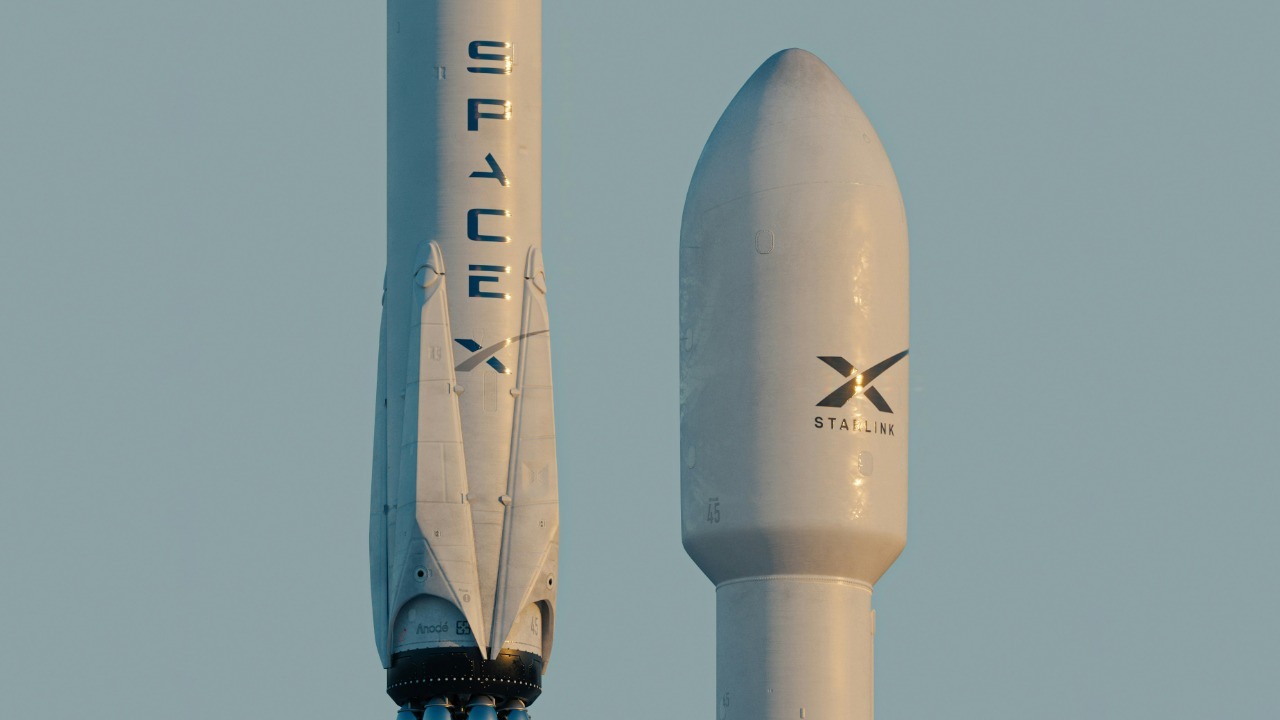
Wall Street is about to confront a merger so large and so unusual that it will effectively test whether public markets are ready to bankroll a vision of space-based internet fused with frontier artificial intelligence. By folding his rocket company into his AI startup at a valuation of $1.25 trillion, Elon Musk is turning Starlink’s orbital broadband network and xAI’s computing ambitions into a single, high-stakes bet on infrastructure in space. The coming IPO will not just price a company, it will reveal how much investors truly believe in a future where global connectivity and AI power are beamed down from orbit.
The biggest merger ever, built around a space internet pitch
At the core of this story is scale. According to deal documents, Musk has combined his rocket business with his AI venture into a single entity valued at $1.25 trillion, instantly creating one of the most valuable private companies on the planet. The transaction is framed as a merger of xAI into SpaceX, but in practice it is a consolidation of launch, satellites, and artificial intelligence into a single platform that Musk and his bankers hope public markets will treat as a new kind of infrastructure giant. The figure is eye-catching not only because of its size, but because it implies investors are being asked to underwrite a future where orbital networks and AI data centers are tightly coupled.
The strategic logic Musk is selling is that the same company that builds rockets and operates Starlink can also deploy AI-optimized data centers and solar-powered satellites in orbit, creating a vertically integrated “space internet” backbone. Earlier reporting on the acquisition notes that Musk has been pursuing plans to put datacenters and solar-powered satellites in space as a way to power artificial intelligence workloads, arguing that Earth-based infrastructure will eventually hit physical and regulatory limits. The combined company is therefore being positioned less as a traditional aerospace contractor and more as a critical utility for bandwidth and compute, with Starlink’s constellation and xAI’s models serving as the proof of concept.
Starlink’s numbers and the IPO math behind the mega-merger
For all the talk of planetary-scale ambition, the valuation ultimately rests on cash flows, and here Starlink is doing much of the heavy lifting. Analysts have pointed out that the satellite broadband unit already generates the bulk of the rocket company’s revenue, with estimates that Starlink brought in around $10.4 billion and could eventually reach $22 billion in annual profit as the network matures. Those figures, cited in a breakdown of why the 2026 IPO is “actually all about Starlink,” help explain why Musk is comfortable asking public investors to pay a premium multiple for a business that still spends heavily on launches and hardware.
On the capital markets side, bankers are already sketching out what a flotation might look like. One report describes plans for a 2026 listing that could raise $30 billion at a valuation around $1.5 trillion, which would instantly rank among the largest IPOs in history. Another analysis of the company’s prospects notes that the strength of Starlink direct-to-mobile ambitions, combined with progress on the Starship launch system, are seen as central drivers behind that lofty price tag. In other words, the merger is being structured so that when the company finally lists, investors are effectively buying a high-growth telecom and data infrastructure play, not just a rocket factory.
Wall Street’s early read: enthusiasm, skepticism, and a bailout narrative
Even before a prospectus hits regulators’ desks, the Street is already split on what this combination really represents. Some see it as a bold attempt to create a new kind of tech conglomerate, with one analysis arguing that Elon Musk Is by bundling together businesses that, on the surface, have little in common. The pitch is that launch, satellites, and AI are all capital-intensive, long-horizon bets that benefit from being financed and governed under one roof, rather than forced to compete for attention as separate tickers. If investors buy that logic, the merged entity could command a valuation premium similar to the one markets have historically granted to dominant platform companies.
Others, however, frame the deal as a rescue mission for a struggling AI startup. A detailed breakdown of the finances describes how the merger Merger Provides Lifeline, Debt, Ridden AI Startup, with much of xAI’s funding effectively coming from Musk’s other businesses. A separate video analysis goes further, arguing that Musk’s decision to merge SpaceX with xAI is a “mega-bailout” worth $1 trillion or more, designed to shore up a debt-laden AI venture by wrapping it inside a more profitable rocket and satellite operation. In that telling, public investors are being asked to absorb not only the upside of orbital internet and AI, but also the financial risk of a startup that might otherwise struggle to raise capital on its own.
How the merger reshapes the Starlink and xAI business model
Strategically, the combination is meant to do more than tidy up a balance sheet. SpaceX’s acquisition of xAI creates a business worth $1.25, according to one detailed examination of the deal, and that same analysis questions whether the premise behind the merger will work in practice. The argument from supporters is that by unifying launch, satellites, and AI, Musk can deploy orbital infrastructure that is tightly optimized for machine learning workloads, from custom chips in satellites to in-space data processing that reduces latency for users on the ground. Critics counter that integrating such different engineering cultures and product roadmaps could slow execution at precisely the moment competitors are accelerating.
The company itself has framed the move in almost civilizational terms. In an announcement describing how xAI joins SpaceX to Accelerate Humanity’s Future, executives argued that AI development is being bottlenecked on Earth by power constraints and regulatory friction, and that moving parts of the stack into orbit could unlock new capabilities. That vision dovetails with Musk’s long-standing emphasis on multi-planetary infrastructure, but it also raises practical questions about cost, reliability, and governance. If Starlink’s satellites become not just internet relays but also AI compute nodes, the merged company will be operating something closer to a global utility, with all the regulatory and geopolitical scrutiny that implies.
Wall Street banks, investor appetite, and the coming stress test
Behind the scenes, the machinery of a blockbuster listing is already grinding into motion. Reporting indicates that SpaceX has lined up four major Wall Street banks for a potential IPO, even as Musk has stopped short of filing formal paperwork. Investor Chamath Palihapitiya has suggested that a combination of SpaceX and xAI with Tes could emerge in the future, hinting at an even larger conglomerate structure that would further test market tolerance for complexity. For now, though, the focus is on how the merged rocket and AI company will be valued on its own, and whether traditional equity investors are prepared to underwrite multi-decade infrastructure projects in orbit.
Early signals suggest there will be no shortage of demand. One investment Adviser Colleen McHugh has already predicted huge investor interest in the flotation, pointing to pent-up appetite for exposure to the private space sector after a year when many high-growth tech names stayed on the sidelines. Markets will soon test a Musk merger that promises “space-based internet,” and the outcome will signal whether investors see this as the next logical step in the evolution of telecom and cloud computing, or as a bridge too far in terms of technological and execution risk. The bookbuilding process, when it comes, will be the real stress test of how much faith Wall Street has in Musk’s ability to deliver on timelines that stretch well beyond a typical earnings cycle.
Public perception, planetary symbolism, and political context
Outside the spreadsheets, the merger has been wrapped in a layer of symbolism that Musk’s supporters and critics both seize on. One widely shared commentary noted that the deal was timed around Musk’s birthday and a rare planetary alignment involving Jupiter, Venus and Mercury, a flourish that The Week UK described as part of the “starry” narrative around the transaction. Another analysis by Dan Milmo Glob highlighted how the merger creates a business worth $1.25 while questioning whether the underlying thesis, that AI and rockets belong under one corporate roof, will stand up to competitive and regulatory pressure. These narratives matter because they shape how retail investors and policymakers interpret the deal: as visionary, hubristic, or some mix of both.
The political backdrop is equally important. As president, Donald Trump has repeatedly championed American dominance in space and advanced technology, and any listing of a combined rocket and AI champion will unfold in a Washington environment that is both supportive of domestic space leadership and increasingly wary of concentrated power in tech. Musk’s companies already operate at the intersection of national security, infrastructure, and online speech, and the merged entity will deepen that entanglement. The company’s official materials, including the main SpaceX site, emphasize missions like Mars colonization and global connectivity, but regulators will be just as focused on terrestrial issues such as spectrum allocation, competition with terrestrial ISPs, and the resilience of critical communications networks in crises.
What the stress test means for space, AI, and everything in between
When markets finally get their chance to price this mega-merger, they will be evaluating more than a single company. The deal is a referendum on whether investors believe that the next wave of internet and AI infrastructure will be built in orbit, and whether they trust Musk to manage a conglomerate that spans rockets, satellites, and machine learning. A short video analysis of the merger argues that there is a “crazy arms race” in AI spending that has “completely financialized” the sector, with participants racing to raise ever larger sums just to stay in the game. That perspective, captured in a longer discussion of why Feb has become a flashpoint for Musk’s latest moves, suggests that the merger is as much about securing access to capital as it is about engineering synergies.
At the same time, the physical reality of the project is hard to ignore. The combined company’s hardware is not an abstraction; it consists of launch pads, factories, and a growing constellation of satellites that can be tracked from Earth. Public tools that visualize orbital infrastructure, such as space mapping services, make clear just how quickly Starlink has filled low Earth orbit with hardware. As the merger folds xAI into that footprint, the question for Wall Street is whether it is willing to finance not just more satellites, but an entirely new layer of AI-enabled infrastructure in the sky. The answer, revealed in the pricing and performance of the eventual IPO, will shape how aggressively other companies pursue similar combinations of space and artificial intelligence in the years ahead.
More From The Daily Overview
*This article was researched with the help of AI, with human editors creating the final content.

Grant Mercer covers market dynamics, business trends, and the economic forces driving growth across industries. His analysis connects macro movements with real-world implications for investors, entrepreneurs, and professionals. Through his work at The Daily Overview, Grant helps readers understand how markets function and where opportunities may emerge.