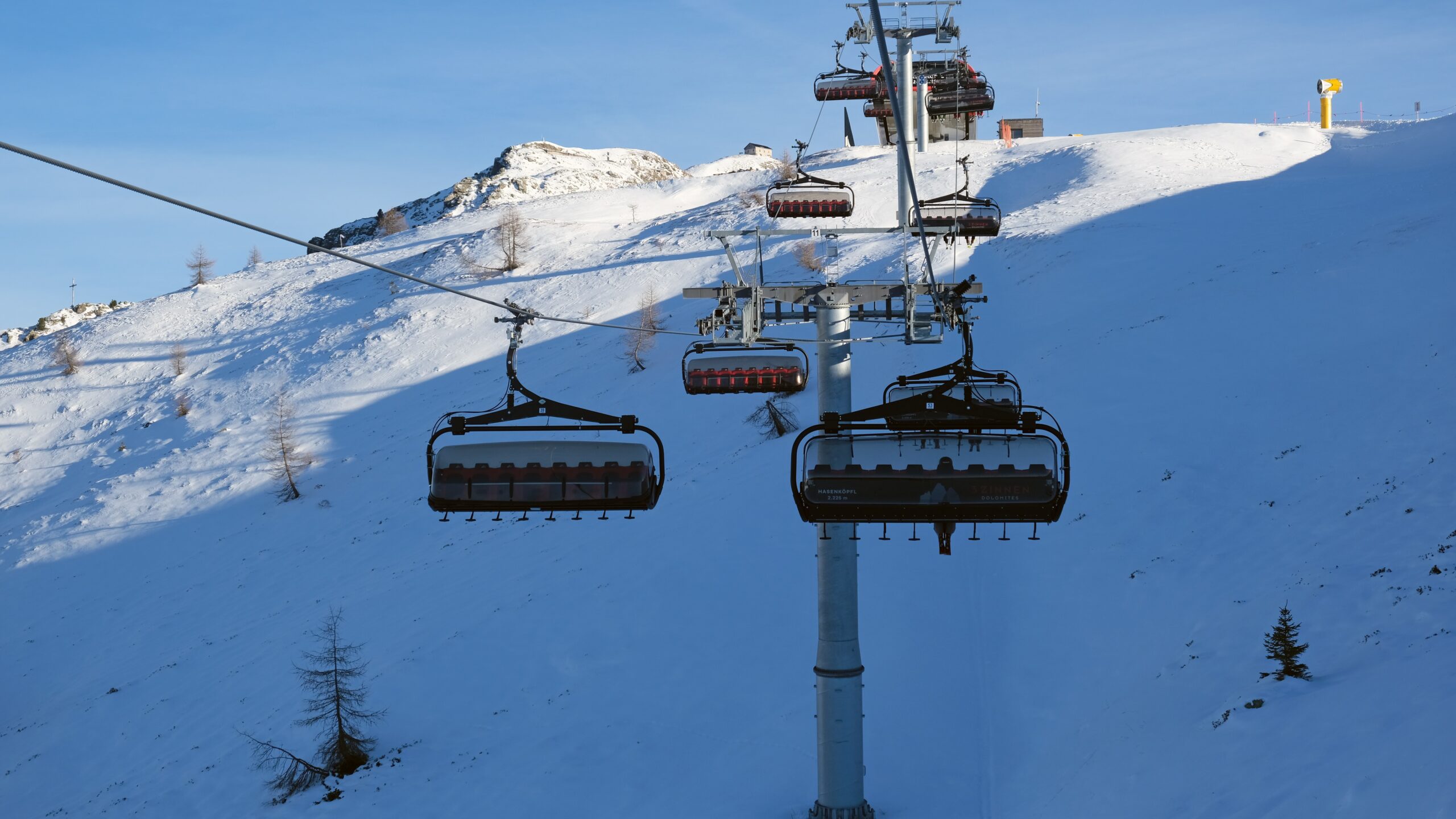
Across the American West, the winter economy that depends on deep snow and reliable cold is buckling under a season that looks more like late March than midwinter. From Colorado to New England, resort operators and small shop owners describe a brutal crunch in which lifts sit idle, hotel rooms go empty, and the bills for snowmaking and staffing keep coming.
The alarm from ski country is not just about a bad year, it is about a pattern that is starting to look structural. As low snowpack, warm temperatures, and erratic storms reshape the season, businesses up and down the mountain say the hit to revenue is “across the board” and getting harder to absorb.
The winter that never really arrived
The current crisis began with a snow deficit that never quite closed. What should have been a crucial early base-building period started with mountain snowpack at just 45% of normal levels on Thanksgiving 2025, a figure that only improved to 57% by January 2026. That shortfall left many runs thin or closed at a time when resorts typically rely on holiday crowds to anchor their balance sheets for the rest of the season.
In COLORADO, USA, the thin coverage has been compounded by persistent warmth, with local reports describing an “unusually warm and dry winter” that has pushed visitor numbers down and forced operators to scale back terrain and events, a trend that has rippled through lodging, restaurants, and shops that rent winter gear or sell lift-adjacent services to skiers and snowboarders who never arrived in expected numbers COLORADO, USA. Earlier in the season, operators across the country were already warning of a “Really rough start” to winter as bare slopes and rain replaced the usual December powder that typically sets up the rest of the year’s bookings Really.
From Vail to Loveland, numbers that rattle the industry
The financial fallout is showing up starkly in the ledgers of both corporate giants and family operations. Vail Resorts has told investors that skier visits and on-mountain spending are sharply lower, with one recent update pointing to a roughly 20% drop in skier visits at its flagship properties, a hit that executives tied directly to the lack of snow and weather disruptions across its network of mountains Vail Resorts. On Tuesday, Vail Mountain itself reported its worst snowpack since it began keeping records in 1978, a benchmark that underscores how far outside historical norms this season has drifted and how difficult it is to maintain the usual menu of terrain and experiences for paying guests Vail Mountain.
The pain is not limited to the biggest brands. As SIEGLER reported, business is down at both family-owned Loveland and the corporate resorts, with Vail acknowledging that skier traffic is off by about 20% and that the shortfall is hitting everything from lift ticket revenue to ski school bookings and on-mountain dining SIEGLER. That slump is mirrored across the region, where one analysis of Colorado’s low snowpack estimated that the state’s winter recreation economy could be down by as much as 30% from a normal season if conditions do not rebound, a scenario that would ripple through tax receipts, seasonal employment, and the viability of smaller hills that lack deep financial reserves 30%.
Small towns and family shops on the front line
For the communities that orbit ski hills, the downturn is not an abstract percentage but a daily cash-flow crisis. In Wheat Ridge, a suburb that has long served Front Range skiers, Larsson Ski and Sports describes itself as a family-owned ski shop that has been in the Wheat Ridge area for about 50 years, and the owners say the lack of snow has left them with racks of unsold gear and far fewer customers coming through the door. That kind of legacy business, built over decades of predictable winters, suddenly finds itself exposed to a climate pattern that no longer guarantees enough cold days to sustain the old model of renting and tuning skis every weekend.
Similar stories are emerging far from the Rockies. In the Upper Midwest, Business owners devastated as unexpected crisis slashes profits describe how “Mother Nature doesn’t help us out” when temperatures swing above freezing and rain washes away carefully made snow, leaving operators who invested heavily in snowmaking with little to show for it and staff they can no longer afford to keep on full schedules Mother Nature. Samantha Hindman, who has chronicled how these swings are changing winter business in Minneapolis, notes that the crisis is “unexpected” only in the sense that operators built their budgets on historical norms that no longer apply, not because the underlying warming trend was invisible Samantha Hindman.
Climate signals and a shrinking season
Scientists and resort managers alike are increasingly blunt about the role of a warming climate in turning what used to be occasional bad winters into a more frequent pattern. Analyses of Colorado’s low snowpack stress that Dry winters are not new, but the scientific consensus is that human-driven warming is making these events more intense and more likely, shortening the average season and increasing the odds that rain will fall where snow once did during key holiday periods Dry. What is happening in the Rockies is mirrored in other mountain regions, where low snowpack is now seen not as a fluke but as part of a broader shift that will test whether traditional ski business models can survive What.
In Colorado’s high country, the town and resort of Crested Butte has become a case study in how marginal snow years strain both the lifts and the local economy, with businesses that depend on a steady stream of visitors suddenly facing long stretches of empty sidewalks. Nearby, other mountain communities that once counted on reliable snowpack are now grappling with the prospect that their identity as winter playgrounds could erode if seasons keep shrinking, a concern echoed in coverage of how low snowpack in Colorado is already reshaping expectations for everything from ski tourism to summer activities like fishing and rafting that depend on healthy runoff low snowpack. Even iconic destinations like Loveland are now part of a broader conversation about whether the traditional November-to-April season can still be taken for granted.
Snowmaking, adaptation, and the limits of technology
Resorts have not stood still in the face of these shifts, but the tools they rely on have limits. Many operators have poured money into snowmaking systems that can cover key runs when natural storms fail, yet those systems depend on cold nights and abundant water, both of which are increasingly constrained in a warming climate. In parts of New England, a prolonged drought and low reservoir levels have already forced some ski areas to cut back on snowmaking because the same water is needed for local communities, a stoppage that analysts warn can have a massive impact on the region’s outdoor recreation industry and the state’s broader economy by reducing visitors and the spending they bring Learn. In the Midwest, operators who leaned heavily on snowmaking now find that warm spells can erase their investment in a single rainy weekend, leaving them with higher power bills and no product to sell Business.
Some resorts are trying to diversify beyond skiing, investing in year-round attractions like mountain biking, alpine coasters, and festivals to smooth out revenue and hedge against unreliable winters. Analysts who track the sector note that the same low snowpack that is hurting ski operations in Colorado is also prompting conversations about summer recreation, since reduced runoff can affect rafting, fishing, and other warm-season draws that mountain towns increasingly depend on to fill the gap left by shorter winters US ski resorts. Yet even as operators experiment with new offerings, the core reality remains that their infrastructure, staffing patterns, and brand identity are built around snow, and a season like this one exposes just how vulnerable that foundation has become.
More From TheDailyOverview
*This article was researched with the help of AI, with human editors creating the final content.

Grant Mercer covers market dynamics, business trends, and the economic forces driving growth across industries. His analysis connects macro movements with real-world implications for investors, entrepreneurs, and professionals. Through his work at The Daily Overview, Grant helps readers understand how markets function and where opportunities may emerge.

