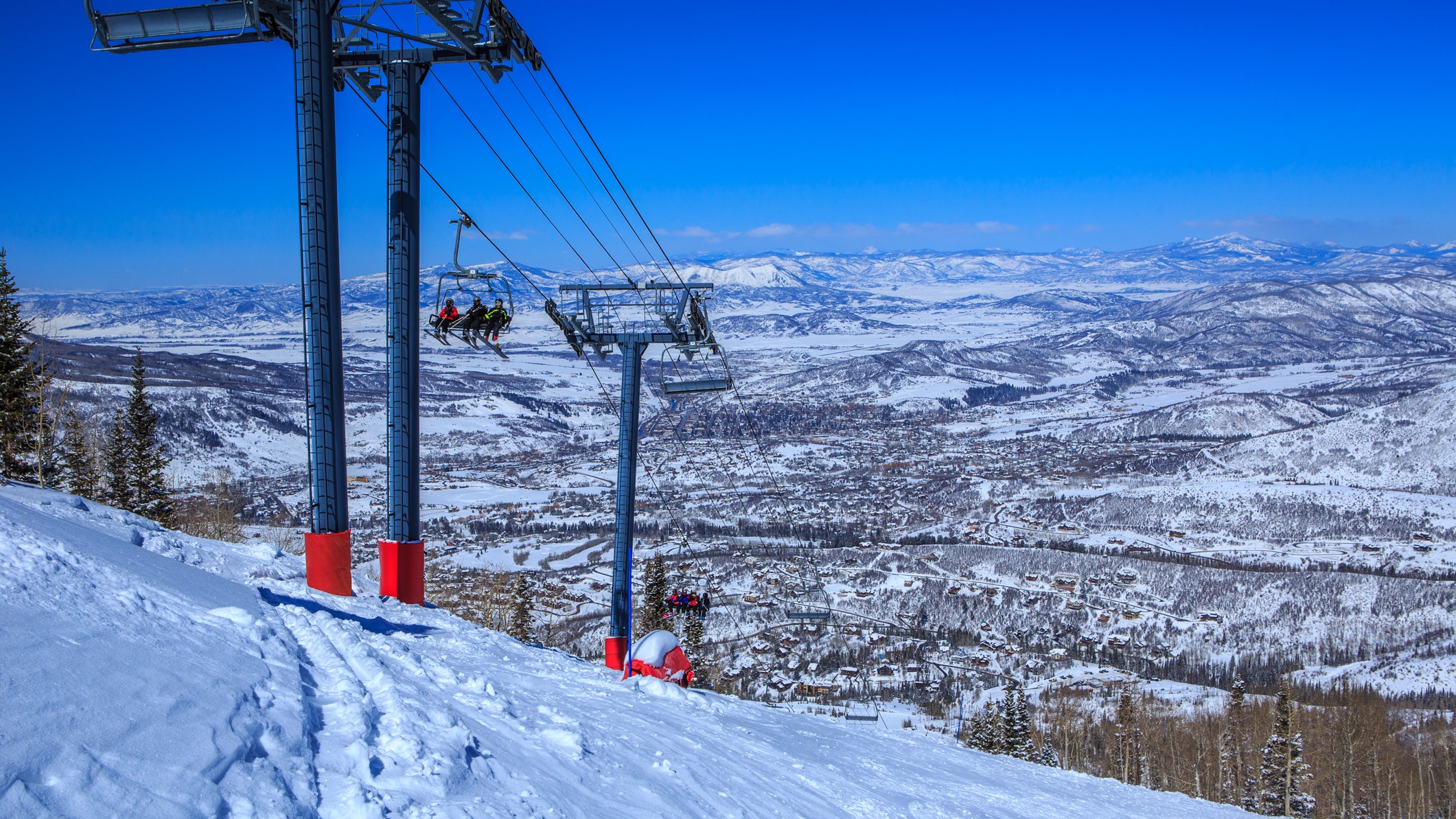
Across the American West, a winter that refuses to arrive is gutting the ski business and emptying slopes that should be packed. Resorts that built their entire model on reliable snow are now confronting a brutal mix of thin coverage, warm temperatures, and skittish visitors. The alarm they are sounding is not just about one bad season, but about whether a cornerstone of the mountain economy can survive in anything like its current form.
From Colorado to Oregon and Utah, operators are reporting some of the weakest conditions in memory, with marquee destinations like Vail Mountain logging record-poor snowpack and major companies warning of steep drops in skier visits. I see a pattern emerging that goes far beyond a slow start to winter, touching everything from local jobs and small retailers to water supplies and the long term viability of snow-based tourism.
Historic snow drought hits marquee resorts
The most visible sign of the crisis is the bare ground where deep powder should be. Earlier this winter, Vail Mountain reported its worst snowpack since it began keeping records in 1978, a stark marker of how far conditions have slipped at one of the country’s flagship ski areas. That shortfall is part of a broader snow drought across the West, where even high elevation terrain that usually holds up in lean years has struggled to open, leaving visitors facing rocks, ice, and closed runs instead of the midwinter coverage they expect from a place like Vail Mountain.
Colorado’s statewide numbers tell the same story. A recent map from the USDA put the state’s snowpack at just 59% of the median, a deficit that has left the 2025–26 ski season limping along. Even when storms do arrive, they have not been enough to reset the baseline. Winter Storm Fern, which finally delivered fresh snow to Colorado’s mountain towns, dropped 23 inches (58 centimetres) in some spots, but researchers noted that the 58 centimetres were not nearly enough to turn around a dry and warm winter that had already put resorts on the back foot.
Visitor numbers plunge as warm weather lingers
Thin snow is only part of the problem; persistent warmth has compounded the damage by eroding what little base exists and undermining confidence among travelers. In Colorado, an abundance of warm weather earlier in the season left many mountains with “less than ideal” conditions, forcing operators to delay openings and scale back terrain. That pattern was serious enough that multiple US ski resorts pushed back their first day of operations, with reports from Colorado describing how early season heat made it impossible to build and hold snow.
The impact on visitation has been immediate. Skier visits at Vail Resorts were down 20% through January 4 compared with the previous year, a drop that executives tied directly to the lack of natural snow and the reluctance of guests to book trips when webcams show brown hillsides. That 20% plunge has been widely cited as a warning sign for the broader industry, with one analysis noting that lift ticket, dining, and ski school revenue at Vail Resorts have all suffered as guests stay home. Company leaders have described visitation as “Below the low end” of expectations, a phrase that has quickly become shorthand for how far this season has fallen short of normal.
Economic pain ripples through mountain towns
When visitors vanish, the damage does not stop at the lift gates. In Oregon, resort operators have warned that more than $200 million is at stake as the snow shortage drags on, with one manager, Rogers, saying they are making roughly half of what they usually earn at this point in the season. That kind of revenue collapse hits seasonal workers first, but it quickly spreads to hotels, restaurants, and gear shops that depend on a steady stream of skiers to survive. In Colorado, a family owned retailer, Larsson Ski and in Wheat Ridge, has described how a slow winter threatens a business that has been serving the community for 50 years, underscoring how deeply these seasons are woven into local economies.
The pain is not limited to the big destination states. Even in places like the Tennessee Valley, where small hills and novelty ski operations rely on brief windows of cold, erratic weather has made it harder to plan staffing and investments. Nationally, analysts tracking the sector have warned that profits at US ski resorts are being squeezed by low levels of snowfall, with some operators raising red flags about how quickly a few bad winters can erode balance sheets. One recent assessment framed the situation as a major crisis for snow based tourism, noting that resorts across the country are watching revenue from lift tickets and ancillary spending slide as conditions stay Below the levels they need to cover costs.
Climate signals and the fight to adapt
Behind the immediate financial shock lies a deeper climate signal that operators can no longer ignore. In Utah, hydrologists and resort managers have pointed to Below average snowfall as both a disruption to the current ski season and a warning about shifting patterns across the state. The NRCS and Brighton Ski representatives have described how expectations of a strong winter have collided with reality, leaving operators to question what future seasons will look like if warming trends continue. In Colorado, scientists emphasize that the state has a semi arid climate where water stored in the snowpack is crucial not only for skiing but also for agriculture, drinking water, fishing, and related river activities, a point underscored in analyses of how Low snow years ripple far beyond the slopes.
Resorts are trying to adapt, but the tools they have are limited. Snowmaking can help bridge short gaps, yet it depends on cold nights that are increasingly scarce and on water supplies that are already under pressure. In Colorado, meteorologists have noted that on top of a dry fall, the state has been unseasonably warm, with Denver logging an average December 2025 air temperature that was 11 degrees Fahrenheit above normal and similar warmth spread across the Colorado mountains. Company leaders like Vail Resorts CEO have told investors that snowfall at the company’s resorts in California, Colorado, Utah, and Washingto has been among the worst in the company’s history, and that the lack of snow has dragged down not only lift ticket sales but also ancillary spending on food, lessons, and rentals.
What a reshaped ski economy could look like
As I look across these reports, it is clear that the ski industry is being forced into a rapid rethink of its business model. Large operators like Vail Resorts still have the financial muscle to ride out a few bad winters, but even they are warning that a 20% drop in skier visits, like the one documented at Vail Mountain in Colorado, cannot become the norm. Smaller hills, which lack diversified revenue streams and deep capital reserves, are even more exposed. Some are experimenting with four season operations built around mountain biking, hiking, and concerts, while others are lobbying for public support on the grounds that they anchor rural economies and provide winter recreation that would otherwise vanish.
There are also hints of geographic reshuffling. As traditional snow belts struggle, colder pockets in the Midwest and Southeast may see brief surges in interest when conditions line up, as happened when skiers flocked to slopes in North Alabama during a cold snap in the Tennessee Valley. Yet those windows are short and unpredictable, and they do little to offset the structural challenges facing the big Western resorts that have long defined American skiing. For now, the industry is caught between hope that late season storms will salvage something from this winter and the growing recognition, echoed in analyses of how US ski resorts are raising red flags about a major crisis, that the era of dependable snow may already be over, leaving operators and communities scrambling to adapt before the next warm, dry season arrives.
More From TheDailyOverview
*This article was researched with the help of AI, with human editors creating the final content.

Elias Broderick specializes in residential and commercial real estate, with a focus on market cycles, property fundamentals, and investment strategy. His writing translates complex housing and development trends into clear insights for both new and experienced investors. At The Daily Overview, Elias explores how real estate fits into long-term wealth planning.

