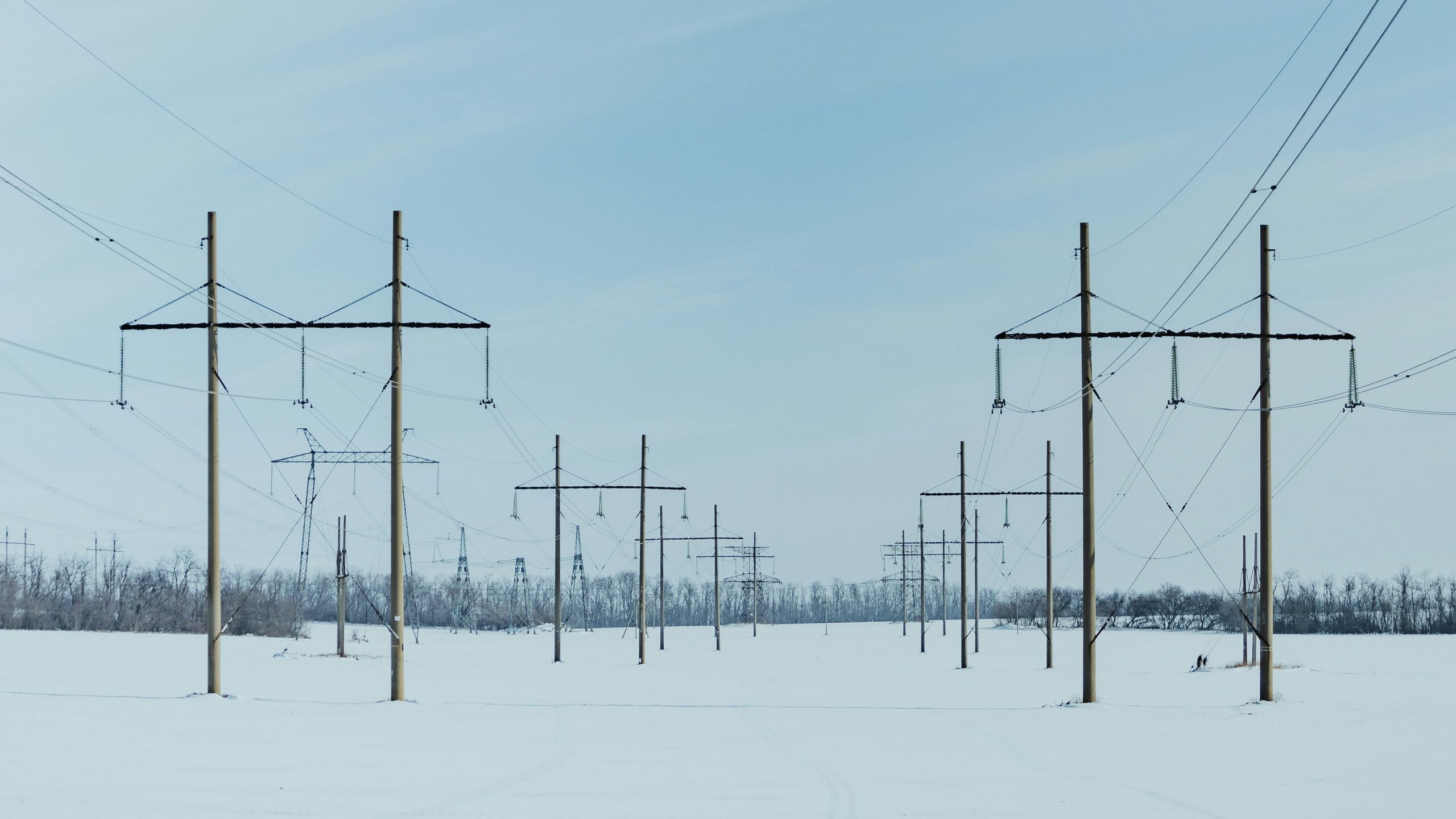
Winter storms across the eastern United States have turned the quiet hum of AI data centers into a flashpoint for the power grid, sending wholesale electricity prices to levels that would have seemed unthinkable only a few years ago. In parts of “data center alley,” real-time costs spiked into four figures per megawatt-hour as operators fought to keep racks of GPUs online while neighborhoods shivered through outages. The same weather system that knocked down lines and iced roads has exposed how tightly the digital economy is now bound to the physical limits of the grid. What began as a regional cold snap has become a stress test for the AI boom itself, with grid operators, miners, and households all competing for the same constrained supply. The headline figure of power costs jumping toward $1,200/MWh is not just a market anomaly, it is a warning about how quickly extreme weather can collide with concentrated energy demand.
Storm-driven price shock in the largest U.S. grid
The latest winter blast hit a region that already hosts the world’s densest cluster of energy-hungry facilities, and the price reaction was immediate. In the largest U.S. grid, real-time wholesale electricity prices surged on a Sunday as demand climbed in an area that has become synonymous with hyperscale campuses and AI training clusters. Reporting from Jan highlighted how this corridor, often called “data center alley,” now sits at the center of both the digital economy and the physical power system, with operators scrambling to secure supply as temperatures plunged and demand for heating spiked alongside server loads, a dynamic captured in detailed coverage of power prices. Grid managers were not just dealing with a cold day, they were staring down record-breaking consumption. The regional operator PJM predicted demand at 147.2 GW, a level that would surpass the existing winter peak of 143.7 G set in January 2025. That forecast underscored how quickly the load profile has shifted, with AI data centers layered on top of traditional residential and industrial demand across states like Virginia. As the storm deepened, the grid was forced to balance surging consumption against constrained generation and transmission, a combination that translated directly into eye-watering spot prices.
AI data centers at the heart of the grid stress
AI infrastructure has moved from a niche load to a central character in the grid story, and the storm made that impossible to ignore. The concentration of hyperscale campuses in a handful of counties means that when temperatures drop, the incremental megawatts needed to keep GPUs cooled and inference services online can rival the draw of entire cities. Reporting from Jan described how the winter storm tested power grids that were already straining to accommodate AI data centers, with Electricity costs spiking in the very counties that host the most facilities. In practical terms, that meant operators had to choose between curtailing workloads or paying whatever the market demanded to keep power flowing. The storm showed that AI clusters are no longer just passive consumers of energy, they are active participants in grid risk. When a single campus can draw hundreds of megawatts, its decision to keep training a large language model during a polar blast can influence prices for everyone else on the same network. The winter event turned that abstract concern into a concrete reality, with data center alley’s appetite for power amplifying the volatility triggered by ice, wind, and failing distribution lines.
Wholesale prices spike toward $1,200/MWh and beyond
The headline-grabbing figure of power costs racing toward $1,200/MWh reflects a broader pattern of extreme price spikes during the storm. In Dominion Energy’s Virginia territory, real-time wholesale electricity prices topped $1,800 per MWh early Sunday, a staggering jump from about $200 per MWh the day before. That same report noted that the figure of $1,800 marked one of the most severe short-term spikes the region has seen, underscoring how quickly scarcity pricing can kick in when demand outstrips available capacity. Those numbers are not just curiosities for traders, they translate directly into operational decisions for AI and cloud providers. When spot prices soar into the four-digit range, even well-hedged operators face painful choices about whether to throttle nonessential workloads, shift jobs to other regions, or absorb the hit in the name of uptime. Earlier coverage of the storm’s impact on the largest U.S. grid described how Power prices rose sharply on Sunday as demand surged, reinforcing that these were not isolated price spikes but part of a systemic stress event. For AI operators that have built business models around cheap, abundant electricity, the storm’s wholesale market was a harsh reminder that those assumptions can break down in a matter of hours.
Households, heating bills, and the politics of priority
While AI data centers and traders watched the wholesale market, households felt the storm in a more immediate way. Winter storms have caused thousands of power outages around the country, leaving families in the dark even as server farms stayed lit. Reporting on consumer impacts noted that Winter weather is expected to push heating bills sharply higher for American households nationwide, with images from photographer Mark Felix for Bloomberg via Getty Images capturing the human side of the outages and rising costs. That juxtaposition, racks of GPUs humming while living rooms go cold, is likely to sharpen political scrutiny of how grid capacity is allocated. Regulators and local officials will face questions about whether it is acceptable for AI clusters to keep drawing full power during scarcity events while residential customers are asked to conserve or endure rolling blackouts. The storm has effectively turned data center alley into a case study in energy equity, forcing a conversation about who gets priority when the grid is under stress and how much of the cost of AI’s growth should be borne by ratepayers who may never directly use those services.
Bitcoin miners blink first as Fern hits the grid
Not every high-intensity digital load chose to ride out the storm at any price. As Winter storm Fern swept across the country, Bitcoin mining operations began powering down to avoid both physical risk and punishing electricity costs. Coverage of the crypto sector’s response noted that Foundry USA saw its hashrate plunge as miners curtailed activity, a shift that showed how quickly flexible loads can respond when the grid is under duress. The contrast with AI data centers is instructive. Bitcoin miners, whose revenue is directly tied to the marginal cost of power, can dial back almost instantly when prices spike or when grid operators request relief. AI workloads, particularly large training runs and latency-sensitive inference services, are far less elastic. As Fern strained the grid, miners effectively acted as a pressure valve, while AI clusters largely remained a fixed demand. That divergence suggests one path forward for grid planners: encourage more interruptible or price-responsive loads that can shed demand during extreme events, while pushing AI operators to invest in on-site generation, storage, or more aggressive demand management so they do not exacerbate the next storm-driven crunch. More From TheDailyOverview
*This article was researched with the help of AI, with human editors creating the final content.
Corrected on 2/4/26 at 12:08 p.m. CST: Corrected PJM grid coverage by removing reference to Georgia and clarified the predicted demand unit from ‘g’ to ‘GW’.

Grant Mercer covers market dynamics, business trends, and the economic forces driving growth across industries. His analysis connects macro movements with real-world implications for investors, entrepreneurs, and professionals. Through his work at The Daily Overview, Grant helps readers understand how markets function and where opportunities may emerge.

