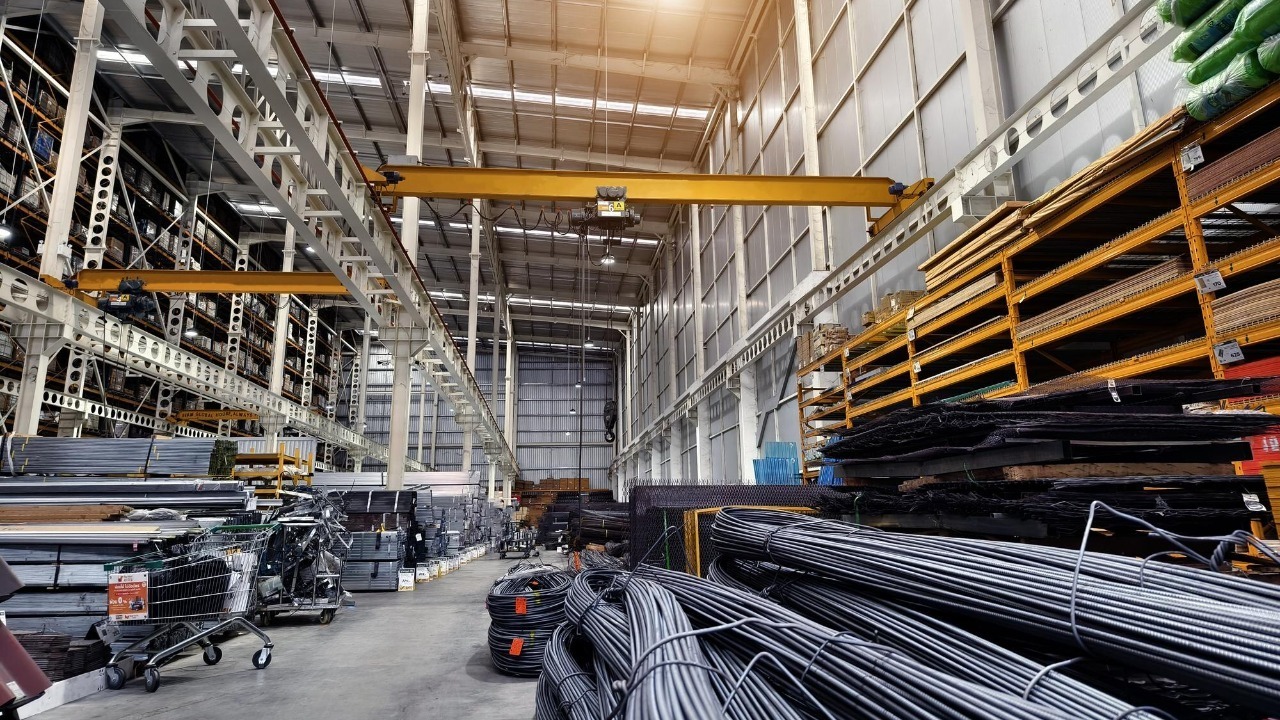
President Donald Trump doubled Section 232 tariffs on steel and aluminum imports from 25% to 50%, effective June 4, 2025, in a move that lifted domestic producers but sent costs rippling through industries that depend on cheap metal. The policy, announced during a speech to steelworkers in Pennsylvania on May 30, 2025, was framed as a defense of national security and a response to global excess capacity. Eight months later, the question at the center of this trade escalation has only sharpened: who actually benefits when the price of steel climbs this steeply?
From 25% to 50%: How the Tariff Doubled
The legal mechanism behind the increase is Proclamation 10947, which raised the ad valorem tariff rate on steel and aluminum imports from an additional 25% to an additional 50%. The proclamation specifies that the duty applies to the value of the steel or aluminum content in covered products, not to non-metal components, and it explicitly builds on the 2018 Commerce Department Section 232 findings that foreign steel imports can threaten national security. In doing so, it uses the same statutory authority but pushes the trade barrier roughly twice as high as the original Trump-era measure.
The groundwork for this escalation was laid months earlier. In February 2025, a separate action, Proclamation 10896, terminated many of the alternative arrangements and country exemptions that had allowed certain trading partners and specific companies to sidestep the original 25% tariffs. That reset also sharply restricted the exclusion process that importers had used to petition for relief on particular products. By the time the 50% rate took effect in June, most of the loopholes that had softened the original tariffs were already closed, meaning the new rate hit a much broader base of imports almost immediately.
The White House Rationale: Security and Manufacturing Jobs
The administration’s stated justification rests on two pillars: national security and the revival of domestic manufacturing. A June 2025 White House fact sheet ties the increase to global excess capacity, arguing that foreign overproduction, particularly from heavily subsidized producers, undermines the financial health of American mills that the military supply chain depends on. Section 232 of the Trade Expansion Act of 1962 authorizes the president to impose trade restrictions when the secretary of commerce finds that imports of a good threaten to impair national security, a standard that has been interpreted broadly to include the economic viability of key industries rather than just direct military vulnerability.
In its messaging, the administration has linked the higher tariffs to a broader push to “re-shore” manufacturing and raise blue-collar wages. Officials point back to Trump’s first term, when Section 232 duties on steel and aluminum were first imposed and then adjusted, as evidence that trade protection can stabilize domestic output and employment in metals. A February 2025 fact sheet framed the closure of loopholes and exemptions as a step that would “restore” the intended level of protection and thereby strengthen America’s manufacturing base. The consistent message from the White House is that the short-term costs to downstream users are justified by the longer-term benefits of preserving industrial capacity and jobs in steelmaking communities.
Expanding the Net: Derivative Products and the Inclusion Process
The tariff wall did not stop at raw steel slabs and coils. The Department of Commerce and its Bureau of Industry and Security announced an interim final rule establishing a new inclusion procedure designed to extend Section 232 coverage to additional derivative steel and aluminum articles. Under this system, interested parties can petition to have particular products (such as fasteners, tubing, or certain auto components that contain significant metal content) formally designated as subject to the 50% duty. The rule emphasizes that the focus is on items where steel or aluminum is a substantial input, closing avenues where foreign producers had been shipping more processed goods instead of raw material to avoid earlier tariffs.
The Bureau later announced that it had added 407 product categories to the tariff schedule through this process, dramatically widening the universe of goods exposed to the higher rate. Importers seeking clarity or relief must now navigate the Commerce Department’s electronic STELA portal, where inclusion requests and related filings are posted. For domestic steelmakers, the expansion of covered categories is a victory: it reduces the risk that foreign competitors can undercut them by exporting semi-finished or finished items instead of raw steel. For manufacturers that rely on those derivative products, however, the broadened scope means higher costs on everything from machinery parts to construction components, with little time to reconfigure supply chains.
Winners on Wall Street, Losers on the Factory Floor
Domestic steel producers saw immediate benefits from the policy shift. The Producer Price Index for steel mill products, tracked by the Bureau of Labor Statistics and published through the Federal Reserve’s FRED series, shows how prices at the mill gate respond when cheaper imports are constrained. Higher tariffs reduce competitive pressure from foreign suppliers, allowing U.S. mills to charge more per ton while running their facilities at higher utilization rates. For shareholders and executives at large steelmakers, that combination of higher prices and steadier demand translates into stronger earnings, which can be quickly reflected in stock valuations and executive compensation.
The flip side of those gains appears in the balance sheets of steel-consuming industries. Automakers, appliance manufacturers, construction firms, and equipment producers all face higher input costs when domestic steel prices rise. On February 13, 2026, equity markets offered a snapshot of this tension: shares in U.S. steel and aluminum companies fell while automakers’ stocks gained after reports suggested a possible pullback in tariffs, according to an analysis from Morgan Stanley. That single trading session distilled the core reality: what helps primary metal producers often hurts manufacturers further down the chain, and vice versa. While the administration tends to speak of “American industry” as a unified interest, the market reaction underscores how fragmented those interests are in practice.
The UK Exception and the Offshoring Risk
One detail in the June 2025 fact sheet stands out: a contingency arrangement for the United Kingdom. While the public documents do not spell out the full terms, the existence of a carveout for a specific ally raises a strategic question about how companies might respond. If certain countries enjoy more favorable treatment under Section 232, manufacturers have a clear incentive to route production through those jurisdictions. A U.S. automaker or appliance producer facing a 50% tariff on steel imported directly from a non-exempt country may find it cheaper to source components from a UK-based supplier, or even to relocate parts of its assembly process offshore to take advantage of preferential access.
This dynamic runs counter to the stated goal of rebuilding domestic supply chains. Uneven pressure (harsh on some trading partners, softer on others) can encourage firms to reconfigure their logistics and investment plans in ways that keep high-value activities abroad. The U.S. International Trade Commission’s DataWeb tool, which offers detailed import and export statistics, provides one way to monitor whether imports of steel-intensive goods are shifting toward countries with better tariff terms. If, over time, the data show rising imports of finished machinery or vehicles from exempt allies alongside falling imports of raw steel, it would suggest that the policy is pushing manufacturing steps offshore even as it protects domestic metal production.
National Security, Technology, and the Limits of Tariffs
The administration’s argument that tariffs are essential for national security fits within a broader effort to define critical infrastructure and industrial capacity more expansively. Agencies such as the Department of Homeland Security have highlighted the importance of resilient supply chains and secure industrial systems through initiatives like the WOW program, which emphasizes preparedness and continuity for key sectors. In that framework, a robust domestic steel industry is one piece of a larger security puzzle that also includes energy, transportation, and digital infrastructure. Tariffs are presented as a tool to prevent overreliance on foreign sources for materials that underpin everything from naval ships to electrical grids.
At the same time, the federal government is investing in complementary strategies that go beyond border measures. Efforts to promote advanced manufacturing, automation, and artificial intelligence, reflected in coordination hubs such as the national AI initiative, aim to boost productivity and competitiveness inside U.S. factories. For steel-consuming industries, technologies like AI-assisted design, predictive maintenance, and optimized logistics can help offset some of the cost pressures created by higher input prices. However, these tools are long-term solutions that require capital and workforce training, and they do not eliminate the immediate arithmetic of a 50% tariff. The tension between using trade policy to shield legacy industries and using innovation policy to transform them remains unresolved.
Consumers, Politics, and What Comes Next
For households, the impact of doubling steel and aluminum tariffs shows up indirectly. Higher prices for cars, appliances, and construction materials can filter through to monthly budgets and housing costs, even if the connection to Section 232 is rarely visible on a receipt. Policymakers have tried to cushion some of these pressures with targeted programs and messaging. Initiatives like the Trump Card benefits platform and the TrumpRx effort on prescription drug affordability, for example, are framed as ways to put more money back in consumers’ pockets or lower specific categories of expenses. While these efforts operate in very different policy domains, they form part of the same political narrative. Aggressive trade measures can coexist with, or be balanced by, relief on other cost-of-living fronts.
Whether the 50% steel and aluminum tariffs endure in their current form will depend on a mix of legal challenges, diplomatic negotiations, and domestic political calculations. Congress has periodically debated reforms to Section 232 authority, and trading partners have signaled that they may seek concessions or retaliate through their own measures. For now, the policy has clearly created winners and losers: domestic mills enjoy stronger pricing power and higher utilization, while many manufacturers face steeper bills and complex sourcing decisions. As data from tools like FRED and the USITC’s trade statistics accumulate over the coming years, the empirical record will offer a clearer verdict on a question that remains hotly contested: do steep tariffs ultimately strengthen the broader U.S. economy, or do they mainly shift costs from one part of it to another?
More From The Daily Overview
*This article was researched with the help of AI, with human editors creating the final content.

Grant Mercer covers market dynamics, business trends, and the economic forces driving growth across industries. His analysis connects macro movements with real-world implications for investors, entrepreneurs, and professionals. Through his work at The Daily Overview, Grant helps readers understand how markets function and where opportunities may emerge.

