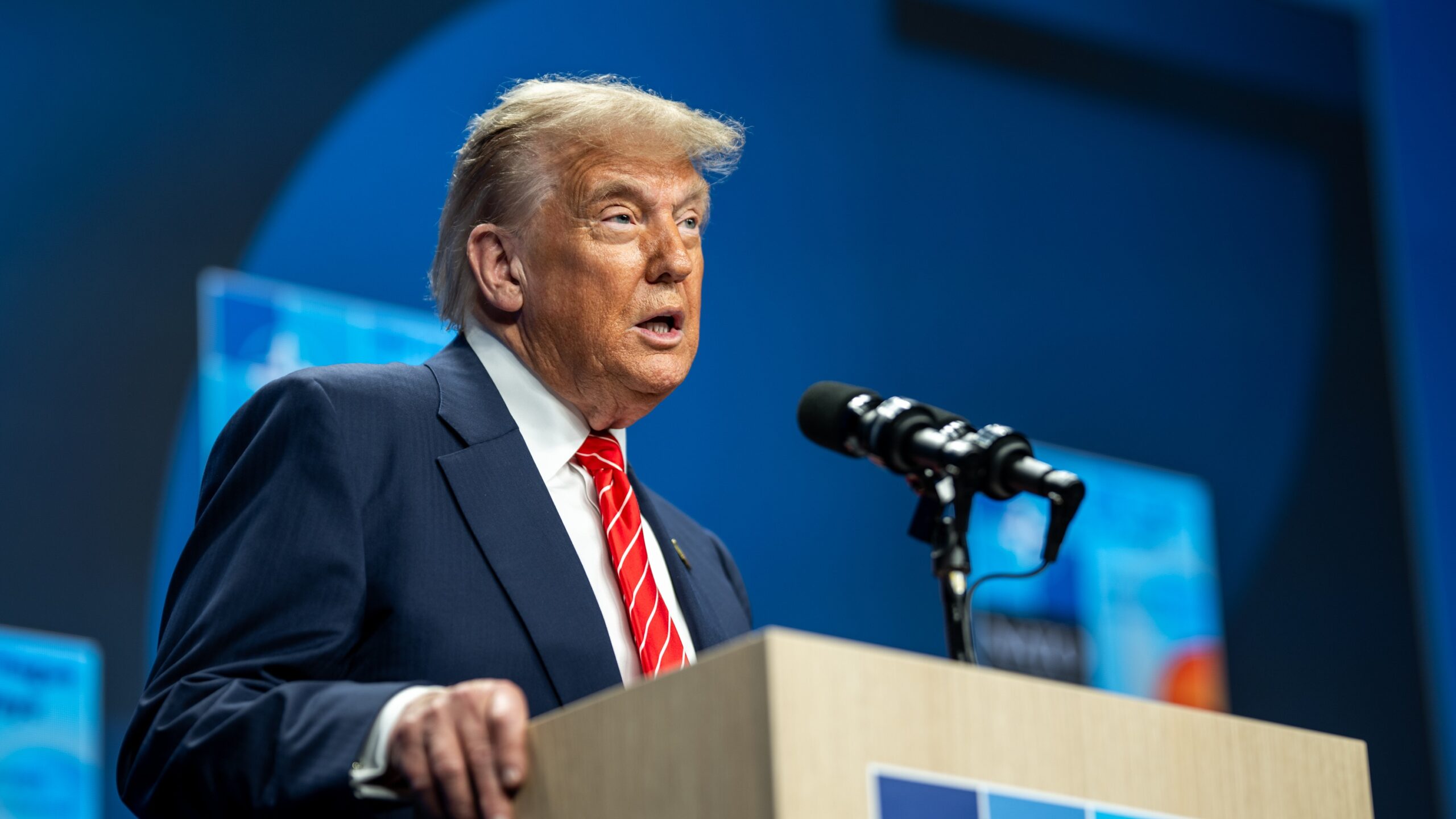
US equities snapped back sharply after President Donald Trump dialed down his confrontation with Europe and eased the immediate threat of new tariffs. A bruising sell-off earlier in the week gave way to a broad-based rebound as investors recalibrated the risk of a transatlantic trade fight and rotated back into growth-sensitive sectors.
The shift in tone, including a softer line on Europe and Greenland and a public emphasis on negotiation over escalation, helped restore confidence that the White House is not racing toward a tariff shock that could derail the expansion. I see the market’s reaction as a textbook reminder that, in this cycle, a few words from the Oval Office can move trillions of dollars in asset values within hours.
Wall Street’s relief rally after a bruising sell-off
US stocks had just endured their worst single session since October before buyers stepped back in, a pattern that underscores how quickly sentiment can swing when policy risk is in play. After that steep drop on Tuesday, major benchmarks finished the next session with solid gains as Stocks regained some of the ground they had lost. The Dow, which had led the prior decline, was central to that rebound as investors reassessed the likelihood that the White House would actually follow through on its most aggressive tariff threats.
The scale of the move was striking. The Dow Jones Industrial Average surged 588.64 points, a gain of 1.21%, to close at 49,007.23, while the S&P 500 g 1.16%, signaling that the relief was not confined to a handful of blue chips. In live market coverage, Stocks Recoup Losses was the dominant narrative, with Wall Street treating the policy shift as a green light to buy the dip.
Trump’s softer tone on Europe and Greenland
The catalyst for the rally was not a data surprise or a central bank move, but a change in rhetoric from President Donald Trump on Europe and Greenland. After days of saber-rattling over potential levies on European goods and speculation about a more confrontational approach to Greenland, the president used appearances at the World Economic Forum to stress that the United States preferred negotiation and that he would not use force in any Greenland-related talks. In Davos, All three major US stock indexes were already higher in late-morning trading as investors digested his assurance in Switzerland that he would not use force to acquire Greenland.
That message was reinforced by a broader retreat from the most aggressive tariff language. President Donald Trump, attending the World Economic Forum in Davos, signaled that his administration was backing away from a plan to hike certain tariffs to 25% from June 1 and was instead pursuing what officials described as a Greenland and Europe “deal” framework. That latest retreat from a tariff escalation that had rattled investors earlier in the week helped convince traders that the White House was sensitive to market fallout, a perception that tends to limit the downside for risk assets when political tensions flare.
How the tariff U-turn rippled through global markets
The policy shift did not just lift US benchmarks, it also reverberated across Europe and other major markets. Global equities and US futures rallied as President Trump backtracked on threats to hit eight European countries with 10% tariffs, easing fears of an immediate tit-for-tat response from Brussels. In Europe, bank shares and export-heavy industrials, which had been under pressure on concern about an “unflinching” response from the bloc, rebounded as investors priced in a lower probability of a full-blown trade confrontation.
In the United States, the relief was visible not only in headline indexes but also in the behavior of futures and sector ETFs tied to trade-sensitive industries. Market commentary framed the move as a classic “risk-on” rotation, with investors stepping back into cyclical names that had been hit hardest during the earlier sell-off. Analysts noted that Wall Street had braced for a more combative stance from President Donald Trump toward Europe, and that the softer tone instead was interpreted as a sign that the administration remains attuned to market signals, even as it pursues a hard line in trade negotiations.
Inside the numbers: Dow, NASDAQ and the data investors watch
Beyond the day’s headlines, the rebound highlighted how closely investors are tracking index-level data to gauge the durability of the rally. The Dow Jones Industrial show how the index’s Date, Price, Open, High and Low levels have swung as tariff rhetoric has intensified and then cooled. I see traders using that history to judge whether the latest bounce is simply a short-covering move or the start of a more durable uptrend that could carry the Dow to fresh highs if policy risk continues to recede.
The technology-heavy NASDAQ has been just as sensitive to the ebb and flow of trade headlines, particularly for large-cap software and semiconductor names that rely heavily on global demand. According to NASDAQ Composite Historical Data, investors are parsing each Date print along with the index’s Price, Open, High and Low to understand how quickly growth stocks recover when geopolitical clouds lift. Many retail traders are leaning on platforms that aggregate this information, often via tools that rely on feeds governed by the Google Finance disclaimer, to make rapid decisions as presidential comments hit the tape.
What the rebound says about policy risk and the road ahead
For me, the most telling aspect of the rally is how directly it tracked the perceived probability of new tariffs rather than any shift in economic fundamentals. Market commentary framed the move in simple terms: US stocks are higher because investors finally believe that President Donald Trump is stepping back from the brink on trade. As one widely circulated analysis of Why Is the put it, the answer is that “Trump Backs Off Tariffs,” and that alone was enough to flip risk appetite from fear to cautious optimism.
The episode also underlines how quickly the narrative could reverse if the tone hardens again. Earlier this week, Karishma Vanjani noted that Wall Street had just experienced its worst day since October, a reminder that the same president who can trigger a relief rally with a conciliatory remark can also spark a rout with a single threat. As The Dow and its peers climb back from Tuesday’s lows, I see investors balancing the short-term relief of a tariff U-turn against the longer-term reality that as long as trade remains a central tool of US policy, markets will continue to live and die by the president’s next sentence.
More From TheDailyOverview
*This article was researched with the help of AI, with human editors creating the final content.

Grant Mercer covers market dynamics, business trends, and the economic forces driving growth across industries. His analysis connects macro movements with real-world implications for investors, entrepreneurs, and professionals. Through his work at The Daily Overview, Grant helps readers understand how markets function and where opportunities may emerge.