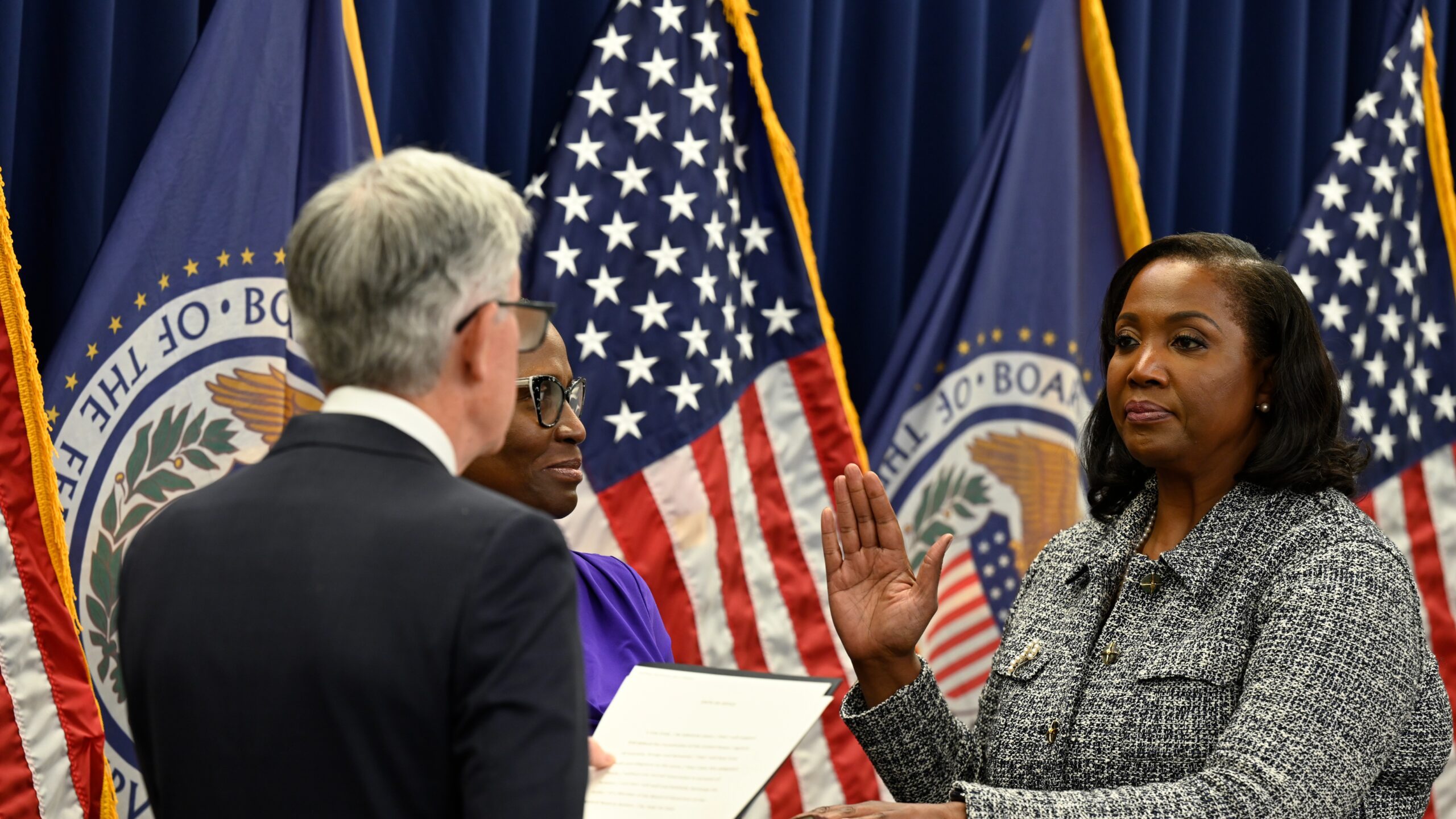
The Supreme Court has signaled deep unease with President Donald Trump’s attempt to oust Federal Reserve governor Lisa Cook midterm, a move that would give the White House sweeping leverage over interest rate policy. During arguments, justices across the ideological spectrum pressed Trump’s lawyers on whether the Constitution really allows a president to fire a Fed governor at will, without any showing of misconduct or cause. Their questions suggested a strong appetite to preserve the central bank’s insulation from day-to-day politics.
At stake is more than one seat on the Federal Reserve Board. The case tests how far Trump can go in reshaping independent economic institutions, and whether long‑standing protections for central bank officials survive a broader conservative push to expand presidential control over the executive branch. The justices appeared to recognize that if they side with Trump here, they could be opening the door to future presidents purging the Fed whenever policy turns unpopular.
The clash over Cook’s job and Fed independence
Trump set this confrontation in motion when he announced last August on his Truth Social platform that he was firing Lisa Cook from the Federal Reserve Board, citing what he described as unproven allegations and bypassing the usual process for documenting any misconduct. Lower courts quickly blocked the dismissal, keeping Cook in place while they weighed whether the president can remove a Fed governor without cause, and the dispute has now landed before the Supreme Court as a direct test of central bank independence, according to detailed accounts of the Trump bid.
Federal law has long been understood to protect governors like Cook from removal except “for cause,” a phrase that typically covers serious misconduct or incapacity rather than policy disagreements. Reports on the arguments describe justices probing whether Trump’s unilateral firing announcement on Truth Social respected that statutory limit and the due process expectations that come with it, with one analysis highlighting a sharp focus on due and the lack of any formal record supporting the accusations.
Inside a skeptical Supreme Court
From the opening minutes of the hearing, the tone on the bench leaned against Trump’s position. Multiple accounts describe The Supreme Court Wednesday as “reluctant” or “wary” of granting the president unfettered power to fire a sitting Fed governor, with several conservative justices joining liberals in questioning whether such a move would gut the statutory promise of independence that Congress built into the Federal Reserve System. One detailed summary of the session said the justices appeared poised to reject Trump’s attempt to immediately remove Cook, after they had already issued a temporary order blocking the White House from carrying out the firing while the case proceeds, according to contemporaneous live updates.
Coverage of the arguments notes that President Trump’s lawyers framed the case as a straightforward application of presidential control over executive officers, while several justices pressed them on why Congress’s “for cause” language should not be read as a real constraint. One report on the session said the Supreme Court seemed doubtful of Trump’s claim that he can fire Fed governors by fiat, with questions from the bench, including those directed by Chief Justice John Roberts, suggesting concern that accepting Trump’s theory would let any future president purge the Board whenever interest rate decisions proved politically inconvenient, a dynamic captured in detailed argument summaries.
Why Lisa Cook’s seat matters so much
Lisa Cook is not just any regulator, she is a Federal Reserve governor with a vote on interest rates and financial stability, and her removal would send a powerful signal about how secure those roles really are. Reports from the courtroom describe Cook arriving accompanied by her lawyer as the justices weighed whether the independence of the Federal Reserve can survive what one account called “at‑will removal,” a phrase used to capture Trump’s claim that he can dismiss her without cause, a tension laid out in detail in coverage of the Fed governor.
Her case has become a proxy for the broader question of whether the Fed can resist direct political pressure from the White House. Federal Reserve Chairman Jerome H. Powell has been drawn into the narrative as well, with one account describing him talking with Board of Governors staff while the Supreme Court weighed Trump’s bid to remove Cook from the central bank board, and justices questioning Trump’s failure to follow the “for cause” standard that has long underpinned the Fed’s autonomy, as detailed in coverage of the Fed board.
Signals from the bench: due process and guardrails
Several justices homed in on the procedural shortcuts in Trump’s approach, asking why Cook was not given a formal opportunity to respond to the accusations that the president cited on Truth Social. One detailed account of the hearing described “FOCUS ON DUE PROCESS” as a central theme, with justices pressing the administration’s lawyer on the absence of any evidentiary record or hearing before the firing announcement and questioning whether that squared with the statutory “for cause” protection that Congress wrote into the Federal Reserve Act, concerns that were laid out in a close read of the Court’s takeaways.
Liberal members of the Court were especially blunt about the stakes. Justice Sonia Sotomayor was singled out in one analysis as warning that a snap decision endorsing Trump’s firing could destabilize not only Cook’s position but the broader architecture that keeps monetary policy insulated from partisan swings, and that commentary emphasized how her questions tied the case to a longer line of disputes over independent agencies, a perspective captured in reporting on Justice Sonia Sotomayor and her exchanges with counsel.
How the outcome could reshape presidential power over the Fed
Even before a final opinion, the justices’ questions are already being read as a warning shot against efforts to turn the Fed into a more directly political arm of the presidency. Multiple reports say the Supreme Court appears likely to allow Lisa Cook to remain on the Fed board, with at least five justices signaling that they see real limits on Trump’s ability to remove her, and one account framed the likely result as a decision that would reaffirm the central bank’s role as a technocratic body that guides the economy rather than a team of presidential appointees serving entirely at will, a forecast grounded in detailed coverage of the likely outcome.
At the same time, the Court seems intent on writing an opinion that is narrow enough to avoid upending other recent rulings that expanded presidential control over agencies, while still drawing a clear line around the Fed. One detailed account of the session said the Supreme Court seems inclined to keep Lisa Cook on the Fed board despite Trump’s attempt to fire her, with at least five justices, during arguments in the packed courtroom Wednesday, voicing concern that giving the president at‑will removal power here would undermine the Federal Reserve’s political independence, a dynamic described in coverage of the inclined majority.
More From TheDailyOverview
*This article was researched with the help of AI, with human editors creating the final content.

Grant Mercer covers market dynamics, business trends, and the economic forces driving growth across industries. His analysis connects macro movements with real-world implications for investors, entrepreneurs, and professionals. Through his work at The Daily Overview, Grant helps readers understand how markets function and where opportunities may emerge.

