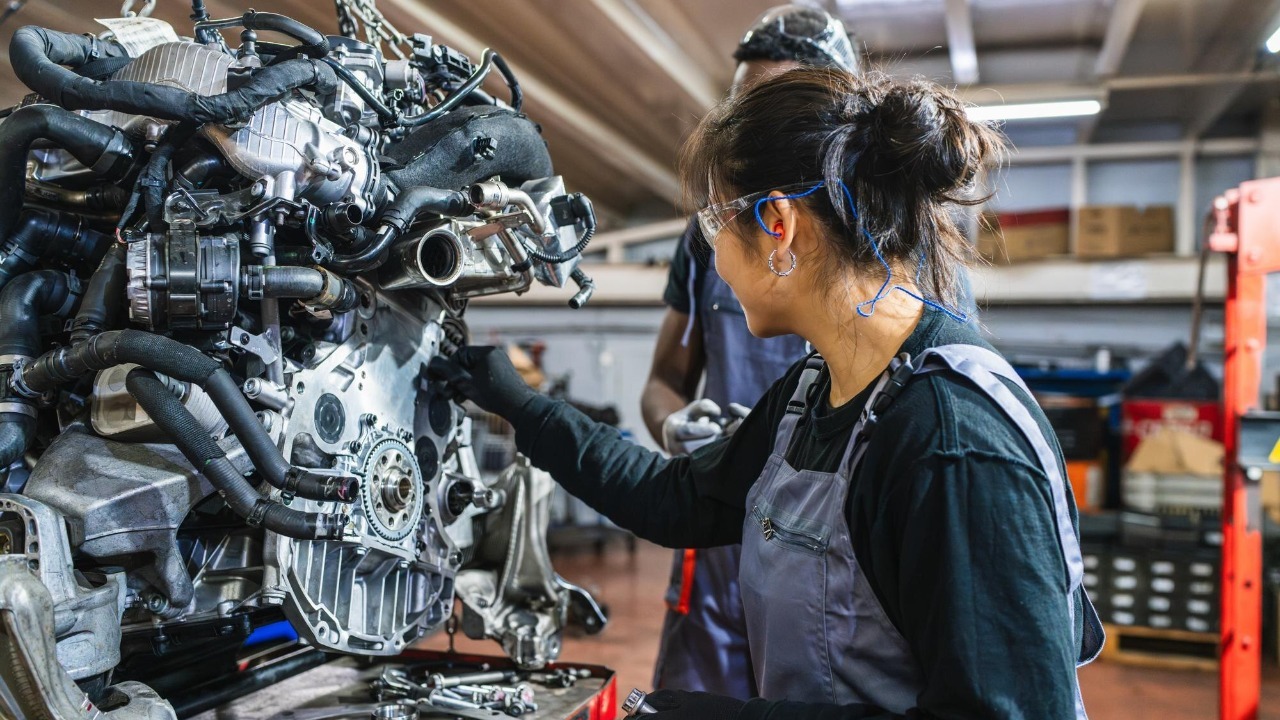
Tariffs that were billed as a tool to revive American manufacturing have instead helped push one of the world’s biggest auto-parts makers into crisis, exposing how fragile the global car supply chain has become. As the United States escalates trade barriers on vehicles and components, a $9 billion supplier that once looked too entrenched to fail is now a case study in how policy shocks, debt and shifting technology can combine to topple an industrial giant.
I see the company’s unraveling not as an isolated bankruptcy but as a warning about what happens when trade policy, corporate leverage and the electric-vehicle transition collide at full speed. The same tariffs that were supposed to protect domestic jobs have scrambled sourcing decisions, squeezed margins and accelerated a reckoning for suppliers that were already stretched thin by the pivot away from internal combustion engines.
How a global auto-parts champion lost its footing
The supplier at the center of this story spent years building itself into a dominant player in critical components, from engine systems and transmissions to electronics that quietly sit behind the dashboards of mass-market models like the Ford F-150 and Toyota RAV4. Revenue climbed into the billions as it locked in long-term contracts with major automakers and expanded aggressively into North America, Europe and Asia, leaving it with a sprawling footprint and a customer list that read like a who’s who of the industry. That scale, however, came with a heavy debt load and a business model deeply tied to the fortunes of gasoline and diesel vehicles, which left the company exposed once the economics of the car market began to shift.
According to financial disclosures, the group carried roughly $9 billion in annual sales against several billion dollars of liabilities, a structure that worked only as long as volumes stayed high and pricing remained predictable. When automakers started trimming orders for traditional powertrain parts and redirecting capital toward electric platforms, the supplier’s mix of products suddenly looked dated. Internal documents cited in strategy reviews show executives racing to pivot into battery housings, inverters and advanced driver-assistance systems, but those investments required fresh capital at the very moment lenders were growing wary of the sector’s volatility.
Tariffs turn a slow squeeze into a sudden shock
The turning point came when the United States sharply raised tariffs on imported auto parts and certain finished vehicles, a move that upended the cost structure for suppliers that relied on cross-border production. The company had built its network around low-cost manufacturing hubs in Mexico and Asia, shipping components into U.S. assembly plants under a relatively stable trade regime. Once tariffs climbed into double digits on key categories, the margin on parts shipped into the American market narrowed dramatically, forcing the supplier either to absorb the hit or try to pass it on to automakers that were already under pressure to keep sticker prices in check.
In regulatory filings summarized in trade impact reports, the company estimated that new U.S. duties added hundreds of millions of dollars in annual costs across its product lines, particularly on metal-intensive components and electronics sourced from China. Management initially tried to offset the blow with cost cuts and selective price increases, but contracts with major customers limited how quickly it could adjust. As detailed in earnings call transcripts, executives warned that tariffs were eroding profitability in North America even as they scrambled to re-route some production through plants in the United States and Canada, a reconfiguration that required fresh capital spending the balance sheet could barely support.
Bankruptcy, restructuring and the scramble to keep factories running
Once higher tariffs collided with slowing demand for internal combustion components, the company’s already tight cash flow snapped. Lenders, spooked by the combination of trade uncertainty and the capital intensity of the EV transition, began to demand stricter terms and higher interest rates on refinancings. The supplier eventually sought court protection in a complex restructuring that covered operations in the United States, Europe and Asia, a process described in detail in bankruptcy filings. Production lines that fed parts into high-volume models like the Chevrolet Silverado and Honda CR-V suddenly depended on debtor-in-possession financing and emergency agreements with automakers to keep shipments moving.
Automakers, wary of any disruption that could idle assembly plants, stepped in with support agreements and, in some cases, direct financial backing to stabilize key facilities. According to court-approved support documents, several manufacturers agreed to temporary price increases and accelerated payments in exchange for guaranteed supply, effectively using their own balance sheets to keep a critical vendor alive. The restructuring plan, outlined in term sheets, called for wiping out a large portion of the company’s unsecured debt, handing control to a mix of creditors and strategic investors, and selling off non-core units to raise cash. Even with that lifeline, management acknowledged that some plants would close and certain product lines would be wound down as the group refocused on parts with a clearer future in an electrifying market.
What the collapse reveals about U.S. industrial policy
From my perspective, the supplier’s downfall underscores a tension at the heart of current U.S. industrial policy: tariffs can shield some domestic producers in the short term, but they also inject uncertainty and cost into supply chains that are already juggling a once-in-a-century technological shift. The auto-parts ecosystem is built on long planning cycles and thin margins, and when trade rules change faster than contracts can be rewritten, the weakest links snap first. In this case, a company that was large enough to touch almost every major automaker still lacked the pricing power to fully offset tariff-driven cost spikes, especially while it was pouring money into new EV-related programs that would not pay off for years.
Policy documents and industry analyses compiled in tariff impact studies show that U.S. duties on vehicles and parts have encouraged some reshoring of production, but they have also raised costs for domestic assembly plants that depend on imported components. The bankruptcy of a $9 billion supplier illustrates how those costs can cascade: when a key vendor falters, automakers face the risk of line stoppages, workers confront potential layoffs, and local economies around supplier plants absorb the shock. As noted in supply chain risk assessments, the result is a more brittle system in which a single corporate failure can ripple through multiple states and countries, even as policymakers tout tariffs as a straightforward tool to rebuild industrial strength.
The next phase of the auto-parts shakeout
Looking ahead, I expect the collapse of this supplier to mark the beginning rather than the end of a broader shakeout in the parts sector. Companies that are heavily exposed to internal combustion engines, carry significant leverage and rely on cross-border trade for cost advantages now face a harsher environment on all three fronts. Tariffs have raised the floor on input costs, the EV transition is eroding demand for legacy components, and higher interest rates have made it more expensive to refinance debt or fund new investments. Analysts cited in industry outlooks warn that mid-sized suppliers without the scale to negotiate favorable terms with automakers or the capital to invest in next-generation technologies are particularly vulnerable.
At the same time, the restructuring of this $9 billion player is creating opportunities for rivals and new entrants that are better aligned with the future of mobility. Asset sales described in auction notices include plants and engineering teams that specialize in power electronics, lightweight materials and software-heavy control units, all of which are in high demand as automakers roll out more electric and hybrid models. I see a pattern emerging in which tariffs, rather than simply protecting existing jobs, are accelerating a re-sorting of the supply base: weaker, debt-laden incumbents are being forced into bankruptcy or consolidation, while better-capitalized groups snap up assets and reposition themselves around EV platforms, advanced safety systems and connected-car technology.
More From TheDailyOverview
- Dave Ramsey says these two simple questions show whether you’re rich or poor
- Retired But Want To Work? Try These 18 Jobs for Seniors That Pay Weekly
- IRS raises capital gains thresholds for 2026 and what’s new
- 12 ways to make $5,000 fast that actually work

Grant Mercer covers market dynamics, business trends, and the economic forces driving growth across industries. His analysis connects macro movements with real-world implications for investors, entrepreneurs, and professionals. Through his work at The Daily Overview, Grant helps readers understand how markets function and where opportunities may emerge.

