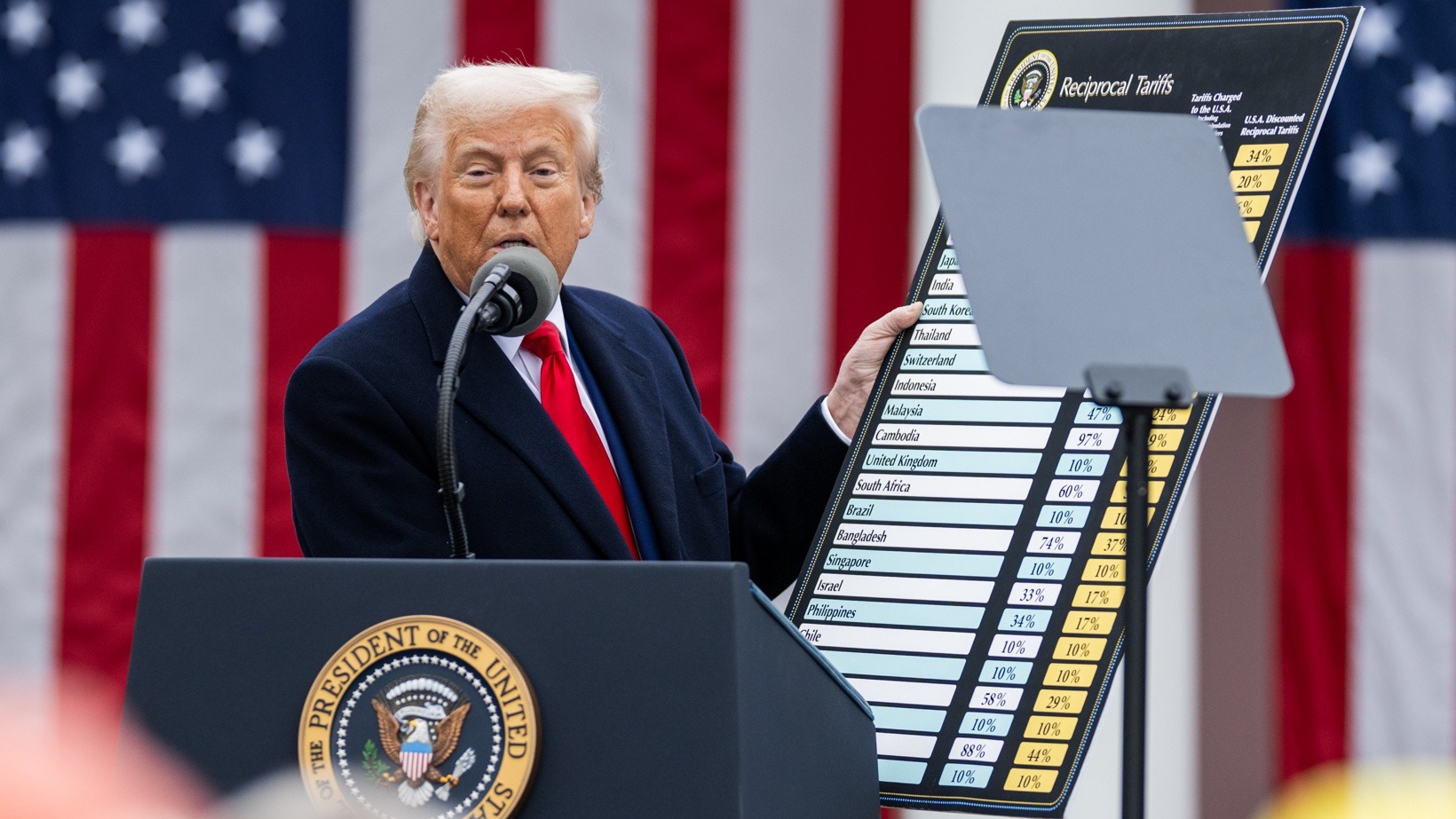
The United States ran a record goods trade deficit in 2025, blowing past prior highs even as President Trump’s reciprocal tariffs took effect across much of the year. Federal data released on February 19, 2026, shows the annual goods deficit hit $1,240.9 billion, while the broader goods-and-services deficit totaled $901.5 billion. While the overall deficit was little changed from 2024, the record goods gap runs counter to the tariff program’s stated aim of addressing “large and persistent” U.S. goods trade deficits.
Record Goods Gap Despite Tariff Escalation
The scale of the 2025 goods deficit is hard to overstate. According to the official trade tables, the annual goods deficit reached $1,240.9 billion, while the services surplus rose 8.9 percent to $339.5 billion. That services cushion kept the combined goods-and-services deficit at $901.5 billion, down $2.1 billion from $903.5 billion in 2024. The Joint Economic Committee, a bipartisan congressional body, separately estimated the shortfall at $902 billion, down from $904 billion the prior year, a minor rounding difference that reflects the same underlying picture: services exports offset a worsening goods imbalance.
The December monthly deficit widened to $70.3 billion in goods and services, capping a year in which monthly trade figures moved sharply from month to month. Growth in exports narrowly outpaced imports for the full year, but that slim edge did almost nothing to close the goods gap.
Why Tariffs Did Not Close the Gap
The administration built its tariff architecture on a clear theory. An April 2025 directive invoked the International Emergency Economic Powers Act and the National Emergencies Act to impose broad reciprocal duties, explicitly tying the action to “large and persistent” goods trade deficits. The White House order set out the implementation of the reciprocal tariff program, while U.S. Customs and Border Protection publishes related trade statistics. A follow-on September order then modified the program’s scope and set new procedures for trade and security agreements. The tariffs were not static; they evolved throughout the year as the administration adjusted rates and scope.
Yet the deficit widened anyway, and the reason is structural. Tariffs raise the price of imports but do not automatically reduce the volume of goods Americans buy. When demand for foreign-made capital equipment, electronics, and consumer products stays strong, importers absorb or pass along the added cost rather than switching to domestic alternatives that often do not exist at comparable scale. In sectors such as advanced semiconductors or specialized machinery, there is simply no quick way to re-shore production, so tariffs function more like a consumption tax than a lever that can rapidly rebalance trade flows.
Structural Headwinds and Policy Limits
Deeper forces also work against tariff-driven rebalancing. The United States continues to run a large current-account deficit in part because the dollar remains the world’s dominant reserve currency, attracting global capital and keeping the exchange rate relatively strong. That strength makes imports cheaper and exports more expensive, offsetting some of the price effects of tariffs. At the same time, America’s aging population and high consumption levels mean domestic savings are low relative to investment, a macroeconomic gap that tends to manifest as a trade deficit regardless of border measures. In that context, tariffs can shuffle trade among partners or shift specific product lines, but they struggle to alter the aggregate numbers.
Implementation frictions further diluted the intended impact. Customs officers and trade officials had to interpret new schedules, exemptions, and country-specific carve-outs, a task that fell in part to agencies under the Department of Homeland Security, which outlines its broader enforcement mission on the department website. Businesses, meanwhile, reorganized supply chains to route goods through countries facing lower duties, or reclassified products to fit into less-penalized categories. Those adaptations blunted the bite of reciprocal tariffs even as they introduced new administrative costs. The record 2025 goods deficit underscores how difficult it is to engineer a narrower trade gap through tariffs alone, especially when structural savings-investment imbalances and currency dynamics continue to pull in the opposite direction.
More From The Daily Overview
*This article was researched with the help of AI, with human editors creating the final content.

Grant Mercer covers market dynamics, business trends, and the economic forces driving growth across industries. His analysis connects macro movements with real-world implications for investors, entrepreneurs, and professionals. Through his work at The Daily Overview, Grant helps readers understand how markets function and where opportunities may emerge.

