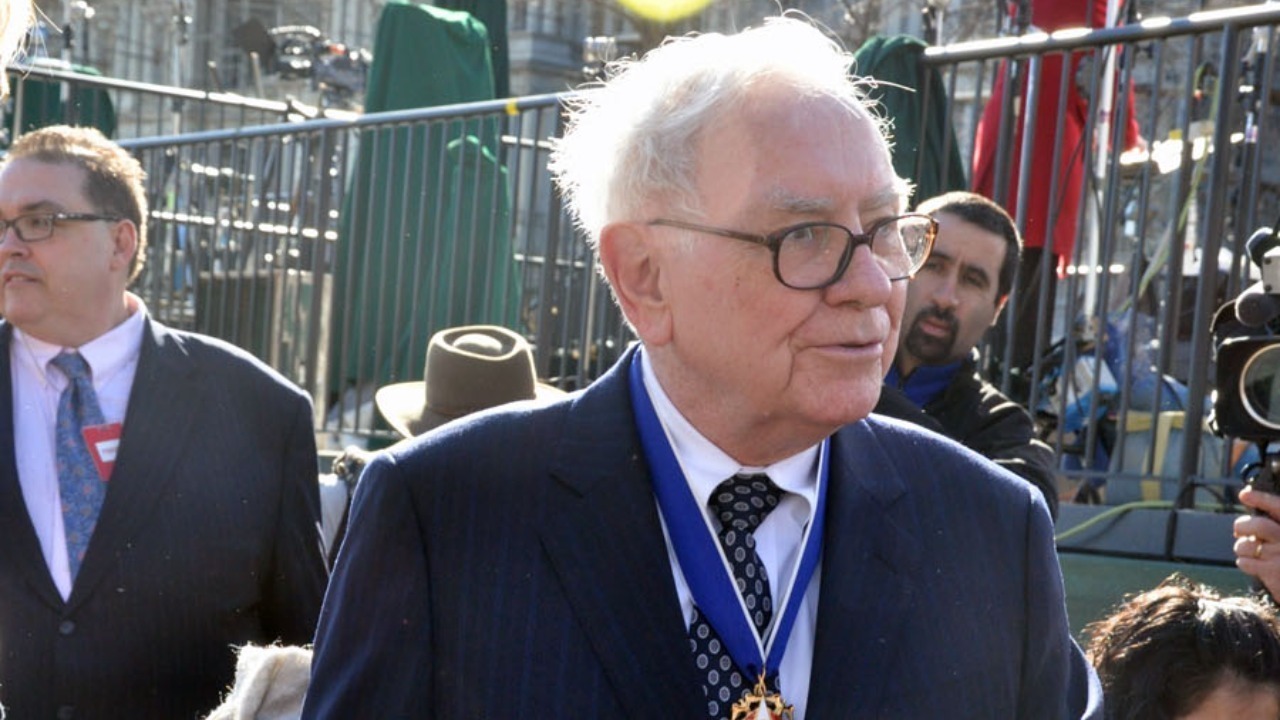
Warren Buffett has spent decades as one of the world’s wealthiest investors, yet his youngest son, Peter Buffett, says he did not realize his father was a billionaire until he was already in his twenties. The revelation, which left his friends as shocked as he was, underscores how deliberately the Buffett family kept extreme wealth in the background of daily life. It also offers a rare look at how one of the richest households in America tried to raise children as if money barely existed.
The day Peter Buffett discovered his dad was a billionaire
Peter Buffett has described a single, almost absurdly ordinary moment when the scale of his father’s fortune finally clicked. As a young adult, he was flipping through a Forbes list of the richest people in the world when he suddenly saw the name “Warren Buffett” and realized it was not just a familiar surname, it was his father. He has recalled that he and his friends laughed at first, partly from disbelief and partly from the surreal idea that the quiet man they knew from Omaha was listed among global billionaires, a reaction that shows how successfully the family had insulated everyday life from Warren Buffett’s public status as one of the wealthiest people alive, a story he later retold while speaking at a philanthropy summit in New York, where he was introduced as Warren Buffett’s youngest son, Peter Buffett, and asked to reflect on that moment of discovery at the Clinton Global Initiative’s Summit on Philanthropy in 2013, as reported in the Indian business press.
In later interviews, Peter has said he was already in his twenties when he understood that his father was not just comfortable but a billionaire, and that his friends were as stunned as he was when they connected the dots. He has emphasized that there were no private jets, no sprawling compounds, and no obvious signs that the family’s patriarch was the same Warren Buffett whose net worth was being tracked in financial pages, a point he reiterated when he explained that he did not know his family was rich until he saw his father’s name on a billionaire list and realized how differently outsiders viewed them compared with the way they saw themselves, a recollection detailed in a recent profile of the.
Growing up Buffett: buses, modest houses and “no clue” about the job
The reason that Forbes moment landed with such force is that Peter Buffett’s childhood in Omaha, Nebraska, looked and felt solidly middle class. He has said he grew up in a regular neighborhood in Omaha, not behind gates or in a coastal enclave, and that his parents, Warren Buffett and Susan Alice Buffett, made a point of stripping away the trappings that usually surround extreme wealth, from luxury travel to designer wardrobes, so that their three children would ride the bus, attend public schools, and see themselves as ordinary kids rather than heirs in waiting, a philosophy he has discussed in conversations highlighted on social media, where one post notes that Peter Buffett, Warren Buffett’s younger son, grew up in a middle-class neighborhood in Omaha, Nebras, and that his parents used their resources to “buy time” for him to pursue music instead of buying status symbols, as described in an Instagram feature.
That low-key upbringing extended to how Warren Buffett’s work was described at home. Peter has said that as a child he had “no clue” what his father actually did for a living and genuinely thought his job involved checking security alarm systems, because that was the kind of simple explanation that fit the quiet, routine life he saw around him. He has contrasted that with the reality that Warren Buffett was already a major investor and, by the time Peter was old enough to read financial news, one of the wealthiest people in the world, a disconnect he has explored in detail in interviews where he recalls that he grew up thinking his dad’s job was checking security alarms and did not know they were rich until around 25, a story captured in a widely shared retelling of his.
A deliberate strategy to strip out “lifestyle inflation”
Peter’s late realization was not an accident of obliviousness, it was the result of a deliberate parenting strategy. Warren Buffett has said he wanted his children to have “a very normal growing-up,” which in practice meant no private jets, no luxury lifestyle, and no billionaire bubble, even as his net worth soared. He has described the family’s approach as stripping away the glitz and skipping the luxury so that the kids would not be consumed by lifestyle inflation, a phrase that captures his belief that money should not dictate identity or values, a philosophy summarized in reporting that quotes him saying, “Our kids had a very normal growing-up. They did not grow up in a billionaire’s household,” and urging parents to strip the glitz, skip the luxury, and let kids ride the bus, as detailed in a recent account.
Peter has echoed that view from the child’s perspective, saying he “just lived the life” he had and did not have any unusual feelings about money because wealth was never on display at home. He has recalled that there were no constant reminders of status, no parade of high-end cars, and no sense that his father’s investing success should dictate his own choices, an experience that aligns with descriptions of Warren Buffett raising his kids like money did not exist, with no private jets, no luxury lifestyle, and a son who only later realized how rich the family was, as recounted in a follow-up report.
From quiet heir to musician and philanthropist
That understated childhood helped shape Peter Buffett’s own definition of success, which diverged sharply from the world of balance sheets and stock tickers. Rather than join Berkshire Hathaway or pursue a career in finance, he became an American musician and composer, building a life in the arts that he has said was made possible not by inherited wealth but by the freedom his parents gave him to explore his interests. He has also become known for his philanthropic work, serving as co-chair of the NoVo Foundation and using his platform to talk about privilege, responsibility, and the limits of money as a measure of a life well lived, a trajectory outlined in profiles that describe Peter as the youngest of Warren Buffett’s three children with Susan Alice Buffett, an American musician who has served as co-chair of the NoVo Foundation, as noted in a detailed biographical sketch.
Peter has been explicit that he does not define success by the size of a bank account, even though he grew up in proximity to one of the largest fortunes in history. In one interview, he is introduced as an American musician who has repeatedly said that wealth is not how he defines success, and that his father’s example, combined with his own late awareness of the family’s money, pushed him to focus on fulfillment and contribution rather than accumulation, a stance highlighted in coverage that notes how he has used his story to challenge assumptions about billionaire heirs and to argue that meaning comes from purpose, not net worth, as reflected in an interview about his.
Why the Buffett experiment resonates in an age of extreme wealth
Peter Buffett’s account lands differently in an era when the children of tech founders and hedge fund managers often grow up in a world of private aviation, exclusive schools, and early exposure to family offices. His story suggests an alternative script, one in which even a household tied to Warren Buffett’s name can prioritize buses over Bentleys and curiosity over entitlement. Social media posts that revisit his childhood emphasize that Warren Buffett’s son thought his dad checked security alarms and that wealth was never on display, a narrative that has resonated with audiences who see in it a counterpoint to the stereotype of billionaire kids surrounded by luxury, as captured in a widely shared post.
More From TheDailyOverview

Cole Whitaker focuses on the fundamentals of money management, helping readers make smarter decisions around income, spending, saving, and long-term financial stability. His writing emphasizes clarity, discipline, and practical systems that work in real life. At The Daily Overview, Cole breaks down personal finance topics into straightforward guidance readers can apply immediately.

