Venezuela is throwing open the gates of its vast oil fields just as President Donald Trump threatens sweeping tariffs on any crude that keeps Cuba’s economy running. The twin moves, one inviting foreign capital and the other warning off suppliers to Havana, are colliding in a way that could redraw energy flows across the Americas. I see a new map emerging in which every barrel that leaves Venezuelan ports is suddenly entangled with Washington’s Cuba strategy.
Caracas rewrites the rules of its oil game
Venezuela has moved from decades of tight state control to a rapid legal overhaul that invites private and foreign companies back into its oil heartland. The state company PDVSA is no longer the sole commanding force, as a new Law gives private companies more control over exploration and production while keeping ultimate sovereignty in state hands. Reporting from Tiago Rogero South America describes how that Law, approved after sustained US pressure, is meant to reverse years of collapsing output by letting outside operators manage fields, book reserves and share profits in ways that had been politically taboo in Caracas. Officials in Venezuela frame the shift as a “green light” for foreign capital, with the government building a legal framework that allows international firms to hold majority stakes in some projects and repatriate earnings more freely. One detailed account of how Venezuela opened the door to foreign capital notes that lawmakers pushed the package through after a tense session, betting that outside money is the only realistic path to stabilizing the economy. The reform aims to create more favorable conditions for private and foreign investment in oil exploration and production, with legislation that still keeps oil marketing under state supervision, as described in one account.
Acting leadership and US pressure shape the opening
The political choreography behind this opening is as important as the legal text. Venezuela’s acting President Delcy Rodríguez, identified in one report as the leader who pushed the package through, signed an overhaul described as Acting President Signs, only after the National Assembly approved it. That sequence underscores how domestic institutions, not just presidential decrees, are being used to signal credibility to investors who remember past expropriations. At the same time, Tiago Rogero South America reports that the Law emerged after direct US pressure, with Washington tying sanctions relief and new licenses to concrete steps that give private companies more operational control. In WASHINGTON, TNND describes how Venezuela approved a new law opening the nation’s oil sector to private companies again, giving foreign companies a path back into joint ventures that had been frozen or heavily restricted. The same report notes that the Trump administration is easing barriers for U.S. firms to sell Venezuelan oil, among other activities, a shift echoed in another detailed look at how the Trump administration eases barriers for U.S. firms to sell Venezuelan crude. That combination of internal reform and external incentives is what makes this opening more than a symbolic gesture.
Trump’s Cuba tariffs turn every barrel into a geopolitical test
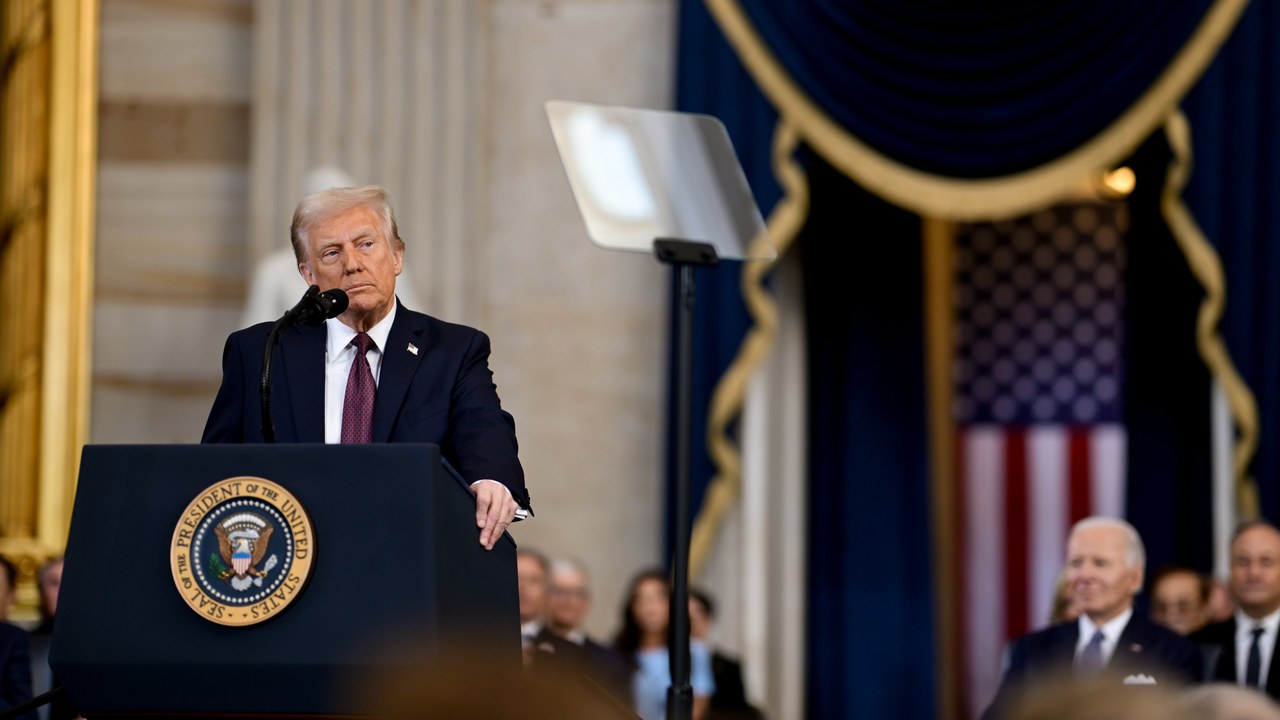
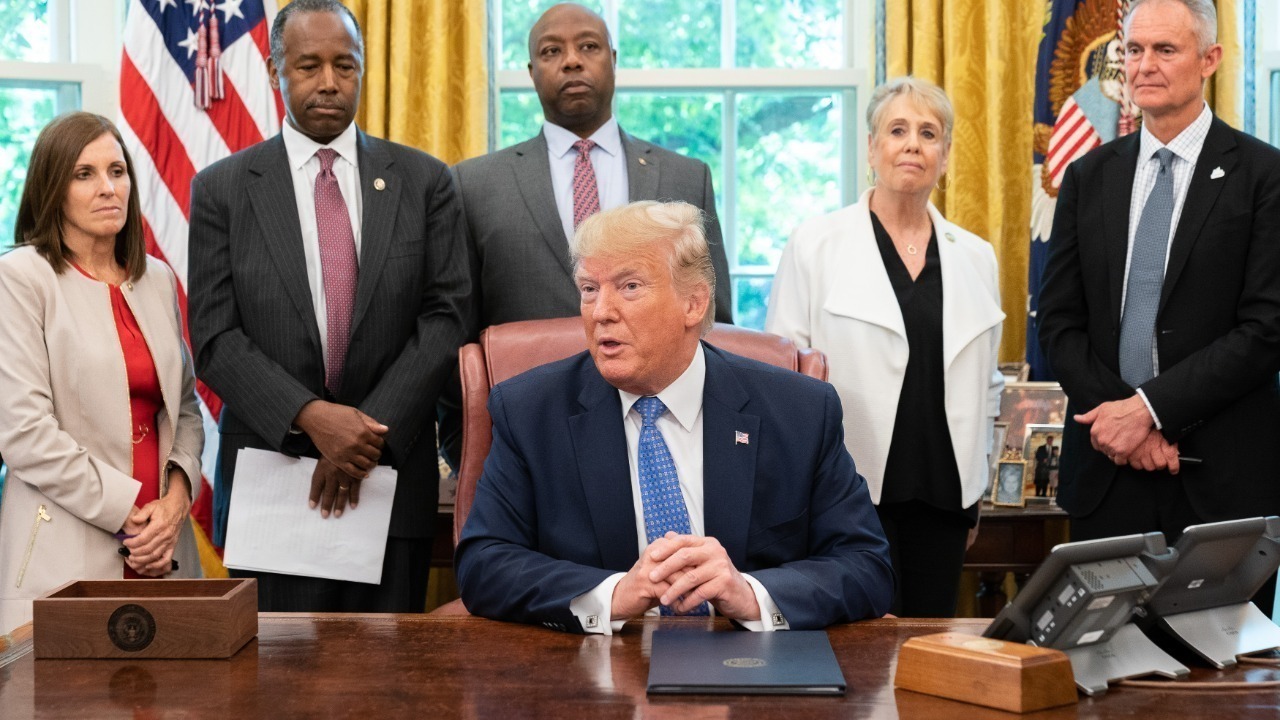
While Caracas courts investors, President Donald Trump is turning oil into a blunt instrument of pressure on Havana. In an executive order described in one detailed report, President Donald Trump signed a measure on Jan. 29 that threatens to impose new tariffs on any country that directly or indirectly supplies or provides oil to Cuba, a move summarized in a post that highlights how President Donald Trump is willing to extend penalties far beyond U.S. shores. Another detailed account of how Trump Moves to Cut Off All Oil to Cuba as the U.S. Takes Aim at Its Government explains that the threat covers any country that continues to ship crude to the island or provide oil to Cuba through swaps and intermediaries, effectively targeting the entire supply chain. Television coverage captured the bluntness of the message, with one segment noting that the president is threatening tariffs on any country selling oil to Cuba, a move putting pressure directly on Mexico and other regional suppliers. That warning is echoed in a video that highlights how shipments to Cuba from Mexic and others could now trigger U.S. tariffs. A separate report on Trump tightens screws on Cuba, threatening tariffs on oil suppliers, details how Trump is using National Security authorities to target any firm that continues to supply the island nation with oil, underscoring that this is not just rhetoric but a policy backed by executive power, as described in a close look at how Trump is tightening the screws on Cuba.
Mexico, Cuba and the regional squeeze
The immediate fallout of Trump’s threat is being felt in Mexico City and Havana, where officials are weighing whether to keep tankers moving toward Cuban ports. One detailed analysis of Trump’s threatened tariffs over oil to Cuba puts Mexico in a bind, with Uriel Blanco, Sol Amaya and Michael Rios explaining how the policy forces Mexico to choose between maintaining a strong relationship with Trump and honoring energy and political ties with Havana. Another report on Trump threatens tariffs on any country selling oil to Cuba, backing Mexico into a corner, quotes Cuban Foreign Minister Bruno Rodr warning that the measure is aimed at strangling Cuba’s economy by cutting off fuel, while also stressing that Trump is also putting Mexico under intense diplomatic strain. Market watchers are already treating the executive order as a live risk factor. An assessment focused on Market dynamics in Crude oil notes that Updates with comments from Mexican leaders show how seriously they take the threat, with the Mexican president signaling that the country will defend its sovereignty while trying to avoid a direct clash with President Donald Trump. Another update on Trump threatens tariffs on Cuba’s oil sales describes how traders are recalibrating routes and insurance costs in response to the possibility that any cargo linked to Updates from Mexican officials could now face U.S. penalties. Coverage from CNN, linked through a detailed report that carries the By CNN tag, reinforces that regional governments see this as a test of how far Washington is willing to go to isolate Cuba’s fuel lifeline, as described in the broader context of regional oil supply.
Investors weigh opportunity against tariff risk
For global oil companies, Venezuela’s opening and Trump’s Cuba tariffs are two sides of the same coin. A detailed breakdown of how two big changes make Venezuelan oil more open to US investors explains that a new license authorizes U.S. entities to export, refine, store, transport and purchase Venezuelan oil, where Previously Chevron had a limited waiver that applied only to specific joint ventures. That expanded license, described in depth in a report on Venezuelan crude, is meant to dovetail with Caracas’s reforms, but it also sits alongside Trump’s threat that countries that buy Venezuelan oil and then ship it to Cuba will face a 25% tariff, as highlighted in a Breaking news post that quotes Trump directly. Some of the biggest names in the sector are not rushing in. A detailed piece by Jordan Blum, who is identified as Editor, Energy, notes that Exxon Mobil and Chevron are declining new spending in Venezuela while taking a wait-and-see approach for the years ahead, even though the country’s reserves remain among the largest in the world. That caution reflects not only memories of past disputes but also the risk that any cargo could be caught up in Trump’s evolving tariff regime, which includes threats on countries supplying oil to Cuba and declarations of a national emergency in posts that emphasize how President Donald Trump continues to wield tariffs as leverage. Another CNN report on Venezuela approves new law opening its oil industry as Trump threatens more tariffs on countries selling oil to Cuba, which is Updated Jan and Published Jan, underlines that investors must now factor in both the promise of new contracts and the risk that any link to Cuba could trigger penalties, a tension that will define how quickly capital actually flows into Venezuela’s newly opened fields. More From TheDailyOverview
*This article was researched with the help of AI, with human editors creating the final content.
Corrected on 2/4/26 at 12:19 p.m. CST: Corrects ‘Del’ to ‘Delcy Rodríguez’ and ‘Mexic’ to ‘Mexico’ for factual accuracy.

Grant Mercer covers market dynamics, business trends, and the economic forces driving growth across industries. His analysis connects macro movements with real-world implications for investors, entrepreneurs, and professionals. Through his work at The Daily Overview, Grant helps readers understand how markets function and where opportunities may emerge.