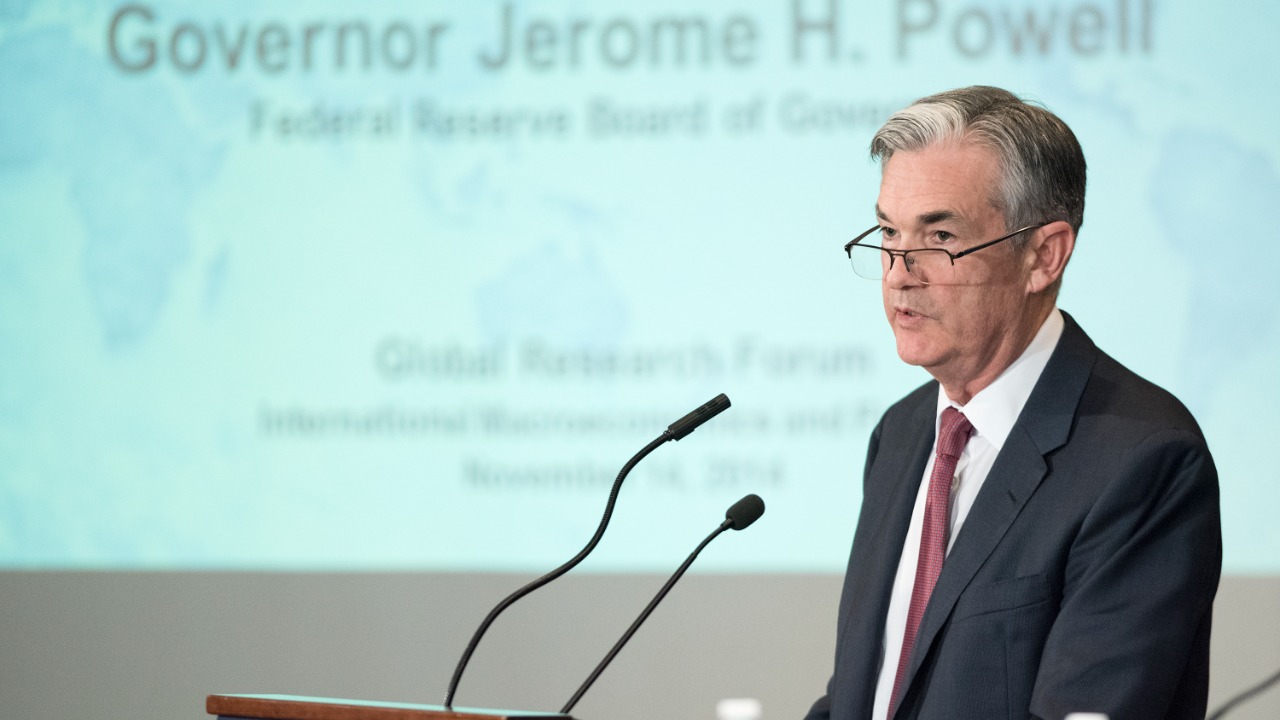
Strong growth numbers are painting a rosy picture of the United States economy, but the person in charge of monetary policy is sounding a more sobering note. Jerome Powell is warning that a new pattern in household behavior, driven by stubborn inflation and higher borrowing costs, is quietly tightening the screws on family budgets even as GDP stays robust. The tension between headline strength and everyday strain is becoming the defining story of this expansion.
Instead of celebrating a clean soft landing, I see Powell using his latest policy meeting to highlight how many Americans are being pushed to cut back, trade down, and rethink basic spending. His message is that the macro data no longer tells the full story of economic health, and that the squeeze on ordinary households is now central to how the Federal Reserve thinks about the path ahead.
The Fed’s “solid” economy meets a strained consumer
On paper, the backdrop could hardly look better. In its latest policy statement, the Federal Reserve said that Available indicators show economic activity expanding at a “solid” pace, with Job gains still running strong and inflation moving gradually toward the central bank’s 2 percent objective. Chair Powell underscored in his press conference that he and his colleagues remain “squarely focused” on their dual mandate of maximum employment and stable prices, a point laid out in the official CHAIR remarks. In a separate clip from the same appearance, recorded in Jan, he even acknowledged that the strength of the economy has “surprised us,” citing resilient consumer spending as a key driver.
Yet that same consumer strength is starting to look more fragile beneath the surface. In recent comments, Powell has stressed that Americans are increasingly being forced to “economize” as persistent price pressures eat into paychecks, a dynamic highlighted in detailed coverage of how Americans are adjusting their budgets. That is the emerging contradiction: the aggregate data still looks healthy, but the marginal dollar of spending is coming from households that are cutting back elsewhere, stretching credit, or dipping into savings. When I look at that combination, it suggests an economy that is strong for now but increasingly vulnerable to any new shock.
“Economizing” becomes the new normal
The phrase that keeps coming up in Powell’s recent appearances is that consumers are looking to “economize.” He has described a pattern in which people are trading down to cheaper brands, skipping discretionary purchases, and hunting more aggressively for discounts as inflation lingers above target. Reporting on his remarks shows him explicitly saying that Powell sees Americans adjusting their behavior in response to higher prices, with the squeeze most acute for lower and middle income families. In my view, that is the “scary” trend he is flagging: not a sudden collapse in spending, but a slow grind in which households are forced to rewire their daily lives just to keep up.
There is a growing body of evidence that this is not just anecdotal. Detailed accounts of his comments show Fed Chair Jerome Powell explaining that consumers are actively trying to economize in the face of inflation that has proven more stubborn than policymakers expected. That means more people are delaying big-ticket purchases like 2024 SUVs, stretching the life of older appliances, or swapping restaurant meals for cheaper groceries from chains like Aldi and Walmart. When I connect those behavioral shifts to the Fed’s own acknowledgment that inflation is only “moving toward” 2 percent, not yet there, it becomes clear that the cost of living shock is still very much alive in household budgets.
Stubborn inflation, tariffs, and the Trump factor
Powell has been careful to avoid wading into politics, but his explanation for why inflation has picked up again inevitably touches on policy choices in Washington. In his latest remarks, he attributed part of the renewed price pressure to higher tariffs, which he described as taxes on imports that are being used by the Trump administration as a tool in its broader economic strategy. Coverage of those comments notes that he directly linked the recent rise in the pace of price growth to these trade measures, saying that Trump era tariffs are feeding into the inflation story. From my perspective, that is a notable shift, because it frames trade policy as a direct contributor to the household squeeze he is so worried about.
At the same time, Powell has emphasized that the Fed cannot simply wish away these cost pressures and must instead calibrate interest rates to keep inflation expectations anchored. The official statement makes clear that the central bank still sees inflation as elevated relative to its goal, even as it acknowledges that price growth has moderated from its peak. Analysts who track his comments have pointed out that he expects inflation to continue easing over the course of this year, but only if policy remains sufficiently restrictive to offset forces like tariffs and tight labor markets. When I put that together with his warnings about consumers being forced to economize, it suggests a delicate balancing act: the Fed is trying to cool inflation that is partly driven by policy choices outside its control, without tipping already stretched households into a deeper pullback.
Rate cuts on hold and what it means for household budgets
Monetary policy is the other key piece of the squeeze. The Fed has already moved interest rates down from their peak, but it has now paused that easing cycle, keeping the federal funds rate in a target range of 3.5% to 3.75%. Data compiled on the policy path show that this decision, often summarized as Fed Pauses Rate, leaves borrowing costs at their lowest level since 2022 but still well above the ultra cheap money era that defined the previous decade. In practical terms, that means mortgage rates, auto loans, and credit card APRs remain elevated enough to bite into monthly cash flow, especially for households that took on variable rate debt.
From the Fed’s perspective, holding rates steady is a way to keep pressure on inflation while assessing how the economy absorbs past moves. The official statement that The Fed released after its meeting makes clear that policymakers still see risks to both sides of their mandate and are not yet ready to declare victory. For households, though, the pause means that relief on borrowing costs will not come as quickly as some had hoped. When I look at Powell’s repeated references to Americans economizing, I see a direct link to this rate environment: families refinancing a 2019 mortgage into a higher rate, or carrying a balance on a rewards card from apps like Apple Card or Chase, are paying more each month, which leaves less room to absorb higher prices at the grocery store or gas pump.
Why Powell’s warning matters despite strong GDP
What makes Powell’s latest comments stand out is that they come at a time when headline GDP growth remains strong. Earlier this year, analysis of his remarks highlighted that Jerome Powell was pointing to a worrying trend affecting the typical American household even as overall GDP numbers looked healthy. He described how stubborn inflation is forcing people to adjust their spending patterns, with particular stress on those who have less financial cushion. In my reading, that is a clear signal that the Fed is no longer content to judge success solely by aggregate output; it is paying closer attention to distributional effects and the lived experience behind the data.
More From TheDailyOverview
*This article was researched with the help of AI, with human editors creating the final content.

Grant Mercer covers market dynamics, business trends, and the economic forces driving growth across industries. His analysis connects macro movements with real-world implications for investors, entrepreneurs, and professionals. Through his work at The Daily Overview, Grant helps readers understand how markets function and where opportunities may emerge.

