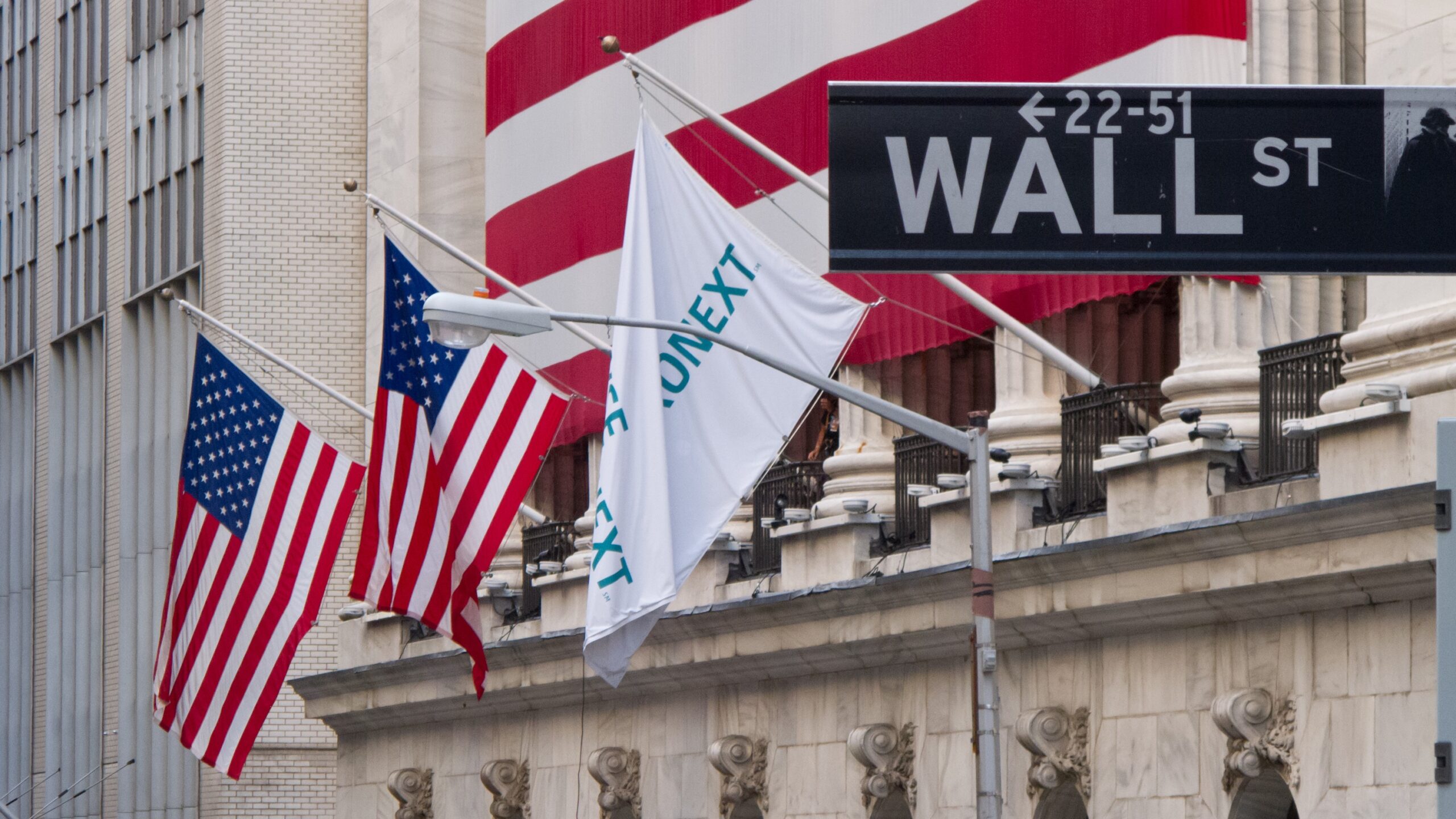
Wall Street is flashing one of its loudest caution signals in years, with roughly $7.8 trillion parked in ultra‑safe money market funds instead of stocks. The sheer scale of that cash hoard suggests investors are nervous about what comes next, even as major indexes hover near records. I want to unpack why that alarm is blaring, how it fits into the current political and economic backdrop, and whether market participants are really listening.
The $7.8 trillion wall of worry
The core warning is simple: when investors stash $7.8 trillion in money markets, they are choosing safety over risk, despite a powerful bull run in equities. That pile of cash, built up over several years of uncertainty, reflects a deep reluctance to fully trust the rally in the Dow Jones Industrial Average and the broader benchmarks that have powered higher in the third year of the current bull market. In effect, Wall Street is running on two tracks at once, with headline indexes climbing while a huge pool of capital waits on the sidelines for a better entry point or a clearer macro signal.
Jan reporting on the third year of the bull market highlights how the Dow Jones Industrial and other major gauges have continued to deliver for investors even as this cash mountain has grown. Another Jan analysis notes that investors have climbed of worry before and come out stronger, with history showing that markets tend to recover from corrections of roughly 10 percent in value approximately once per year. The tension between those two realities, strong performance and persistent caution, is what makes the $7.8 trillion figure feel like an alarm rather than a comfort blanket.
Politics, Trump, and the next market shock
Any discussion of Wall Street’s anxiety has to run through Washington, where President Donald Trump’s policies and the coming electoral calendar loom over asset prices. Some global investors who were blindsided by the strength of the United States market in recent years are now returning to Wall Street with one eye firmly on the exit, citing medium‑term risks such as Trump’s trade agenda and its potential to reshape world trade. That kind of conditional participation helps explain why so much capital remains parked in cash, ready to move quickly if policy or sentiment shifts.
Political risk is not just an abstract talking point, it is being quantified in stark terms. One analysis of a potential $7 trillion “Trump shock” argues that If the Democrats take the House in the 2026 midterms, it will be lights out for Trump’s presidency and his legacy, with major implications for tax, regulation, and trade. The same analysis warns that such a shift could trigger market moves that range from sharp corrections to sector‑specific booms, with some projections of gains even as high as 1,847 percent in niche areas if policy tilts in their favor. When investors weigh scenarios like that, it is not surprising that many prefer the optionality of cash over committing fully to today’s valuations.
Global cracks behind record indexes
On the surface, record or near‑record levels in United States indexes suggest confidence, but the global picture looks more fragile. Large European consumer and luxury names have been hit by worries about demand from American shoppers and broader macro headwinds. In recent trading, LVMH dropped 4 percent, Herm fell 3.1%, and others like Kering, Richemont, and Burberry also declined as investors reassessed the outlook for discretionary spending. Those moves came alongside broader weakness in European benchmarks, with major indexes such as the FTSE 100 sliding as traders digested the prospect of slower growth and persistent inflation.
United States assets are not immune to that reassessment. Lori Heinel, global chief investment officer at State Street Inves, has described the U.S. market’s standing as “a little bit bruised,” even as indexes flirt with highs. Some global investors, according to Sep analysis, are rethinking their allocations after being blindsided by the stunning comeback in American equities, and they now see the United States as less of an automatic safe haven and more of a tactical trade. That shift in perception feeds directly into the $7.8 trillion cash build‑up, because it encourages institutions to keep dry powder ready for a more attractive entry point or a sudden dislocation.
From crisis scars to cash cushions
There is also a psychological legacy at work that helps explain why so much money is sitting in low‑risk vehicles. Coming out of a crisis, investors will tend to be cautious, since many of them will have been financially clobbered during the downturn and will want a cushion to protect against future shocks. That instinct has been reinforced by the rapid succession of stress events in recent years, from pandemic turmoil to inflation spikes and banking scares, each of which reminded market participants how quickly liquidity can dry up and correlations can converge.
Historical analysis of the Wall Street collapse and the return of more reality‑based economics underscores how deeply those scars can run. Even as valuations recover, many households and institutions prefer to rebuild balance sheets and hold more liquid assets than they did before the crisis. When that long‑term caution meets a macro environment filled with political risk, uneven global growth, and questions about the durability of corporate earnings, the result is a structural preference for cash that shows up directly in the $7.8 trillion figure.
Is caution a risk in itself?
The irony is that extreme caution can itself become a source of instability if it leads to crowded positioning and sudden reversals. When so much capital is parked in money markets, any shift in sentiment, such as a perceived “all clear” on inflation or a decisive political outcome, can unleash a powerful wave of buying that pushes valuations even higher. Jan commentary on the current bull market notes that Investors have repeatedly climbed similar walls of worry, with corrections of around 10 percent often serving as entry points rather than endpoints. If that pattern holds, the cash on the sidelines could fuel another leg up, even as traditional valuation metrics flash amber.
At the same time, some market observers argue that the size of the cash pile is a rational response to a world where geopolitical de escalation is easing oil prices but uncertainty remains high. One Jan market thread notes that $7.8 trillion in money markets suggests that investors continue to Prioritize risk management even as enthusiasm for themes like artificial intelligence and semiconductor demand, including names such as $TSM, reignites. In that sense, the alarm is not being ignored so much as integrated into a more cautious playbook, where investors are willing to participate in upside but only with a clear exit strategy and a substantial buffer in cash.
More From TheDailyOverview

Silas Redman writes about the structure of modern banking, financial regulations, and the rules that govern money movement. His work examines how institutions, policies, and compliance frameworks affect individuals and businesses alike. At The Daily Overview, Silas aims to help readers better understand the systems operating behind everyday financial decisions.

