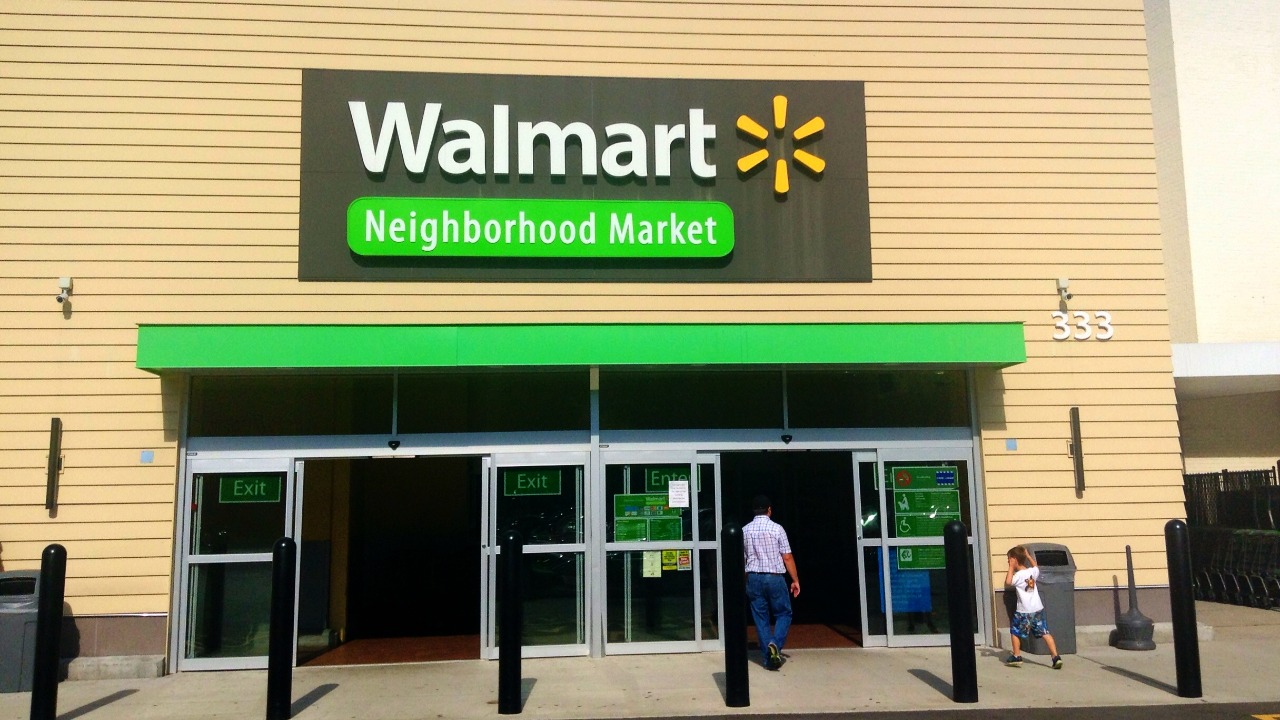
Walmart is turning the most stressful part of grocery shopping, the checkout line, into a test bed for artificial intelligence that does the work of a human cashier and a personal shopper at once. Instead of tapping through menus or scanning every barcode alone, customers are being handed over to AI “agents” that can guide them from search to payment across stores, apps and even third party platforms. The shift is not just a tech upgrade, it is a bet that shoppers will trust invisible software to manage their carts, their data and, increasingly, their time.
As that system rolls out nationwide, the retailer is pairing conversational assistants with new hardware, automation and anti theft tools so that the same AI that recommends vitamins or sneakers can also verify what is in a basket and close the sale. I see this as the clearest signal yet that checkout is no longer a separate step in the trip, it is becoming a continuous background process that follows the customer from aisle to aisle and screen to screen.
From self checkout to AI checkout
Walmart spent the past decade training shoppers to do their own scanning, and now it is quietly swapping that model for one where AI does more of the work. In some locations, the company has already reduced or removed traditional self checkout lanes as part of a New Blueprint for, steering customers toward staffed lanes and app based experiences that can be more tightly controlled. That pivot sets the stage for agent led commerce, where the “lane” is no longer a fixed piece of hardware but a software layer that can live in a phone, a kiosk or a smart cart.
At the same time, the company is upgrading the physical side of checkout with smarter self service equipment that behaves more like an ATM than a basic scanner. New Walmart Self Checkout units are using AI and RFID to Battle Theft by verifying that each item is properly scanned, a response to shrink that also gives the software a richer view of what is in every basket. By tightening that loop between what customers intend to buy and what the system sees, Walmart is laying the groundwork for AI agents that can manage transactions with far less human oversight.
Inside Walmart’s agent led commerce bet with Google
The most ambitious piece of this transformation is happening in the cloud, where The Google and Walmart are wiring their systems together so AI can handle shopping as an end to end task. Their partnership centers on AI for Seamless Discovery, Shopping, Checkout, letting a customer describe what they need in natural language and have an agent assemble, compare and purchase items across Walmart’s catalog. In practical terms, that means a shopper could ask for “back to school supplies for a third grader” and have the AI build a cart, apply preferences and complete payment without ever tapping a traditional “add to cart” button, a vision detailed in their joint work on Seamless Discovery.
That strategy was put on public display At NRF, where Big Show attendees saw John Furner, the incoming CEO of Walmart, join Sundar Pichai to describe how these agents will manage transactions from start to finish. Their comments framed agent led commerce as a way to collapse the distance between browsing and buying, with AI handling substitutions, delivery options and promotions on the fly. The fact that this was presented as a shared Share project between a retail giant and a search giant underscores how central both see this model to the future of shopping.
How Sparky and GenAI assistants change the trip
Inside Walmart’s own ecosystem, the most visible face of this shift is Sparky, the in house AI shopping assistant that now sits alongside the retailer’s app and website. Executives have described Sparky as a way to move “towards that more enjoyable and convenient future,” using conversational prompts to build baskets, surface deals and even tap into external tools like ChatGPT’s Instant Checkout. By opting in to that Instant Checkout feature, Sparky effectively turns any chat into a potential point of sale, blurring the line between conversation and transaction.
In stores, Walmart is layering a separate GenAI assistant on top of that, designed to learn how customers shop and respond with recommendations as they move through the space. Reporting on those pilots notes that the GenAI assistant is built to adapt to each shopper’s habits, nudging them toward new products or services based on what they have bought before and what is in their cart now. That same system is being integrated into both physical stores and the app, according to Jan coverage of the rollout, which means the AI that guides you to an aisle can also be the one that closes your order at the end of the trip.
A new checkout layer across Google, Shopify and beyond
The reach of Walmart’s AI checkout does not stop at its own app or stores, it is being woven into broader commerce platforms that already mediate how people shop online. Google said Sunday in NEW YORK that it is expanding shopping features in its AI chatbot by teaming up with Walmart, Shopify and Wayfair, turning generic product searches into shoppable conversations. For Walmart, that means its inventory and pricing can surface directly inside Google’s agent, with a checkout function that will allow customers to make purchases without jumping between multiple sites, as described in the NEW partnership details.
On the infrastructure side, Shopify is pushing a complementary vision with UCP, a protocol designed to give AI agents a shared, interoperable way to handle real world commerce. Rather than forcing each retailer to build bespoke integrations, UCP lets agents tap into common rules for inventory, pricing rules, loyalty programs and fulfillment requirements, which can then be applied across participating merchants. That approach, outlined in UCP documentation, dovetails with Walmart’s agent led strategy by making it easier for a single AI to orchestrate complex orders that might span multiple brands and delivery options.
Automation, consumer appetite and Walmart’s growth story
Behind the scenes, Walmart is aligning its store operations and capital spending with this AI heavy model of commerce. The company has publicly stated that Walmart aims for 65% of stores to be automation serviced by 2026, a figure that signals how deeply robotics, computer vision and software will be embedded in everyday retail tasks. Analysts tracking Walmart (WMT) note that Walmart (WMT) is kicking off 2026 with health focused product moves like Lemme wellness gummies alongside these AI upgrades, and that investors appear to be cautiously rewarding these health and tech initiatives in the company’s valuation, as outlined in recent coverage of WMT.
Consumer sentiment appears to be moving in the same direction, at least in aggregate. Surveys tied to the Google partnership report that Nearly 70% of consumers say they are interested in using artificial intelligence agents to simplify shopping tasks, and more than half expect these tools to become a standard part of commerce in the years ahead. Walmart has spent years talking about artificial intelligence, but recent moves like the Google tie up and Sparky’s expansion suggest a meaningful shift from experimentation to scaled deployment, a turning point highlighted in Walmart focused analysis.
More From The Daily Overview

Grant Mercer covers market dynamics, business trends, and the economic forces driving growth across industries. His analysis connects macro movements with real-world implications for investors, entrepreneurs, and professionals. Through his work at The Daily Overview, Grant helps readers understand how markets function and where opportunities may emerge.