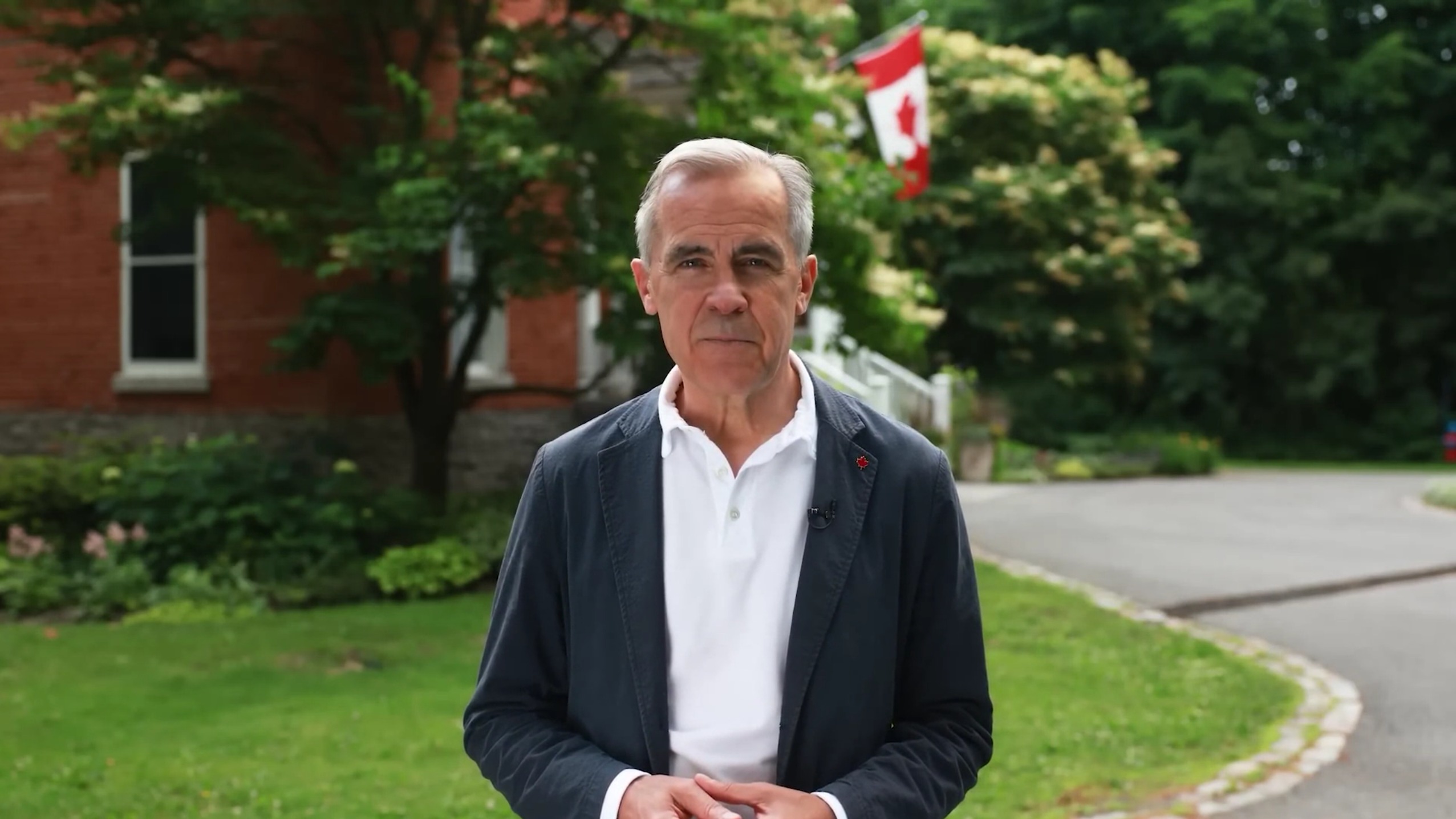
Canadian Prime Minister Mark Carney has used the World Economic Forum stage in Davos to argue that the U.S. led order is breaking apart and that so called middle powers must learn to live in a harsher, more transactional world. His warning is stark, but it risks obscuring a more immediate reality for Europe. For all the talk of autonomy and diversification, the European project still relies on American power in ways that cannot be quickly or cleanly unwound.
If European leaders misread Carney’s message as a licence to plan for a post American era rather than a prompt to shore up a fraying partnership, they will deepen the very rupture he describes. The task is not to imagine Europe without the United States, but to make the transatlantic relationship more balanced and resilient while accepting that, for now, Europe cannot function without American security guarantees and economic leverage.
Carney’s Davos shock and the “rupture” narrative
In Davos, Switzerland, Canadian Prime Minister Mark Carney framed his special address as a response to a historic break in the global system, arguing that the U.S. led order that underpinned decades of prosperity “no longer works” and that the world is entering a more dangerous phase shaped by great power rivalry. His speech at the World Economic Forum was billed as a defining moment for his premiership, and he used it to call for a rebalancing of power away from a single hegemon. In a separate account of the same intervention, Canadian Prime Minister Mark Carney is described warning that “American hegemony” is destabilising world order by concentrating control over energy, technology and finance in Washington’s hands, a critique that sharpened his message that the old bargain is broken.
Carney’s language about a “rupture” resonated with other leaders in Davos who see a world of weaponised trade, contested sea lanes and climate shocks. In one summary of the gathering, he is portrayed as urging middle powers to adapt to a rupture caused by “great powers” and to accept that the U.S. led system is fragmenting under the strain of rivalry with China and Russia, a point echoed in a World Economic Forum account of his special address. Canadian Prime Minister Mark Carney has repeated in multiple formats that the U.S. led global order is breaking apart and that the world is entering a more dangerous era, a message captured in both an Instagram clip and a Facebook video that highlight his insistence that the old system “no longer works”.
Europe’s strategic dependence on American power
Where Carney is right is that Europe can no longer assume that American guarantees are unconditional or permanent, a point made bluntly in an analysis of NATO’s crisis of confidence that argues Europe must prepare for a future in which U.S. commitments are more contingent. That piece notes that Europe can no longer assume that American security promises will last forever and warns that the question is no longer whether Europe should prepare for a reduced U.S. role, but how to do so before the illusion shatters on its own, a judgement captured in a detailed assessment of NATO’s predicament. Yet the same logic underlines how exposed Europe remains, because the continent’s defence architecture, from nuclear deterrence to logistics, still rests on American capabilities that cannot be replicated quickly.
European leaders themselves acknowledge this vulnerability even as they talk up resilience. European Commission President Ursula von der Leyen has argued that a series of geopolitical shocks will force the EU to build a more integrated defence and industrial base, but her remarks in Davos also implicitly recognised that this will take time and that the EU remains deeply tied to U.S. security and technology. In a report on those speeches, European Commission President Ursula von der Leyen is quoted stressing the need to invest in the local economy and infrastructure while facing a “rupture in the world order”, a message captured in an account of the Davos discussions. The uncomfortable truth is that Europe is trying to redesign the aircraft while still flying it, and the engines are American.
Trumpism, Greenland and the limits of European leverage
The return of Trumpism to the White House has intensified European anxiety about that dependence, but it has also exposed how little leverage Europe has when Washington decides to act unilaterally. One opinion piece argues that President Donald Trump’s behaviour has already proved Mark Carney’s point by showing that restraint in U.S. power is a choice, not a structural constraint, and that a more transactional White House can treat allies as bargaining chips. That commentary describes Carney’s Davos intervention as a “brave act” precisely because Trumpism suggests such acts of principled warning should not exist, a judgement embedded in an analysis that links his warning to debates over Greenland. Canadian Prime Minister Mark Carney himself has highlighted the risk of great powers using economic and military pressure to forcefully take over Greenland, a scenario he raised in a candid speech that warned of resources like finance and energy being turned into tools of coercion.
European policymakers have tried to respond with their own instruments, but their efforts underline the imbalance. Yet predictably, even as EU officials are said to be drawing up options for retaliatory tariffs on U.S. imports worth around £80bn, commentators note that Europe still struggles to think beyond President Trump’s ambitions in Greenland and to craft a broader strategy for dealing with an America that mixes security guarantees with tariff threats. That critique is laid out in a commentary that argues Europe has a lot to learn from Mark Carney’s willingness to confront U.S. power directly. If Trump’s return finally compels Europeans to take responsibility for their own security, one opinion writer argues, that is not the death of the liberal order but a necessary correction, a view set out in a piece that insists Europeans must do more without pretending they can do it alone.
Middle powers, NATO and the illusion of autonomy
Carney’s most consequential message for Europe may be his appeal to so called middle powers to coordinate more closely rather than waiting for Washington or Beijing to set the terms. In a detailed examination of his Davos remarks, analysts note that Carney warned that integration among middle powers can no longer be a technocratic project and that failure to adapt will inevitably invite further testing by great powers, a warning captured in a close reading of his speech. The same analysis stresses that the U.S. diplomatic climbdown in recent crises leaves damage behind and that European leaders cannot responsibly continue to rely on a military alliance with a partner whose commitments are now openly debated in domestic politics, a point underlined in a companion assessment that argues European leaders cannot return to the old assumptions about the U.S. role in NATO.
Yet even that critique accepts that NATO without the United States is not a credible deterrent in the short term, which is why some analysts describe the current moment as a “crisis of illusion” rather than a clean break. A separate opinion on Mark Carney’s warning notes that echoes from the past, including earlier debates about burden sharing and U.S. retrenchment, show that NATO has survived previous shocks precisely because European and American leaders ultimately chose to reinvest in the alliance, a pattern discussed in a reflection on his speech. Popular commentary on NPR has linked Carney’s warning to broader debates about Economy, World and NATO, arguing that the alliance’s future will depend on whether European governments treat this as a final wake up call or another passing scare, a theme revisited in a later analysis that situates his remarks in a longer historical arc.
More From TheDailyOverview
*This article was researched with the help of AI, with human editors creating the final content.

Grant Mercer covers market dynamics, business trends, and the economic forces driving growth across industries. His analysis connects macro movements with real-world implications for investors, entrepreneurs, and professionals. Through his work at The Daily Overview, Grant helps readers understand how markets function and where opportunities may emerge.

