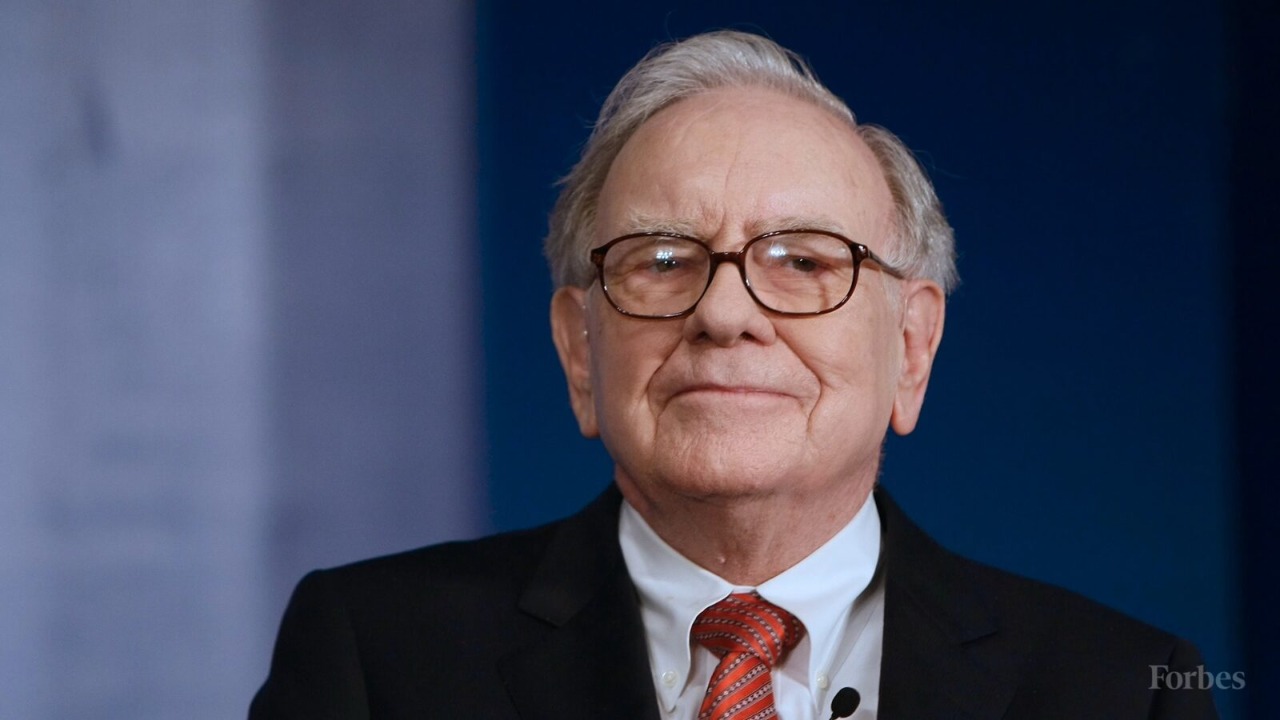
Warren Buffett built his fortune on a simple conviction: stocks beat everything else over the long run. He said so repeatedly, calling cash and bonds poor alternatives to equities. Yet Berkshire Hathaway’s balance sheet now tells a very different story, with roughly $381 billion parked in cash equivalents and short-term U.S. Treasury bills as of September 30, 2025. That gap between what Buffett preached and what Berkshire now practices is one of the most striking contradictions in modern investing.
When Buffett Called Cash a “Terrible Investment”
Back in 2013, Buffett was blunt about where he thought investors should not put their money. During a live CNBC interview that October, he described cash and long-term bonds as “a terrible investment compared to equities.” The context was the Washington debt-ceiling standoff, and Buffett’s message was clear: political turmoil was no reason to flee stocks. He had made the same argument months earlier, appearing on CNBC’s “Squawk Box” in May 2013 to call bonds “terrible” at prevailing yields. In both cases, his logic rested on the idea that low-yielding instruments could not keep pace with inflation over time, while equities offered real growth.
That philosophy shaped decades of Berkshire’s capital allocation. Buffett repeatedly told shareholders that a “substantial majority” of their money belonged in stocks, a position he reiterated in communications summarized by Investopedia coverage. The message was consistent: holding too much cash was a drag on returns, and bonds were even worse. For a generation of investors who followed Buffett’s lead, the takeaway was straightforward. Own businesses, not government paper, and accept short-term volatility in exchange for long-term compounding.
$381 Billion in Cash and T-Bills
The numbers on Berkshire’s most recent quarterly filing tell a starkly different story. According to the company’s Form 10‑Q for September 2025, Berkshire held $72,156 million in cash and cash equivalents alongside $305,367 million in short-term investments in U.S. Treasury bills. Combined, that is roughly $377.5 billion, and the headline figure of approximately $381 billion reflects rounding and related cash-like holdings reported in the same filing. By any measure, it is an extraordinary sum for a company whose chairman spent years warning against exactly this kind of allocation.
The buildup did not happen overnight. Earlier filings show the trajectory of Berkshire’s liquidity. At the end of March 2025, Berkshire reported tens of billions in cash and more than $300 billion in T‑bills, and by June 30, 2025, the mix had shifted as cash equivalents surged while Treasury holdings fell, reflecting active rotation between ultra‑short‑duration instruments rather than a static pile. At the same time, Berkshire has been pruning certain equity positions, as seen in its Form 13F equity disclosure for 2025, which shows trims to several public stock holdings even as the cash and T‑bill mountain grew.
Five Percent of the Entire T-Bill Market
The sheer scale of Berkshire’s Treasury bill position has consequences beyond the company’s own balance sheet. CNBC reported that Berkshire now owns roughly 5% of the Treasury-bill market. Official data on the size and composition of federal debt are available through the government’s Fiscal Data platform, which provides detailed tables on Treasury securities by type and maturity. When a single corporate buyer holds that large a share of a government debt instrument, it effectively makes Berkshire a structural participant in the U.S. short-term funding market, not just a passive investor clipping coupons.
For ordinary investors, this matters because Berkshire’s buying power can influence T-bill yields at the margin, and its decisions about when to rotate out of bills and into equities or acquisitions could move markets. Even if Berkshire cannot set rates outright, its demand adds to the competition for safe assets that already includes money-market funds, banks, and foreign central banks. The company’s posture is therefore a signal about risk appetite at one of the world’s most closely watched conglomerates, especially when viewed alongside federal spending and borrowing trends tracked on portals such as USAspending.gov, which show the broader fiscal backdrop against which those T‑bills are issued.
Why the Contradiction Matters
The simplest reading of Berkshire’s cash hoard is that Buffett cannot find stocks worth buying at current prices. If equities offered compelling value, the man who called cash “terrible” would presumably be deploying capital into businesses rather than Treasury bills yielding a few percentage points. Berkshire’s decision to sit on hundreds of billions in liquid assets, while simultaneously trimming some equity stakes, suggests that management sees better risk-adjusted returns in waiting than in chasing fully valued markets. In that sense, the contradiction between rhetoric and behavior may be more apparent than real: Buffett always emphasized price discipline, and right now discipline points toward patience.
Still, the optics are jarring for investors who internalized his earlier warnings about idle cash. One implication is that time horizon matters. When Buffett dismissed cash and long bonds, he was speaking primarily to individual savers thinking in decades, not to a conglomerate that must be ready to fund insurance claims, seize acquisition opportunities, and withstand market shocks. Berkshire’s current stance highlights a nuance that often gets lost in sound bites: the same asset can be “terrible” for a buy‑and‑hold retirement account yet entirely rational as a temporary parking place for corporate capital awaiting deployment. The contradiction matters because it forces investors to separate Buffett’s timeless principles from the specific constraints and opportunities Berkshire faces today.
Buffett’s Evolving Playbook for a Different Market
Another way to reconcile the shift is to recognize how the investing landscape has changed since Buffett’s 2013 remarks. Back then, bond yields were pinned near historic lows, making it difficult for fixed income to compete with equities over the long run. Today, short-term Treasury bills offer materially higher yields than they did a decade ago, giving large pools of capital a relatively attractive, low‑risk alternative while they wait for better bargains in the stock market. In that environment, holding T‑bills is less about abandoning Buffett’s equity-first philosophy and more about acknowledging that the opportunity cost of waiting has fallen.
There is also a strategic dimension to Berkshire’s hoard. With more than $300 billion in instantly deployable assets, the company is positioned to act as a buyer of last resort if market dislocations create distressed sellers, much as it did during the 2008 financial crisis and the early stages of the pandemic. The larger the cash and T‑bill pile, the more optionality Berkshire has to write big checks quickly—whether for minority stakes, outright acquisitions, or bespoke financing deals that command premium terms. In that sense, the current mountain of government paper can be seen not as a repudiation of Buffett’s long‑held views, but as ammunition for the next chapter of exactly the kind of opportunistic equity investing that built his reputation in the first place.
More From The Daily Overview
*This article was researched with the help of AI, with human editors creating the final content.

Grant Mercer covers market dynamics, business trends, and the economic forces driving growth across industries. His analysis connects macro movements with real-world implications for investors, entrepreneurs, and professionals. Through his work at The Daily Overview, Grant helps readers understand how markets function and where opportunities may emerge.

