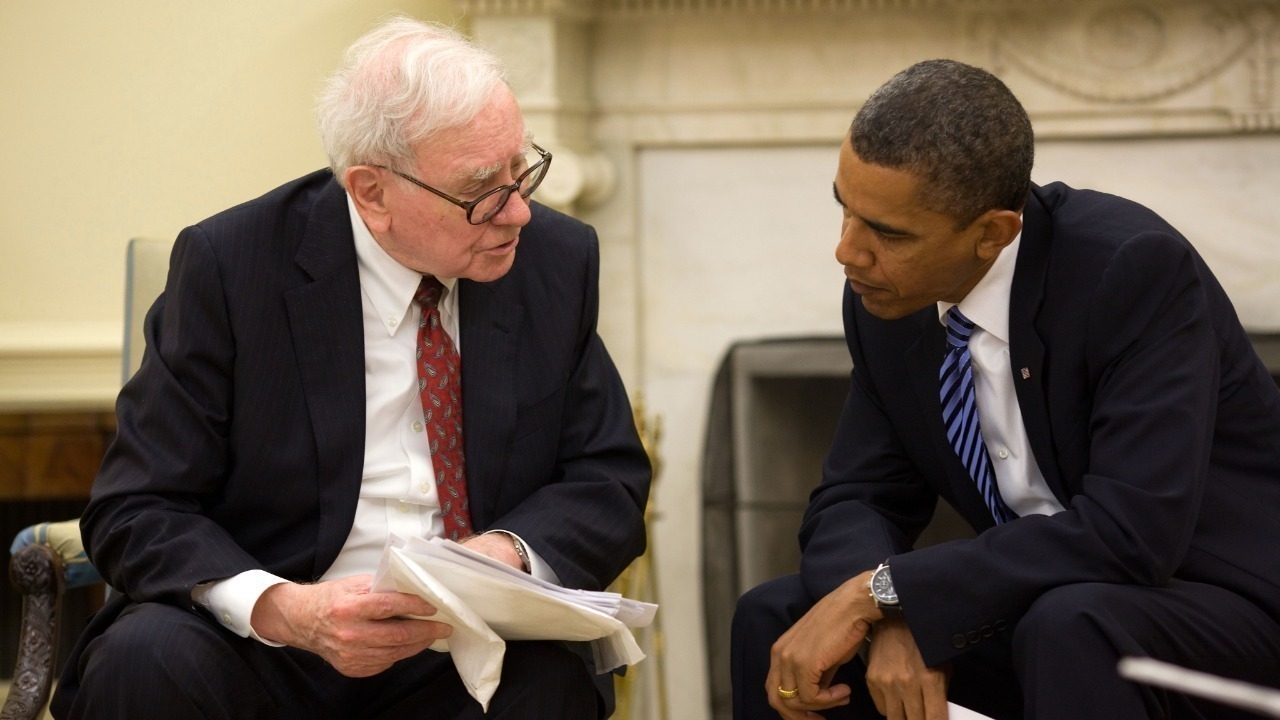
Warren Buffett, the legendary investor often referred to as the Oracle of Omaha, has distilled his financial wisdom into a single, powerful rule for middle-class earners: “Do not save what is left after spending, but spend what is left after saving.” This principle underscores the importance of prioritizing savings to leverage the power of compounding interest over time. Amid growing concerns over tax inequality, Buffett’s broader advocacy includes the Buffett Rule, which suggests that households earning over $1 million annually should pay a minimum 30% effective federal tax rate to create a fairer playing field for middle-class workers.
Buffett’s Saving Rule for Everyday Earners

Buffett’s saving rule is straightforward yet transformative: allocate a fixed percentage of income—such as 10-20%—directly to savings or investments before any discretionary spending occurs. For instance, a middle-class salary of $60,000 annually, when saved and invested with a 7% compound return, could potentially grow to $500,000 over 30 years. This approach not only builds wealth but also instills financial discipline by treating savings as a non-negotiable “bill” that must be paid first. Such a mindset prevents lifestyle inflation and helps build substantial emergency funds or retirement nests, reflecting Buffett’s own frugal habits despite his $100+ billion net worth, according to the Economic Times.
However, real-world barriers exist for middle-class earners, such as rising living costs in areas like Omaha, Nebraska, where Buffett resides. Automating transfers to accounts like 401(k)s or IRAs can help enforce this saving-first rule, making it easier to adhere to even when financial pressures mount. By automating savings, individuals can ensure that their financial goals remain on track, regardless of external economic challenges.
Teaching the Rule to the Next Generation
Buffett advises parents to instill a saving-first mindset in their children by providing a small weekly allowance, such as $5, and requiring them to allocate at least half to savings or a simple investment account from an early age. This approach fosters lifelong habits, encouraging children to start micro-investments in index funds, which can grow to significant sums by adulthood through the power of compounding. Buffett himself exemplified this strategy with his early paper route earnings, which laid the foundation for his future wealth, based on information from The Express.
For families looking to implement this strategy, using kid-friendly tools like custodial Roth IRAs can be beneficial. These accounts offer tax advantages that are accessible to middle-class households, making them an excellent option for teaching children about the benefits of saving and investing early. By embedding these financial habits from a young age, parents can help their children build a secure financial future.
The Buffett Rule and Tax Fairness

The Buffett Rule is a policy proposal aimed at ensuring that the 400 wealthiest American families, who have paid an average federal income tax rate of just 8.2% in recent years, contribute at least 30% on incomes over $1 million. This proposal is designed to directly benefit middle-class earners by promoting fairer revenue distribution. Senator Sheldon Whitehouse has recently called for Congress to pass the Buffett Rule following a report from the Institute on Taxation and Economic Policy, which exposed record tax inequality. The report highlighted that the top 1% effective tax rate fell to 25.4%, while middle-class rates hovered around 15-20%, according to the Senate website.
This rule aims to counter loopholes that allow high earners to pay less than middle-class workers. Buffett himself admitted in 2011 that his secretary paid a higher tax rate than he did, underscoring the need for reforms to ensure tax fairness. By addressing these disparities, the Buffett Rule seeks to create a more equitable tax system that supports the financial well-being of all Americans.
How the Wealthy Exploit Middle-Class Tools
Tech mogul Peter Thiel’s use of a Roth IRA, originally designed as a tax-advantaged retirement account for middle-class savers, exemplifies how the wealthy can exploit tools intended for average earners. Thiel transformed his Roth IRA into a $5 billion tax-free piggy bank by investing in high-growth startups like PayPal. His initial $1,700 investment in 1999 grew exponentially without triggering taxes upon withdrawal after age 59½, highlighting how such accounts were not intended for billionaire-level gains, according to ProPublica.
In contrast, middle-class limitations are evident, with annual Roth contributions capped at $7,000 for 2024. This disparity underscores Buffett’s push for reforms to prevent abuse while preserving benefits for average earners. By addressing these issues, policymakers can ensure that tax-advantaged accounts remain a viable tool for middle-class wealth building, rather than a loophole for the ultra-wealthy.

Cole Whitaker focuses on the fundamentals of money management, helping readers make smarter decisions around income, spending, saving, and long-term financial stability. His writing emphasizes clarity, discipline, and practical systems that work in real life. At The Daily Overview, Cole breaks down personal finance topics into straightforward guidance readers can apply immediately.
