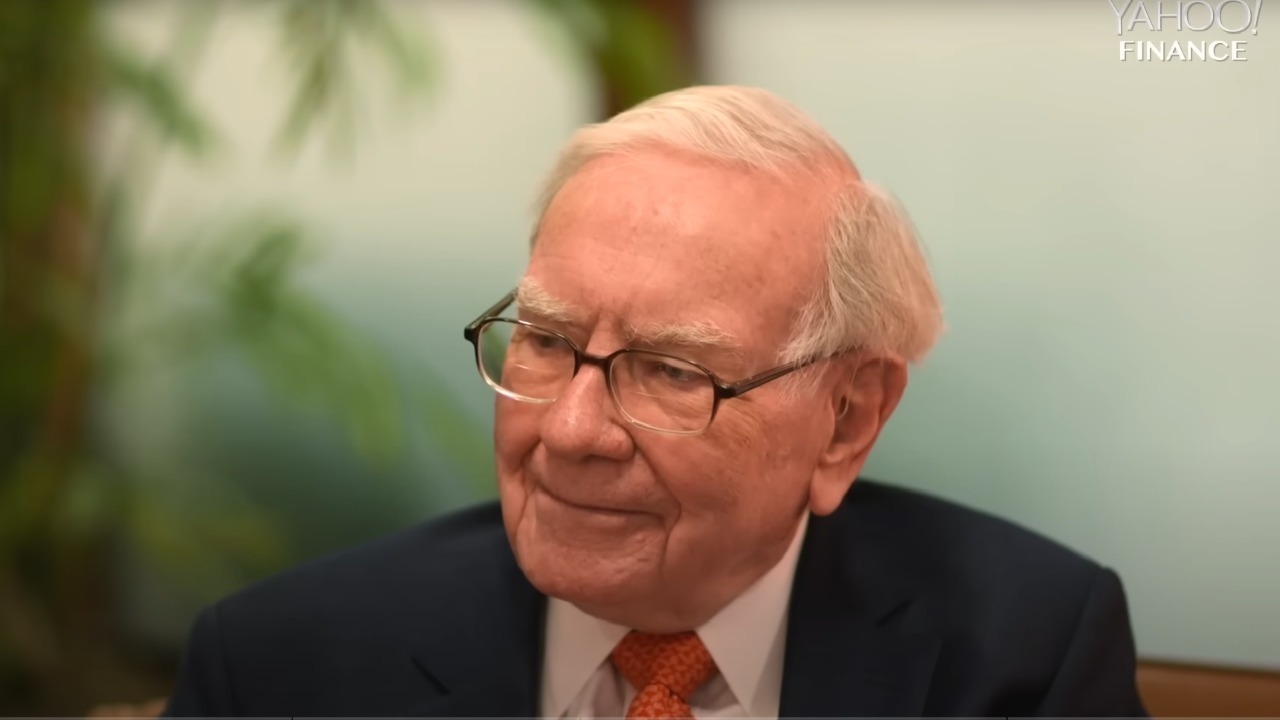
Warren Buffett has spent decades turning simple thought experiments into life-changing financial lessons for young people. One of his favorite exercises for college audiences uses a single, disarming question that forces students to rethink what really drives wealth and success.
Instead of focusing on stock tips or complex models, he asks them to imagine owning a small share of a classmate’s future and then to reverse that lens onto their own lives. That mental shift, paired with his famous “dream car” analogy, distills a philosophy of self-investment, health, and character that can make anyone richer in far more than money.
The 1 question Buffett posed to a room of students
When Warren Buffett speaks to students, he often skips the usual career advice and goes straight to incentives. At the University of Florida Business School, he asked a group to imagine they could pick one person from a class of about 300 and receive 10 percent of that person’s lifetime earnings. As another version of the story recounts, he framed it as a question they would never forget: if they could “own” a slice of one classmate’s future, who would they choose, and why, knowing it had nothing to do with being the smartest or the most athletic. In the same talk, Buffett pushed them to be specific about the traits that made that person such a compelling bet.
Once the students identified their “investment,” Buffett flipped the scenario. He asked them to imagine they also had to choose one classmate to short, someone whose future they would bet against. That uncomfortable twist forced them to name the habits and attitudes that quietly destroy potential. The point, as later reporting on Buffett makes clear, was not to rank their peers, but to realize that the qualities they admired or avoided were largely choices, not destiny. In other words, they could adopt the behaviors of the person they would buy and root out the traits of the person they would sell.
What the exercise really measures: character as compound interest
Buffett’s question sounds like a game, but it is really a lesson in how character compounds. When students describe the classmate they would “buy,” they rarely talk about test scores. They talk about reliability, generosity, resilience and the ability to make others better. In his broader advice to young people, he has argued that surrounding yourself with people who are kind, honest and caring will shape you in the same direction, while choosing peers who bring anger or sadness means that pain will follow you. That is the same logic as picking a stock: you are really choosing a culture and a trajectory, not a quarterly number.
By asking students to imagine a permanent stake in someone else’s life, Buffett is also teaching them to see themselves as long-term assets. He has said that the most important investment anyone can make is in their own abilities and habits, because those are the engines that drive every future decision. In a separate reflection on his student talks, he warned that if people wait until they are 60 or 70 to think about these choices, it is too late to undo the damage. You can maintain and improve, he suggested, but you cannot fully repair a life that has been driven like a wreck.
The “dream car” story and why Buffett talks about rust
To make that point vivid, Buffett often turns from abstract questions to a concrete image: a car. In one widely shared talk, he tells students to imagine that when the session ends, they will each receive the car of their choice, any model, any color, parked outside and fully paid for. Then he adds the catch that appears in multiple retellings, including a video of Warren Buffett’s advice: it is the only car they will ever have. In another version of the story, he begins the same way, stressing that if there is the least little bit of rust, going to get so it does not spread, because you know that if the car breaks down, you cannot go anywhere.
In an essay that recounts the same parable, Buffett says it is crucial to convey this message early to youngsters: Take care of your mind and body the way you would treat that one perfect vehicle. He describes how, if he had such a car, he would read the manual multiple times, follow every maintenance schedule and never let rust eat away at it. In another retelling, he drives the point home by saying that if you were only going to have one car your entire life, you would look after it like your life depended on it, because one and only. For Buffett, that car is a stand-in for the body and mind that have to carry each of us for life.
“You only get one mind, one body”: health as the first investment
Buffett has repeated a related story about a genie who offers a young person a single car for life, then uses the twist to talk about mental health. In a reflection on that Classic Genie Story a Great Lesson in Taking Care of Your Mental Health, he is quoted as saying, “You only get one mind and one body.” That line is not a metaphor for him, it is a capital allocation rule. If you burn out your brain with stress, poor sleep and constant distraction, or neglect your body with junk food and no movement, no amount of financial return will make up for the lost capacity. In other words, the first asset on your personal balance sheet is your health.
Short clips that circulate on social media have amplified this message. In one video, Buffett’s car analogy is summarized with the blunt line that Maintenance is not optional, it is everything. Another reel urges viewers to apply the dream car logic directly to themselves, reminding them that Now they should remember we only get One body and one mind, and that How you treat them today decides the quality of every year that follows. A longer reflection on his talks makes the same point in more detail, noting that You cannot repair the car back into the shape it was, you can only maintain it and avoid a wreck. For Buffett, health is not a side note to wealth, it is the foundation that makes every other investment pay off.
Turning Buffett’s question into a daily playbook
The power of Buffett’s classroom question lies in how easily it can be turned into a checklist for everyday decisions. If I ask myself which colleague or friend I would happily own 10 percent of, I immediately think of specific behaviors: they show up on time, they keep learning, they treat people well when no one is watching. Those are traits I can practice on a Tuesday afternoon, not abstract ideals. When Buffett tells students to identify and then copy the qualities of the person they would buy, he is giving them a blueprint for compounding their own value.
More From TheDailyOverview

Cole Whitaker focuses on the fundamentals of money management, helping readers make smarter decisions around income, spending, saving, and long-term financial stability. His writing emphasizes clarity, discipline, and practical systems that work in real life. At The Daily Overview, Cole breaks down personal finance topics into straightforward guidance readers can apply immediately.