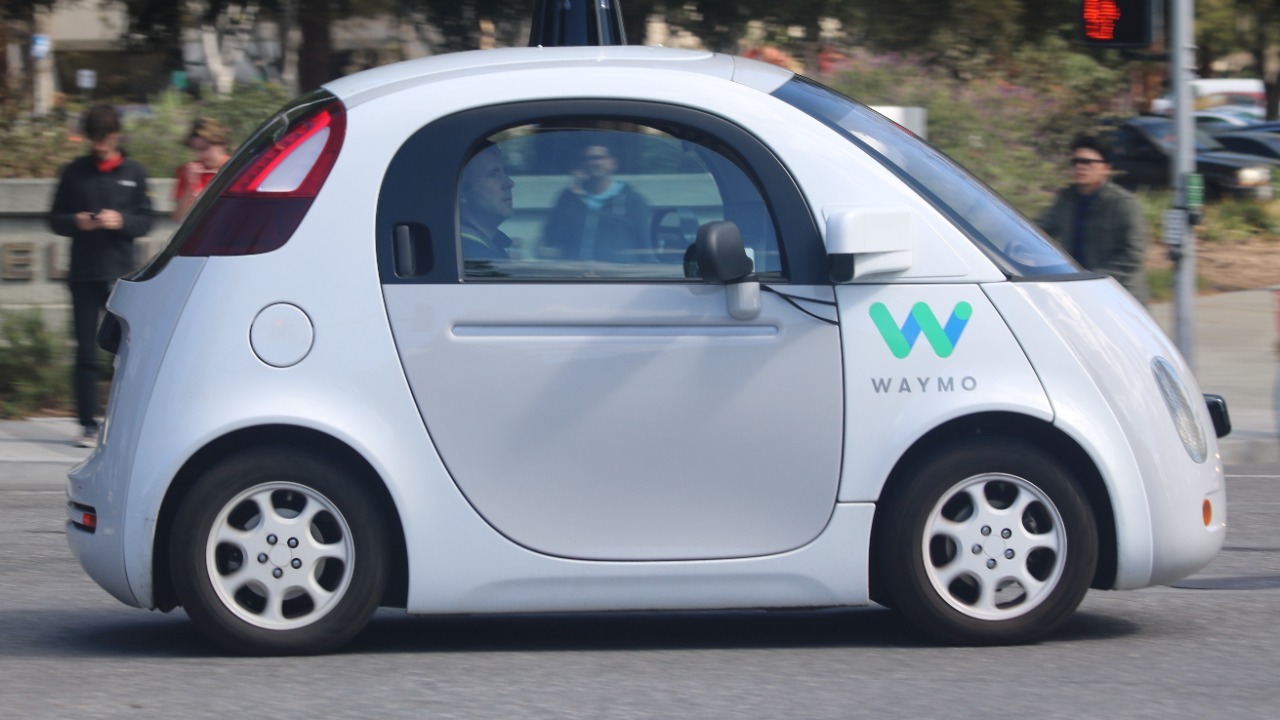
Waymo is racing to lock in a $16 billion capital infusion at a valuation of $110 billion, a funding swing that would instantly reset expectations for the commercial viability of robotaxis. The deal would mark one of the largest private financings in the history of autonomous vehicles and signal that big money still believes self-driving cars are edging toward mainstream use.
For Alphabet, which has nurtured Waymo for more than a decade, the round would both validate years of heavy spending and raise the stakes on turning experimental fleets into a durable business. The numbers alone, $16 billion and $110 billion, frame a simple question: is the robotaxi era finally ready to scale, or is this another expensive bet on a future that keeps receding?
Inside the $16 billion raise and $110 billion price tag
Waymo is described as finalizing a $16 billion funding round that would value the company at $110 billion, a figure that would place it among the most richly valued private tech outfits on the planet. Reporting on the deal notes that the company is in the late stages of closing the transaction, with the $110 billion valuation used as the reference point for new investors buying into the $16 billion Round. That price implies investors are willing to treat Waymo less like a speculative research project and more like a late-stage growth company, even though the robotaxi market is still in its infancy.
Separate coverage characterizes the deal as Waymo seeking about $16 billion in a financing round that would value the unit at nearly $110 billion, language that underscores how the final number may sit just under the headline figure but still in the same rarefied band. Those reports, framed as Takeaways by Bloomberg AI, describe Waymo as aiming for a valuation near $110 billion rather than a precise fixed mark. A separate summary of the same reporting again highlights that Waymo is seeking about $16 billion at a level close to $110 billion, reinforcing that investors are clustering around that price even if the final term sheet lands a fraction lower, as reflected in another Bloomberg AI summary.
Alphabet’s role and why the parent is doubling down
Alphabet is not just a passive owner watching outside investors set the price, it is also contributing capital into the new round, according to reporting that describes Waymo as finalizing a $16 billion funding round at a $110 billion valuation with Alphabet participating. That detail matters because it signals that the parent company, which also owns Google, is willing to keep writing large checks into its autonomous vehicle arm rather than spinning it out or starving it of cash, as noted in coverage that explicitly links Waymo’s financing ambitions to Alphabet. For a conglomerate that has been under pressure to rein in long-shot bets, doubling down at this scale is a clear statement that it sees Waymo as a core strategic asset rather than a side project.
Other summaries of the deal emphasize that Alphabet’s robotaxi unit is securing a massive injection of capital just over a year after its previous funding, suggesting the parent is comfortable with a cadence of large, periodic raises to keep the program on an aggressive trajectory. One description of the transaction notes that Waymo is finalizing a $16 billion funding round at a $110 billion valuation, according to the Financial Times, and that Alphabet is contributing a significant share of the capital, a detail captured in a Waymo summary that ties the funding to a sense that the technology is finally ready for prime time. A related overview of the same deal frames it under the banner of Investment and autonomous vehicles, underscoring that this is as much a capital markets story as a product one, and explicitly labels the transaction as Waymo Closes $16B Round at $110B Valuat, language that appears in a Investment oriented description.
How the valuation stacks up in the AV and AI landscape
A $110 billion valuation would instantly vault Waymo into the top tier of privately held tech companies, ahead of many pure software unicorns and on par with some established automakers. One analysis of the funding describes the company as nearing a $16 billion funding round valuing the company at $110 Billion, language that underscores how unusual it is for an autonomous vehicle company to command a price tag that rivals long-standing industrial giants, as captured in a summary that refers to Waymo Nears that $110 Billion mark. In a sector where many rivals have struggled to raise fresh capital or have been folded back into larger automakers, the ability to attract $16 billion at that price is a stark differentiator.
The broader funding environment for AI and automation helps explain why investors are willing to pay up. A snapshot of the tech deal flow shows that capital is still flowing into AI infrastructure and applications, with one feed highlighting how Denver-based Northslope, which builds customized AI applications for Palantir OS, raised money and was flagged as a notable item just 35 m earlier, a detail captured in a Techmeme snapshot that also names Natalie Breymeyer, Axios, Denver, Northslope and Palantir OS. Against that backdrop of steady AI deal activity, Waymo’s $110 billion valuation looks less like an outlier and more like the apex of a broader wave of capital chasing platforms that blend software, data and real-world operations.
From pilot projects to real riders on real roads
Valuation only matters if it is backed by real-world traction, and Waymo has been working to show that its technology is not confined to test tracks. Earlier this year the company launched fully driverless taxis in South Florida, with reports describing how cars across South Florida roads are now accepting passengers and how people who signed up are beginning to hail rides without a human behind the wheel. That expansion, captured in a video segment focused on South Florida, shows that Waymo is no longer limiting itself to a handful of carefully curated neighborhoods in the Southwest.
Coverage of the funding round ties that operational progress directly to investor appetite, with one summary noting that Waymo is finalizing a $16 billion funding round at a $110 billion valuation and suggesting that the company is finally ready for prime time after years of incremental testing. That same description, which again cites the $110 billion figure and frames the deal as Waymo Closes $16B Round at $110B Valuation, reinforces that the capital is being raised not for a speculative moonshot but for a service that is already moving paying riders, a point echoed in a Billion Funding Round overview that links the funding to both expansion and challenges.
What $16 billion buys: expansion, hardware and regulatory muscle
Raising $16 billion in one shot gives Waymo an unusually large war chest to fund expansion into new cities, upgrade hardware and absorb the heavy fixed costs of mapping and safety validation. One detailed summary of the deal notes that Waymo is finalizing a $16 billion funding round at a $110 billion valuation and explicitly frames the capital as fuel for scaling its robotaxi network beyond its current markets, a point embedded in a description that labels the transaction as Waymo Closes $16B Round at $110B Valuation and highlights the $110 billion and $110 figures in the context of the $110 billion price. With that kind of capital, the company can afford to run overlapping pilots, subsidize early rides and invest in custom sensor stacks without immediately needing to show profitability.
The funding also gives Waymo more leverage in regulatory conversations, since it can point to a deep balance sheet and a long-term commitment to safety investments. A separate description of the same transaction, which again uses the phrasing Waymo Closes $16B Round at $110B Valuat and categorizes it under Investment and autonomous vehicles, underscores that the round is as much about signaling staying power as it is about paying for new cars, a nuance captured in a Waymo Closes overview. Regulators and city officials weighing whether to allow driverless fleets onto their streets are more likely to engage with a company that can demonstrate both technological maturity and the financial capacity to respond to incidents, fund insurance pools and support long-term infrastructure.
The risks behind the eye-popping valuation
Even with real riders and a huge balance sheet, a $110 billion valuation bakes in a lot of optimism about how quickly robotaxis can scale and how profitable they can become. One analysis that describes Waymo as nearing a $16 billion funding round valuing the company at $110 Billion also flags that the company faces expansion and challenges, a pairing that hints at the operational, regulatory and competitive hurdles still ahead, as noted in the $110 billion focused summary. The capital may buy time and optionality, but it does not guarantee that cities will welcome fleets of driverless cars or that riders will consistently choose them over ride-hailing services with human drivers.
There is also the question of how public and private markets will treat such a valuation if and when Waymo eventually lists its shares. The same set of reports that describe Waymo seeking about $16 billion near $110 billion, framed as Takeaways by Bloomberg AI, implicitly acknowledge that the number is aspirational as well as descriptive, a negotiated compromise between what Alphabet believes the unit is worth and what investors are willing to pay, as reflected in the repeated references to Round and Valuation. If growth stalls, or if a high-profile safety incident undermines public trust, that $110 billion figure could quickly look less like a milestone and more like a ceiling.
Why the rest of the industry is watching
For other autonomous vehicle developers, Waymo’s ability to attract $16 billion at a valuation of $110 billion is both a benchmark and a challenge. Some rivals have already pulled back or pivoted to driver-assistance systems, while Waymo is pressing ahead with fully driverless services in markets like South Florida, a rollout documented in coverage that shows driverless cars across South Florida roads now accepting passengers and highlights how people who signed up are beginning to use the service, as seen in the driverless taxis footage. If Waymo can convert that operational lead into a sustainable business, it will set a template that others will either have to follow or consciously reject.
Investors, meanwhile, are using Waymo’s round as a reference point for pricing other bets in mobility and AI. The same tech news streams that surface the Waymo deal also highlight smaller but telling financings, such as the Northslope raise for customized AI applications on Palantir OS that appeared on Techmeme with Natalie Breymeyer and Axios credited in the blurb, showing how capital is flowing into both infrastructure and application layers of AI. In that context, Waymo’s $110 billion valuation is not just a story about one company, it is a signal about how markets are valuing the convergence of software, data and physical-world automation, a convergence that will shape how people move through cities for years to come.
More From TheDailyOverview
*This article was researched with the help of AI, with human editors creating the final content.

Grant Mercer covers market dynamics, business trends, and the economic forces driving growth across industries. His analysis connects macro movements with real-world implications for investors, entrepreneurs, and professionals. Through his work at The Daily Overview, Grant helps readers understand how markets function and where opportunities may emerge.

