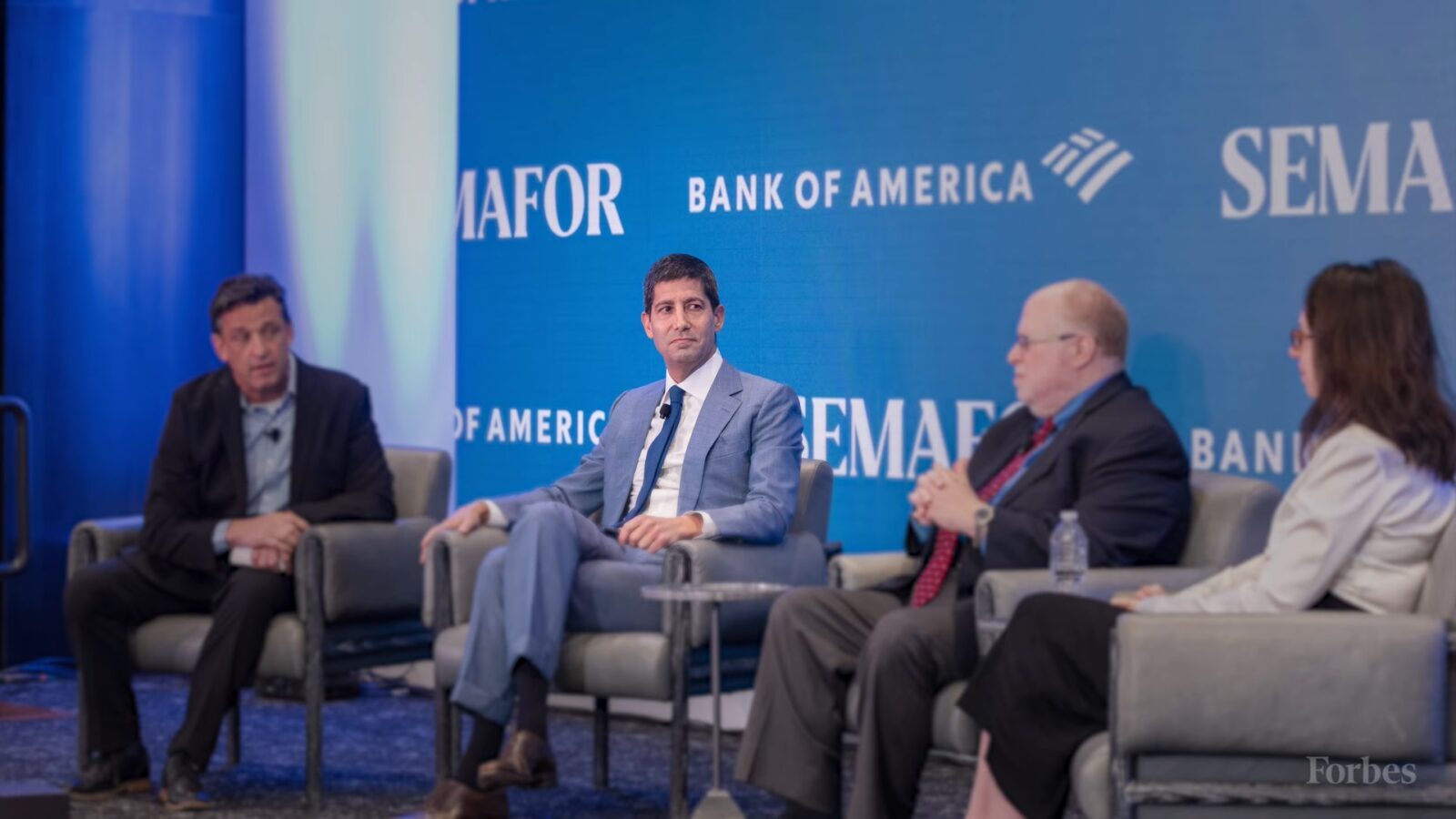
The next chair of the Federal Reserve will walk into an office framed by portraits of predecessors who fought inflation, stabilized markets, and navigated wars. None of them had to manage a $31 trillion national debt while inflation memories were still fresh and political pressure this intense. Kevin Warsh is poised to confront a fiscal overhang that looks more like the late 1940s than anything the modern Fed has seen, with the added complication of a polarized Congress and a president who openly demands lower rates. That combination turns the Fed’s traditional balancing act into something closer to crisis management. The central bank’s decisions on interest rates, its $6.6 trillion balance sheet, and its relationship with the White House will all be filtered through the lens of whether the United States can keep servicing its debt without sacrificing price stability or financial credibility.
The postwar-style debt trap waiting for Warsh
Kevin Warsh is stepping toward the chair at a moment when the Federal Reserve is being asked to do something it has not done since the years immediately after World War II: run monetary policy with a debt load so large that it threatens to shape every decision. Reporting on the newly named chair makes clear that the scale of federal borrowing is no longer a background concern, it is the central macroeconomic fact. With roughly $31 trillion in obligations outstanding, even small moves in interest rates can add hundreds of billions of dollars to annual interest costs, crowding out other spending and raising questions about long term sustainability. That is why some analysts describe the debt itself as the real boss of the Fed. Warsh has argued that the central bank’s past “institutional drift” helped let inflation surge and contributed to an explosion in federal borrowing, a critique he has repeated in speeches and at the Stanford Graduate School of Business, according to one detailed account. If he follows through, he will be trying to restore discipline at a time when markets, and foreign creditors, are watching whether the United States can keep its reputation as the world’s safest place to invest even as its balance sheet swells.
Rate cuts, debt service, and the risk of an interest spiral
Warsh has been unusually blunt that he wants lower interest rates, both to spur growth and to reduce the government’s borrowing costs. He has said repeatedly that the Fed should cut rates to ease the burden of servicing the debt, a stance summarized in one analysis of his public comments. In a world of $31 trillion in debt, the arithmetic is compelling: a one percentage point difference in average interest rates can translate into roughly $300 billion a year in extra payments. That is money that cannot go to defense, Social Security, or infrastructure, and it is one reason some Republicans, including Rep. Jodey Arrington, have framed the situation as a looming “debt spiral” that Warsh must confront as Fed Chair pick Kevin Warsh. The danger is that cutting too aggressively to help the Treasury could reignite inflation and ultimately force even higher rates, the very “spiral in interest expense” that some economists warn about in their assessments of the national debt. Warsh has tried to square this circle by presenting himself as a hawk on inflation and a dove on growth, arguing that a credible commitment to price stability today can create room for lower rates tomorrow. In a November 2025 Wall Street Journal op ed, he outlined a framework in which the Fed would move rates in a way that supports long term growth while still keeping inflation in check, a strategy that has been dissected by academic observers at the University of Virginia’s Darden School of Business who note that There is now intense speculation about how he will actually vote as Fed Chair.
Trump’s demands, Warren’s warnings, and the fight over Fed independence
Layered on top of the math is raw politics. President Trump has made no secret that he wants lower rates, and he has praised Warsh for supporting his economic policies even as tariffs and fiscal expansion helped push inflation higher. One market focused assessment notes that Trump’s tariffs have already added roughly half a percentage point to inflation in 2025, according to Goldman Sachs, which complicates any narrative that cheaper money alone can tame the debt problem. At the same time, President Trump has announced his intention to nominate Kevin Warsh to become the next chair of the Federal Reserve Board of Gov, a move that has been welcomed by some investors who expect a more growth friendly stance from the new chair. Critics see something more troubling. Senator Elizabeth Warren has accused Warsh of softening his stance on rates to please the White House, warning that a central banker who is a longtime donor and confidant of Trump’s could turn the Fed into a political instrument rather than an independent guardian of price stability. In one pointed critique, she argued that his support for Trump’s economic policies shows he is too willing to accommodate the president’s agenda. Another detailed look at the confirmation fight notes the potential challenges and pushback he will face in trying to push rates much lower, especially if inflation flares again.
Regime change at the Fed: shrinking the balance sheet while taming inflation
Warsh has spent years criticizing the Fed’s post crisis playbook, particularly its reliance on a massive balance sheet to support markets. The central bank’s assets ballooned after the 2008 to 2009 Great Recession and have since declined to $6.6 trillion, a figure that underscores how far the institution still is from its pre crisis footprint, according to one assessment of the Fed. Warsh has frequently taken aim at that $6.6 trillion balance sheet, arguing that it distorts markets and blurs the line between monetary and fiscal policy, and he has signaled that shrinking it will be one of his core priorities. That ambition is part of what some insiders describe as a “regime change” agenda at the central bank. A detailed look at internal dynamics notes that the policy changes championed by Warsh will face steep hurdles inside the sprawling institution, where career staff and regional presidents may resist rapid shifts in strategy, according to a summary of internal and external challenges. Another close reading of his agenda frames his three main tasks as shrinking the Fed, taming inflation, and managing the president, a trio of goals that would be difficult even without a $31 trillion debt overhang, as one profile of Trump’s Fed pick puts it.
How a “Warsh Fed” could reshape markets, housing, and communication
Investors are already gaming out what a Warsh Fed would mean for their portfolios. One influential asset manager argues that under a Warsh Fed, markets should expect a more “thoughtful policy approach” that could involve a different communication style and a reassessment of long run rate expectations, even if the transition to a new communication regime may be bumpy, according to a detailed note titled “Under a Warsh Fed, Expect a Thoughtful Policy Approach” that highlights how current expectations for long run rates may need to adjust. Another analysis from the same camp notes that following strong 2025 returns, high quality bonds could still play a stabilizing role if Warsh manages to keep inflation anchored while gradually lowering rates, a scenario that would reward investors who position around a more nuanced policy path. More From TheDailyOverview
*This article was researched with the help of AI, with human editors creating the final content.

Grant Mercer covers market dynamics, business trends, and the economic forces driving growth across industries. His analysis connects macro movements with real-world implications for investors, entrepreneurs, and professionals. Through his work at The Daily Overview, Grant helps readers understand how markets function and where opportunities may emerge.

