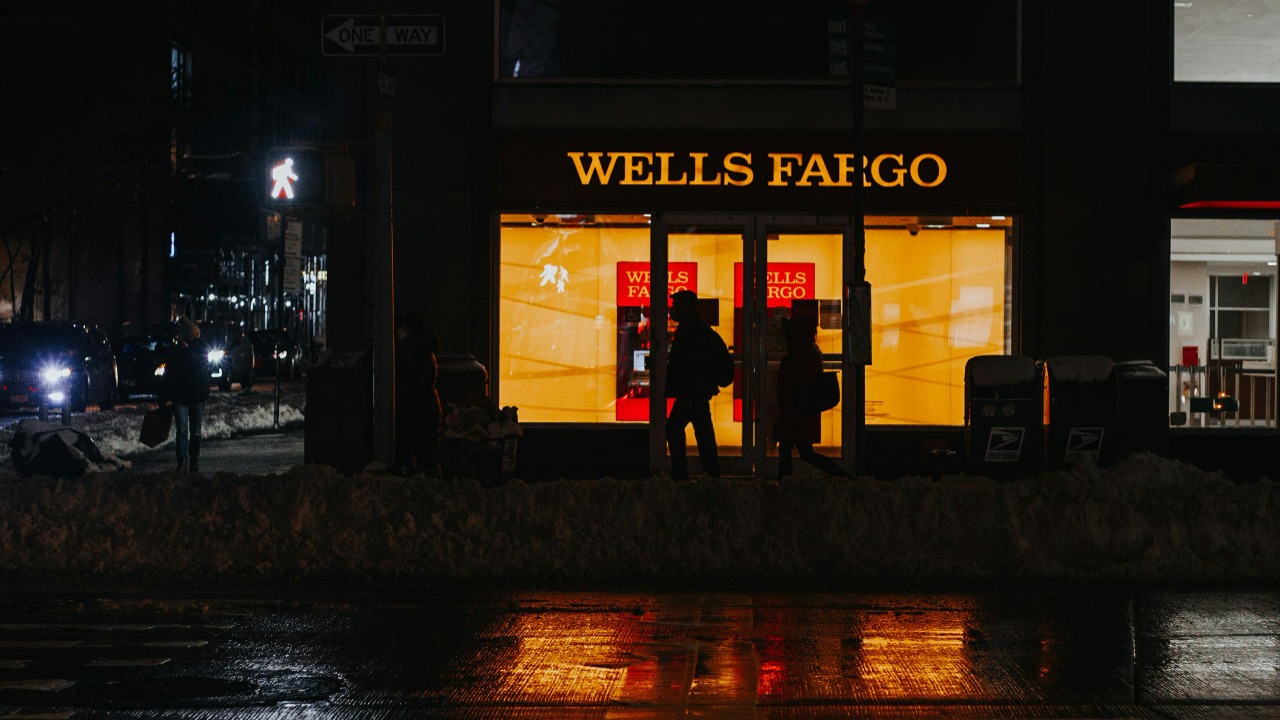
A Houston woman walked into her bank expecting the security of a life insurance payout and walked out, hours later, effectively stripped of it. Within a single afternoon, $4,400 vanished from her Wells Fargo account after she deposited a check, and a technical loophole nearly left her without any refund at all. Her ordeal exposes how quickly digital thieves can move and how slowly big banks sometimes respond when their own systems help open the door.
Her case is not an isolated fluke but part of a pattern in which scammers exploit gaps around deposits, mobile access, and disputed transactions. As I trace what happened to her and to other customers, a picture emerges of a system that places much of the risk on people who assume their bank will stand between them and fraud, not stand in the way when they ask for help.
How a life insurance payout turned into a disappearing act
The woman at the center of this story had just received a life insurance check, money meant to provide stability after a loss rather than spark a new crisis. She deposited the funds into her Wells Fargo account, expecting the standard routine of a hold, a cleared balance, and then the ability to pay bills and cover basic expenses. Instead, within hours of that deposit, roughly $4,400 was drained from her account through transactions she did not recognize, leaving her scrambling to understand how a fresh deposit could evaporate so quickly.
According to detailed accounts of the case, scammers had already positioned themselves to strike by the time the check hit her balance. They were able to move in on the newly available money almost immediately, exploiting the brief window between the deposit and any meaningful review of suspicious activity. The result was that the life insurance payout, which should have been a financial cushion, became the very thing that made her a target, echoing similar warnings about how criminals focus on large, one-time deposits tied to life insurance and other windfalls.
The loophole that let scammers move faster than the bank
What turned this from a simple fraud case into a near disaster was not just the theft itself but the way a legal and procedural gap slowed her path to a refund. Banks often treat certain withdrawals and transfers as “authorized” if they appear to come from a customer’s own device or credentials, even when the customer insists they were tricked or their access was hijacked. In this case, that framework created a loophole: because the transactions technically followed the right digital path, the bank initially treated them as valid, despite the customer’s immediate protests that she had not approved them.
That distinction between unauthorized access and disputed authorization is more than semantics. It can decide whether a victim is quickly reimbursed or left to fight for weeks while bills pile up. The woman’s loss of $4,400 was tied to a broader pattern in which scammers pose as legitimate contacts, coaxing or capturing enough information to move money in ways that look routine on paper. Similar schemes have been reported around a separate Wells Fargo customer who saw $10,000 from a life insurance deposit vanish and another woman who lost $440 in related activity, illustrating how criminals repeatedly lean on the same gray areas in $10,000 payouts and smaller linked withdrawals.
Inside Wells Fargo’s initial denial and public reversal
When the Houston customer first reported the missing money, Wells Fargo did not rush to make her whole. Instead, the bank initially denied her fraud claim, leaning on the argument that the transactions did not fit its internal definition of unauthorized activity. For a customer who had just watched $4,000 disappear within hours of a deposit, that response felt less like a security backstop and more like a second blow, especially given that she had turned to the bank precisely because she believed it would recognize obvious red flags in her account.
The turning point came only after her story reached a wider audience. Once her case was featured in a televised segment, the public scrutiny shifted the balance. The bank ultimately returned more than $4,000 to her account, reversing its earlier stance and acknowledging that the outcome had to change. The sequence was stark: a Houston woman, a disputed loss of $4,000, an initial denial, and then a refund that arrived only after the situation was highlighted in a segment of The Brief described as an Only report on FOX, where the customer, identified as Willie Delane, finally saw the missing funds restored to her $4,000 balance.
A pattern of Houston complaints and media pressure
What happened to Willie Delane fits into a broader pattern of Houston customers turning to local media when they feel their banks are not listening. In another case, a Wells Fargo customer in the same city lost $4,000 just hours after depositing a check, only to have the bank initially reject the fraud claim. The customer described going to the branch, making the deposit, and then discovering that the money had been siphoned off almost immediately, a sequence that mirrors Delane’s experience and underscores how quickly scammers can act once funds appear in an account.
Coverage of these incidents has highlighted not only the losses but also the emotional toll on customers who believed they had done everything right. One report, attributed to By Randy Wallace and tied to FOX coverage in Houston, detailed how the bank’s early refusal to acknowledge fraud left the victim feeling abandoned by an institution she had trusted. The fact that the story was later revisited in a follow up, including a segment described as and and only on Fox Report Randy Wallace, where viewers learned that a Houston woman had more than $4,000 taken just hours after depositing a check, shows how sustained attention can push a bank to revisit its decisions and return the $4,000 that customers insist was never meant to leave their accounts.
What customers can learn from a $4,400 scare
For anyone who relies on a bank to safeguard major deposits, the lesson from these Houston cases is uncomfortable but clear. Scammers are not waiting days for checks to clear; they are watching for large deposits and moving within hours, often using social engineering, spoofed calls, or compromised devices to trigger transfers that look legitimate on the surface. When those transactions slip through, customers can find themselves in a procedural maze where the burden is on them to prove they did not authorize what the bank’s systems have already accepted.
There are practical steps that can reduce the risk, even if they cannot eliminate it. Customers who receive large checks, especially from life insurance or legal settlements, can consider splitting deposits across accounts, limiting online access on the day of deposit, and setting up real time alerts for every withdrawal or transfer. If something does go wrong, the Houston stories suggest that persistence matters: filing formal disputes, documenting every interaction, and, when necessary, bringing public attention to the case can all influence how a bank responds. In the report that first detailed how a Wells Fargo customer lost $4,000 hours after depositing a check, the narrative of a bank that initially denied a fraud claim but later faced questions from FOX, Houston viewers, and a segment credited to By Randy Wallace shows how outside pressure can help close a loophole that nearly cost one woman her $4,000 refund.
More From The Daily Overview

Silas Redman writes about the structure of modern banking, financial regulations, and the rules that govern money movement. His work examines how institutions, policies, and compliance frameworks affect individuals and businesses alike. At The Daily Overview, Silas aims to help readers better understand the systems operating behind everyday financial decisions.

