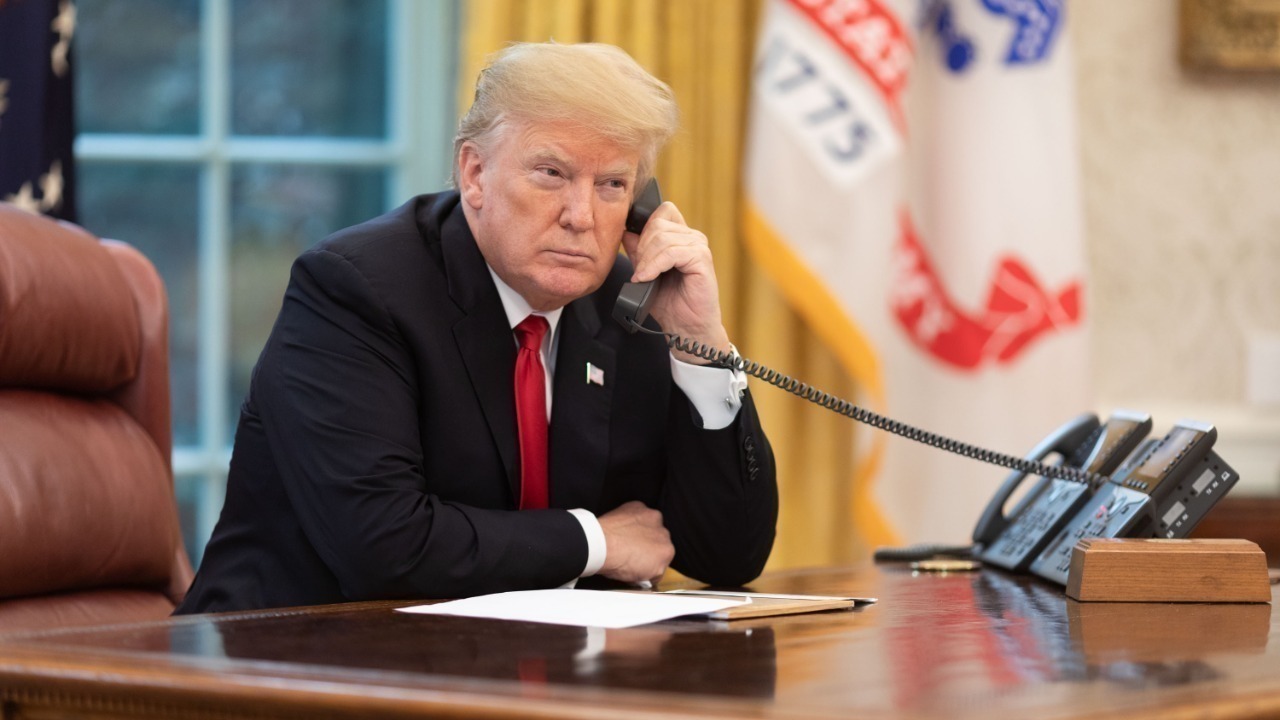
President Donald Trump’s push to clamp down on credit card costs has collided with a fragile financial system, rattling bank stocks on both sides of the Atlantic and igniting warnings that a well‑intentioned cap could spiral into a crisis for millions of borrowers. The proposal, framed as a one‑year emergency measure to shield households from double‑digit rates, has instead exposed deep fault lines over who ultimately pays for consumer protection. I see a policy debate that is really about how much risk the financial system can absorb before it starts to shut ordinary people out.
At the center is a simple, politically potent idea: limit what lenders can charge on plastic. Yet the reaction from markets, analysts and even some consumer advocates suggests the reality is anything but simple, with fears that a blunt cap could choke off credit to the very middle‑ and lower‑income families it is meant to help and push them toward more dangerous forms of debt.
Trump’s 10% cap: populist promise, complex mechanics
President of the United States Donald Trump has called for a one‑year ceiling on Credit Card Interest Rates of 10%, presenting it as a direct intervention to ease pressure on indebted households. In a social media statement that takes effect on what he described as “Effective January 20, 2026,” he framed the move as a temporary reset, arguing that card issuers have been able to charge far above what is needed to cover risk and earn a fair return. The proposal would apply broadly to mainstream cards, where annual percentage rates often run above 20%, and is explicitly pitched as a way to stop what he casts as abusive pricing by large lenders.
Trump’s allies have echoed that message, saying the cap would force banks and specialist card providers to absorb some of the cost of years of rising rates rather than passing everything on to consumers. Supporters argue that a 10% ceiling would still leave room for profit, particularly for issuers that focus on prime borrowers, and that it could push the industry to compete more on service and rewards than on opaque fee structures. The president’s own language has leaned heavily on fairness, portraying the cap as a way to rebalance power between households and the financial sector, a theme that was reinforced when President Donald Trump publicly tied the measure to protecting consumers from what he called excessive charges.
Market shock: banks and card issuers feel the hit
Financial markets have treated the idea as anything but symbolic. In the UK, as much as £8bn was wiped off the market value of British banks after investors tried to price in the risk that a US crackdown on card pricing could spread or squeeze global earnings. Shares in Barclays, which has a significant US credit card business, were among those hit as traders reassessed how much profit lenders can realistically make if they are forced to reprice large portfolios of revolving debt. The sell‑off underscored how a policy aimed at US households can reverberate through London trading screens in a matter of hours.
US‑listed lenders and payment networks have also come under pressure, with a number of Bank stocks sliding after President Donald Trump floated the 10% ceiling over a weekend. Large issuers and networks, including firms such as Capital One and American Express, saw their valuations marked down as investors weighed the risk that a cap would compress margins on some of their most lucrative products. The reaction was particularly sharp for companies heavily exposed to revolving balances, where interest income is a core profit driver, and for payment names like MA that were reported to be losing about 3% as traders digested the potential hit to transaction‑linked revenue, a move captured in the slump that followed when Bank stocks fell.
Why critics warn of a crisis for millions
The fiercest criticism is not about bank share prices but about what happens to borrowers who live on the edge of the credit system. Analysts and industry figures have warned that if lenders are forced to cap rates at 10%, many will simply stop offering cards to higher‑risk customers because they cannot adequately price subprime credit risk at that level. One expert, Kolk, has argued that if a 10% rate cap was actually implemented on credit cards the impacts would be unprecedented, warning that millions of consumers could see their cards cancelled and that the way unsecured lending works in the United States would be changed forever. The concern is that a sudden withdrawal of revolving credit would feel like a private‑sector austerity program, hitting households that rely on cards to smooth income shocks.
Consumer advocates who usually favor tighter regulation have voiced similar worries about unintended consequences. Some have pointed out that evidence shows tight caps can push borrowers toward less regulated, more costly alternatives such as payday lenders, buy now, pay later firms and even the cryptocurrency space, where protections are weaker and volatility is higher. In that scenario, a family that loses access to a 24% APR card might end up borrowing at triple‑digit rates from fringe providers, or turning to high‑fee cash advance apps to cover essentials like rent and car repairs. That is why one analysis concluded that it is pretty clear that a 10% credit card rate cap would cut off credit availability to those that need it most, particularly middle‑ and lower‑income households, and that millions of accounts could be cancelled as a result, a warning laid out in detail in the critique of why Trump’s idea could backfire.
Political crosscurrents: rare alliances and sharp pushback
The politics of the cap are unusually scrambled, cutting across traditional party lines. Progressive Democrat Warren, a senator from Massachusetts, has indicated that Congress could work with Trump on some form of limit to card rates, noting that Mr. Trump has expressed a desire to cap credit card rates and that she has long pushed for similar consumer protections. According to her account, the president called her to discuss the issue, an extraordinary moment of alignment between a Republican White House and one of Wall Street’s most prominent critics. For voters, the sight of Warren and Trump circling the same policy space underscores how widespread anger over card interest has become.
Yet other voices on the left have been far less welcoming. Bernie Sanders has described the 10% proposal as unacceptable, arguing that it does not go far enough and that a more aggressive crackdown on financial profits is needed to rebalance the economy. At the same time, industry‑aligned critics have seized on the design of the cap rather than its intent, warning that if credit card lenders cannot charge rates high enough to cover losses and earn a reasonable return, they will cancel cards and shrink credit lines, leaving vulnerable households worse off. That argument, laid out in detail in one assessment of Trump’s 10% cap, has given Republicans and centrist Democrats who are wary of heavy‑handed regulation a technocratic rationale to oppose the plan even if they share its populist instincts.
Low odds, high stakes: what happens next
For now, many market analysts are betting that the most extreme version of the cap will not become law in its current form. Commentators such as Sam Boughedda have described President Trump’s proposal as a low‑probability risk, arguing that any sweeping executive action would face significant legal challenges and that Congress is unlikely to sign off on a hard 10% ceiling without carve‑outs or phase‑ins. In their view, the immediate market reaction reflects a repricing of tail risk rather than a base‑case scenario, with investors adjusting to the possibility that even a watered‑down cap could trim earnings at major issuers like Capital One and networks such as Visa and MA. That perspective was evident in research that treated the announcement as a political signal rather than a fully baked policy, noting that the odds of full implementation remain limited, a point made explicitly in analysis of why analysts think the cap is unlikely to materialize as proposed.
Even if the pure 10% ceiling never arrives, the debate is already reshaping expectations for the credit card industry. Investors have seen how quickly almost £8bn in value can be erased from British banks when the market senses a regulatory shock, as happened in the UK when shares in Barclays and other lenders slumped on fears of a broader credit card crackdown, a move chronicled in detail when almost £8bn was wiped off UK banks. In the United States, the slide in Capital One and Amex Shares Sink after Trump’s Credit Card Threat has already signaled that investors are bracing for tighter rules on fees and interest, even if the final cap lands above 10% or is targeted at the most aggressive pricing practices. That repricing was evident when Capital One and other issuers sold off alongside payment networks.
From my perspective, the real risk is not that a single executive order instantly rewires the credit system, but that a prolonged period of uncertainty leads banks to pull back preemptively while lawmakers and courts argue over the details. If issuers start trimming limits or closing accounts in anticipation of stricter rules, the effect on household balance sheets could look very similar to the crisis scenario Kolk described, even if the legal cap never fully bites. That is why some experts are already asking what Trump, Congress and the courts may do next, warning that if a 10% rate cap was actually implemented the impacts would be unprecedented and that the way unsecured lending works could be changed forever, a concern laid out starkly in the analysis of whether a credit card crackdown is coming.
For households juggling balances on cards from Capital One, American Express or store‑branded issuers, the stakes are immediate and personal. A cap that is too low could mean a letter in the mail announcing that a long‑standing card is being closed or that a limit has been slashed just as a family needs to replace a transmission on a 2018 Honda Civic or cover a medical bill. On the other hand, leaving rates untouched risks locking millions into cycles of high‑cost debt that can last for years. As credit card stocks sink on fears of tighter rules and investors react with a collective “Yikes” to the prospect of a 10% ceiling, the challenge for policymakers is to find a path that reins in the worst abuses without triggering the very financial crisis for millions that critics of a blunt crackdown are now warning about, a tension captured in the market reaction when credit card stocks.
In the UK, the tremors have already shown how interconnected the system is, with British lenders caught in the crossfire of a US policy debate that may yet be watered down or blocked. Coverage of how UK and US banks tumbled as Trump eyes a credit card rate cap has highlighted that this is not just a domestic fight over fees but a global test of how far governments are willing to go to shield borrowers from the full force of higher rates. As Jan trading screens flashed red and investors digested the idea that Trump warned credit card crackdown will trigger financial crisis for millions, the message from markets was clear: the line between consumer relief and systemic risk is thinner than it looks, a reality that was laid bare when UK and US tumbled on the news.
More From The Daily Overview

Alex is the strategic mind behind The Daily Overview, guiding its mission to uncover the forces shaping modern wealth. With a background in market analysis and a track record of building digital-first businesses, he leads the publication with a focus on clarity, depth, and forward-looking insight. Alex oversees editorial direction, growth strategy, and the development of new content verticals that help readers identify opportunity in an ever-evolving financial landscape. His leadership emphasizes disciplined thinking, high standards, and a commitment to making sophisticated financial ideas accessible to a broad audience.

