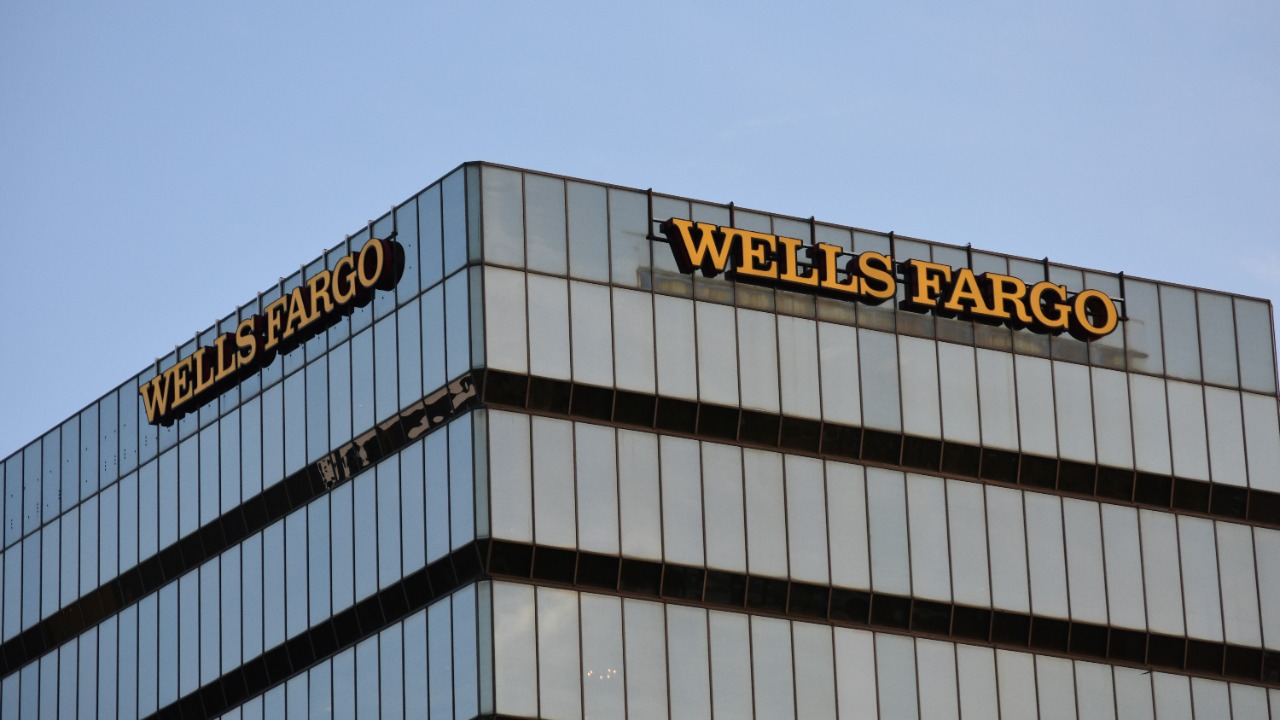
Wells Fargo is absorbing the financial and reputational shock of cutting 5,600 jobs while paying out hundreds of millions of dollars in severance, a restructuring gamble that has rattled investors and employees alike. The bank’s latest results show that the cost of slimming down is hitting earnings in the short term even as executives argue it will leave the franchise leaner and more competitive. I see a company trying to reset its cost base just as it is finally being allowed to grow again, and the tension between those two forces is defining this moment for the lender.
Severance shock hits the bottom line
The headline number that grabbed attention was the decision by Wells Fargo to lay off 5,600 workers, a sweeping reduction that signals how aggressively management is willing to cut to improve efficiency. Those departures did not come cheap. According to one detailed breakdown, Wells Fargo The bank incurred $612 million in fourth quarter severance expenses, a figure also described as $612 m, which directly reduced earnings per share by 14 cents. I read that as a clear sign the bank is front-loading the pain, choosing to recognize a large one-time charge rather than dribbling out restructuring costs over several quarters.
The impact of those payouts is visible in the core earnings numbers. In its own detailed News Release, Wells Fargo Reports Fourth Quarter results that show how the severance line item weighed on profitability even as revenue trends held up. Another analysis notes that Wells Fargo reported Q4 2025 net income of $5.36 billion, or $1.62 per diluted share, a performance that fell short of analyst expectations despite underlying business momentum. When I look at those figures, I see a bank that is still solidly profitable but choosing to sacrifice a cleaner headline number today in the hope of structurally lower costs tomorrow.
Investors punish the stock despite growth prospects
Markets rarely reward messy transitions, and Wells Fargo’s share price reaction underscored that reality. One account of the earnings day describes how Wells Fargo & Co., trading under the ticker WFC, missed analysts’ profit forecasts, with the severance bill cited as a key reason for the disappointment. The same report, by Yizhu Wang, notes that the stock logged its steepest single day decline in roughly half a year after the statement was released, a reminder that investors had been primed for cleaner upside now that some regulatory shackles are loosening. In my view, the selloff reflects frustration that management’s efficiency drive is colliding with expectations for a straightforward earnings rebound.
Yet the growth story behind the numbers is not trivial. Another analysis of the quarter, written by Mallika Mitra, points out that with the asset cap lifted, Wells Fargo is ramping up lending and positioning itself alongside peers like WFC, BAC, JPM and C in competing for new business. That piece, framed around how the change strengthens the case for market optimism, suggests that the bank’s revenue engine is finally free to accelerate just as it is trimming its cost base. From where I sit, the tension between short term earnings pressure and longer term growth capacity is exactly what makes the current valuation debate around the stock so charged.
Inside the restructuring: efficiency, AI and more cuts ahead
Behind the severance figures is a broader restructuring blueprint that reaches across the organization. One report on the layoffs notes that the 5,600 job cuts are part of a companywide effort to streamline operations, with executives signaling that the impact will be felt across multiple business lines and support functions. In that account, Wells Fargo’s profits are described as being hit by severance costs as the bank lays off 5,600 workers, with management indicating that the drive for efficiency will be seen across the company. I interpret that as a signal that this is not a one-off trimming of a single troubled unit but a structural reset of how the bank is staffed and organized.
The leadership has been unusually explicit that more change is coming. In an interview highlighted by Yahoo Finance, Wells Fargo CEO Charlie Scharf, speaking at The Clearing House, said that Wells Fargo expects more job cuts and will roll out AI gradually in 2026. That pairing of workforce reductions with artificial intelligence is telling. I read it as an admission that automation and digital tools are central to the bank’s cost strategy, with AI likely to take over tasks in areas like call centers, fraud monitoring and back office processing. For employees, the message is blunt: the current wave of severance is not the end of the story.
What the numbers say about strategy and risk
When I step back from the headlines, the financial metrics sketch a coherent, if risky, strategy. The combination of $5.36 billion in quarterly net income, $1.62 per diluted share and a $612 million severance charge tells me that Wells Fargo is using its still-strong earnings power to fund a rapid reset of its expense base. The bank’s own Release on Wells Fargo Reports Fourth Quarter performance underscores that the underlying businesses are generating enough profit to absorb such a hit without threatening capital or dividend plans. Strategically, that is the moment when a management team can afford to be bold.
The risk, however, is that the human and operational costs of such a rapid downsizing undermine the very efficiency gains the bank is chasing. Cutting 5,600 roles in a short window can create knowledge gaps, service disruptions and cultural strain, especially in customer-facing areas like branches and call centers. If AI tools and process redesigns are not ready to fill the gaps left by departing staff, the bank could see slippage in customer satisfaction or risk controls just as it is trying to grow lending after the asset cap. That is why I pay close attention to how executives talk about phasing in automation and retraining, not just the headline savings targets.
What it means for customers, workers and the wider market
For customers, the immediate impact of Wells Fargo’s restructuring may be subtle, but it is real. Fewer employees can mean longer wait times in branches, more reliance on mobile apps and chatbots, and a shift toward self-service tools that some clients welcome and others resent. As the bank leans into AI, I expect more interactions to be routed through automated systems, with human staff reserved for complex or high value cases. That trajectory mirrors broader trends across the industry, where digital-first experiences are becoming the norm and traditional relationship banking is being redefined.
For workers and investors, the episode is a reminder of how quickly fortunes can change in a sector that is both highly regulated and deeply exposed to technology shifts. Employees who helped steer the bank through years of regulatory scrutiny now find themselves on the wrong side of an efficiency drive, while shareholders are being asked to look past a volatile quarter in exchange for the promise of a leaner, more scalable franchise. Anyone tracking the stock through tools like Google Finance can see how sharply sentiment can swing on a single earnings release. As I see it, Wells Fargo’s challenge now is to prove that the millions spent on severance and the thousands of jobs cut will translate into a bank that is not only more profitable, but also more resilient and trusted than the one it is leaving behind.
More From The Daily Overview

Grant Mercer covers market dynamics, business trends, and the economic forces driving growth across industries. His analysis connects macro movements with real-world implications for investors, entrepreneurs, and professionals. Through his work at The Daily Overview, Grant helps readers understand how markets function and where opportunities may emerge.

