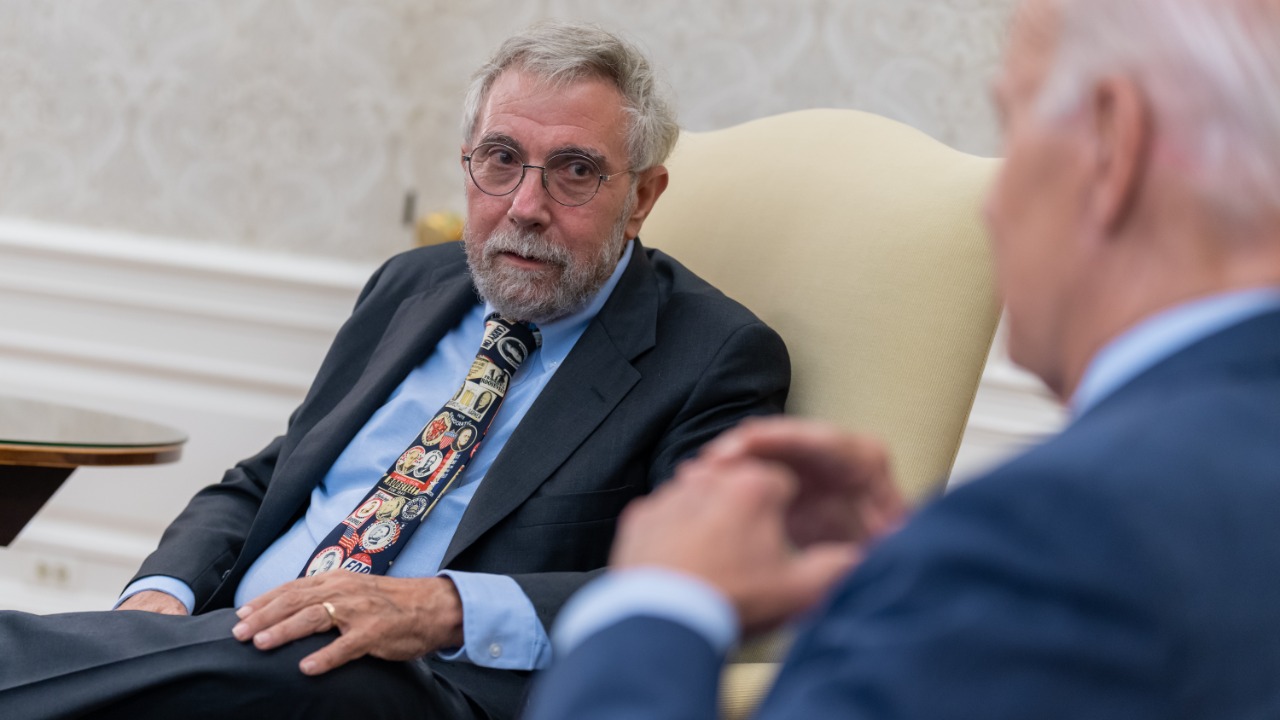
Americans are still wrestling with stubbornly high prices, and the political fight over who can actually make life cheaper has only intensified. President Donald Trump has rolled out a menu of ideas, from capping credit card rates to squeezing tech giants on energy use, but Nobel economist Paul Krugman argues that one relatively simple institutional move could matter more for household budgets than any headline‑grabbing promise. At the center of his argument is a call to restore a powerful consumer watchdog that he says would cut abusive costs in ways families would feel quickly.
Krugman’s focus on consumer finance lands at a moment when credit card balances, mortgage payments and utility bills are all rising faster than paychecks for many Americans. His case is not that Trump has ignored affordability, but that the White House is leaving a proven tool on the table while chasing more politically dramatic, and potentially riskier, interventions.
Trump’s affordability agenda meets a skeptical economist
President Donald Trump has made clear that lowering the cost of living is a central political and policy priority, putting the squeeze on everyday expenses at the top of his domestic agenda in 2026 and casting the effort as a pushback against what he calls the “radical left” in America. His team has floated or advanced measures that target mortgage rates, credit card debt and energy costs, promising relief for households that feel squeezed even as headline inflation has cooled. Although Donald Trump has made a number of recommendations to lower the cost of living for regular Americans, the question is which of those ideas can deliver real, durable savings rather than short‑term political wins.
Krugman, a Nobel laureate who has often been sharply critical of Trump’s economic record, is not dismissing the affordability push outright. Instead, he is drawing a distinction between symbolic moves and what he sees as a “low‑effort” structural fix that would protect Americans from predatory practices in the financial system. In his view, the most effective way to improve affordability is not another one‑off cap or tariff, but a stronger institutional guardrail that shapes how banks, card issuers and lenders treat consumers over time, a point he has underscored in affordability discussions.
The one move Krugman says would bite into everyday costs
Krugman’s central recommendation is straightforward: revive and empower the Obama‑era Consumer Financial Protection Bureau, the watchdog created after the financial crisis to police abusive lending and hidden fees. He argues that restoring this agency to full strength would be a low‑effort way to protect Americans from unfair charges that quietly inflate the cost of living, from junk fees on bank accounts to opaque credit card penalties, a case he has made in comments shared about an Obama‑era watchdog. Nobel economist Paul Krugman says that reviving this consumer bureau would be a low‑effort way to protect Americans, and he frames it as the single biggest step Trump could take if he is serious about affordability.
In Krugman’s telling, the bureau’s enforcement actions and rule‑writing power directly reduce the cost of financial products that almost every household uses. He notes that the agency was established by law under President Barack Obama to rein in practices that had left many Americans with ballooning debts and surprise charges, and he has urged that any rollback of its authority be reversed so that the watchdog can again push down on abusive costs. Nobel economist Paul Krugman has stressed that reviving this Obama‑era consumer watchdog would shield Americans from predatory fees that erode their bank balance, a point he has tied to the need for stronger Americans protections.
How Trump’s credit card cap fits into the picture
Trump has not ignored the financial sector. Donald Trump proposes a 10 percent cap on credit card interest rates starting January 20, 2026, a one‑year limit that he presents as a direct strike at high borrowing costs for households carrying balances on their cards, according to his Donald Trump plan. Business leaders like Klarna’s CEO have publicly backed the idea, arguing that a cap would force traditional card issuers to compete harder and could accelerate the shift toward lower‑cost digital payment options, a stance that has put some fintech executives on the same side as the White House on this specific issue.
Krugman acknowledges that a cap of this kind would immediately help Americans with credit card debt, and he has said that many other struggling American families would feel the benefit as well, since interest charges are a major driver of monthly bills for those who revolve balances. He has also noted that, in straight economic terms, there is a case for limiting what he sees as exploitative rates that far exceed the cost of funds for banks, a point he has made while discussing how such a cap would directly benefit US consumers and Americans with card balances. Yet he still frames the credit card cap as a partial fix that would work best alongside a reinvigorated consumer bureau, rather than as a substitute for it.
Wall Street’s warning and Krugman’s broader critique
Trump’s proposed cap has drawn sharp pushback from the financial industry, which warns that aggressive limits on interest rates could backfire. Citi’s CFO Mark Mason said Trump’s proposed credit card cap would have a “deleterious” impact on the economy, arguing that it could restrict access to credit for higher‑risk borrowers and force banks to pull back on lending, a concern he raised in his role as CFO of Citi. Mason, as well as CEOs at other major lenders, has suggested that the cap could distort the market and undermine profitability in ways that ultimately hurt consumers if card issuers respond by layering on new fees or cutting rewards.
Krugman is not blind to those risks, and his broader record shows a consistent skepticism of Trump’s more interventionist economic moves. Krugman also criticized Trump’s constantly shifting tariffs, arguing that they have created a climate of deep uncertainty and that the trade measures are “crippling” America by disrupting supply chains and investment decisions, a judgment he has repeated when assessing Trump policy. In a separate conversation about the impact of Trump’s tariffs, he pointed to evidence that while some higher‑income shoppers have kept spending, their overall sales are up only a little bit and he warned that the economy is already starting to see the drag from these trade fights, a concern he voiced when discussing how Their behavior reflects underlying strain.
Why a revived watchdog could outlast one‑off fixes
For Krugman, the appeal of restoring the consumer bureau is that it would embed affordability into the plumbing of the financial system rather than relying on temporary caps or ad hoc crackdowns. Krugman suggests reviving the Consumer Financial Protection Bureau to strengthen Trump’s affordability efforts, arguing that a robust watchdog could systematically push down on junk fees, deceptive marketing and abusive loan terms that quietly raise the cost of living, a case laid out in a detailed look at his Affordability Efforts argument. Krugman notes that Trump has proposed a 10 percent one‑year cap on credit card interest rates, but he stresses that without a strong regulator, lenders will always look for new ways to recoup revenue, whether through fees, complex terms or shifting risk to other products.
More From The Daily Overview

Grant Mercer covers market dynamics, business trends, and the economic forces driving growth across industries. His analysis connects macro movements with real-world implications for investors, entrepreneurs, and professionals. Through his work at The Daily Overview, Grant helps readers understand how markets function and where opportunities may emerge.

