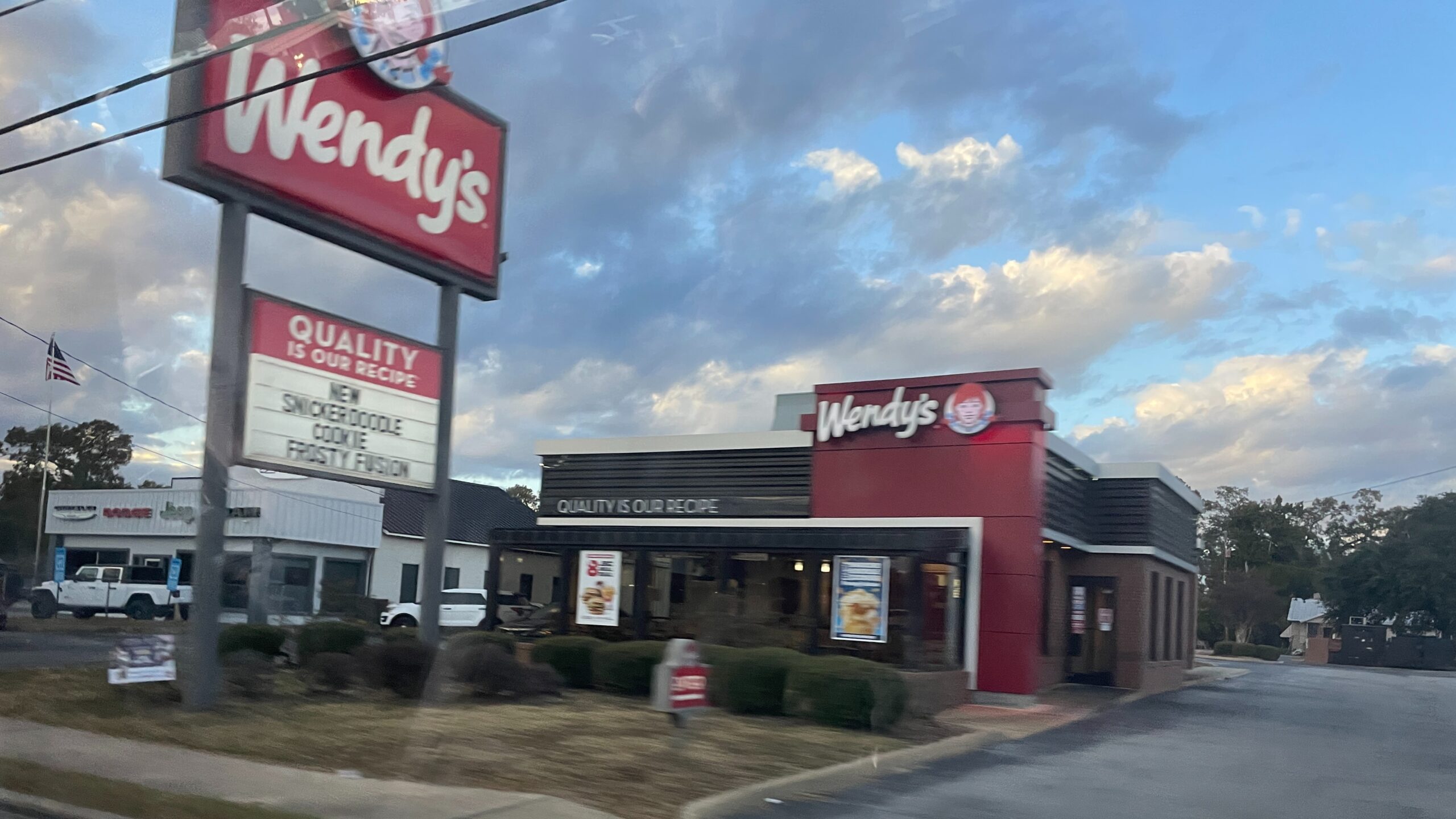
Wendy’s plans to close roughly 300 additional U.S. restaurants over the coming years, a significant acceleration that reflects deeper trouble across its domestic footprint. The closures, representing about 5% to 6% of the chain’s American locations, come after a weak fourth quarter and signal that the company’s turnaround strategy now hinges on shrinking to grow. This move says a lot about where the fast-food industry is headed, and whether trimming underperforming stores can actually fix a sales problem rooted in value perception and consumer fatigue with rising prices.
How Many Stores Are on the Chopping Block
The scale of the planned closures is hard to ignore. Wendy’s expects to shut between 298 and 358 U.S. restaurants, a range that translates to 5% to 6% of its domestic system. For a chain that has spent years trying to expand its presence against McDonald’s and Burger King, voluntarily pulling back from hundreds of locations marks a sharp reversal. These are not random closings scattered across the map; they reflect a deliberate effort to cut loose the weakest performers dragging down systemwide results and to rebalance the network toward higher-volume trade areas.
The company’s annual filing with the SEC for the fiscal year ended December 29, 2024, provides the baseline for understanding this contraction. That Form 10-K document details restaurant counts and the mix between franchised and company-operated locations, and it shows a system that was already experiencing net unit declines before this latest announcement. New openings had failed to keep pace with shutdowns, particularly among smaller franchisees facing higher labor and food costs. The acceleration now looks less like a sudden reaction and more like the culmination of a trend that leadership could no longer offset with optimistic development targets or modest remodel programs.
Weak Fourth Quarter Forces a Reckoning
The timing of this announcement matters because it follows a disappointing fourth quarter, a period when the broader fast-food sector was already grappling with softer traffic. As inflation eased at the grocery store, more households shifted back to cooking at home, and the gap between supermarket and restaurant prices became more visible. For Wendy’s, sluggish same-store sales and pressured margins in Q4 appear to have been the tipping point that convinced executives to move aggressively on store rationalization rather than waiting for a demand rebound that might never fully arrive.
This pattern is familiar in restaurant turnarounds. Companies that delay closing underperforming locations often find those stores do more than lose money individually: they dilute the brand, frustrate franchisees, and consume corporate resources that could be deployed to stronger markets. By the time decisive action is taken, the clean-up needs to be larger and faster than it would have been with earlier intervention. Wendy’s now looks to be in precisely that situation, playing catch-up after several years in which its own filings showed mounting closures and only modest net development. The fourth quarter did not create the problem, but it forced a reckoning with how deep the reset had to be.
The Biggie Value Bet
Store closures are only half of Wendy’s new playbook. The other half is a sharpened focus on everyday value, anchored by its Biggie value tiers that bundle core items at lower price points. This strategy is aimed squarely at a consumer base that has become more price-sensitive and more willing to trade down to cheaper chains, convenience stores, or home cooking. By making value bundles a standing feature rather than a rotating promotion, Wendy’s is trying to give budget-conscious customers a predictable reason to visit, even if broader economic anxiety persists.
The strategic pairing of closures and value is where the turnaround thesis becomes most interesting. The logic is straightforward: shutter locations that cannot generate adequate returns, then use the freed-up capital and management focus to invest in a compelling value proposition at the remaining restaurants. If it works, surviving stores should enjoy higher average volumes and better unit economics, as traffic consolidates into fewer, stronger locations. The risk, however, is that a heavier emphasis on value compresses margins at the exact moment the company needs those margins to improve. The experience of rivals suggests that value menus only pay off when they drive truly incremental visits and check growth, rather than simply discounting meals for existing customers who would have paid more.
What This Means for Franchisees
The vast majority of Wendy’s U.S. restaurants are operated by franchisees, not the company itself, and that reality shapes how the closure wave will play out on the ground. When corporate signals that 5% to 6% of the domestic system needs to go, it is independent business owners—often with deep local ties—who must decide whether to invest more capital, accept a buyout, or walk away. Operators in smaller markets, older buildings, or heavily cannibalized trade areas are likely to feel the most pressure, especially if their units already lag system averages on traffic or profitability.
There is a potential upside for the operators who remain in the system after the dust settles. A leaner footprint can reduce overlap, cut down on stores competing for the same customers, and improve average unit volumes in surviving locations. If Wendy’s pairs the closures with meaningful investments in digital ordering, drive-through throughput, and targeted marketing around its value tiers, franchisees in strong trade areas could emerge in a healthier position than before. Still, that outcome is contingent on execution that Wendy’s has yet to prove at scale: aligning pricing with local demand, maintaining service speed even as value offers potentially increase order complexity, and supporting franchisees with technology and training rather than simply demanding more aggressive discounting.
Shrinking to Grow Is a Risky Playbook
The broader question is whether cutting hundreds of stores can address the underlying challenges Wendy’s faces, or whether it merely removes the most obvious symptoms. Consumers have been signaling across the fast-food landscape that they are more selective about when and where they spend, and that the perceived value of a typical drive-through meal has eroded. Closing weaker stores may improve reported averages and reduce financial drag, but it does not automatically make the remaining restaurants more compelling places to eat. The Biggie value tiers are a meaningful response, yet they must be backed by food quality, speed, and consistency that clearly differentiate Wendy’s from rivals in a crowded field.
Investors and analysts often treat large-scale store rationalization as inherently bullish, assuming that a smaller, more focused footprint will inevitably be more profitable. History offers a more mixed record. Some brands have used closures as the first step in a successful reset, but others have found that shrinking failed to fix deeper issues around menu relevance, brand perception, or operational execution. Wendy’s is now testing that tension in real time. If the company uses this contraction to simplify operations, strengthen franchise relationships, and deliver reliable value without hollowing out margins, the move to close roughly 300 restaurants could mark the start of a healthier era. If not, it may simply leave the chain with fewer locations, the same strategic problems, and a customer base that has even more alternatives vying for every fast-food dollar.
More From The Daily Overview
*This article was researched with the help of AI, with human editors creating the final content.

Grant Mercer covers market dynamics, business trends, and the economic forces driving growth across industries. His analysis connects macro movements with real-world implications for investors, entrepreneurs, and professionals. Through his work at The Daily Overview, Grant helps readers understand how markets function and where opportunities may emerge.