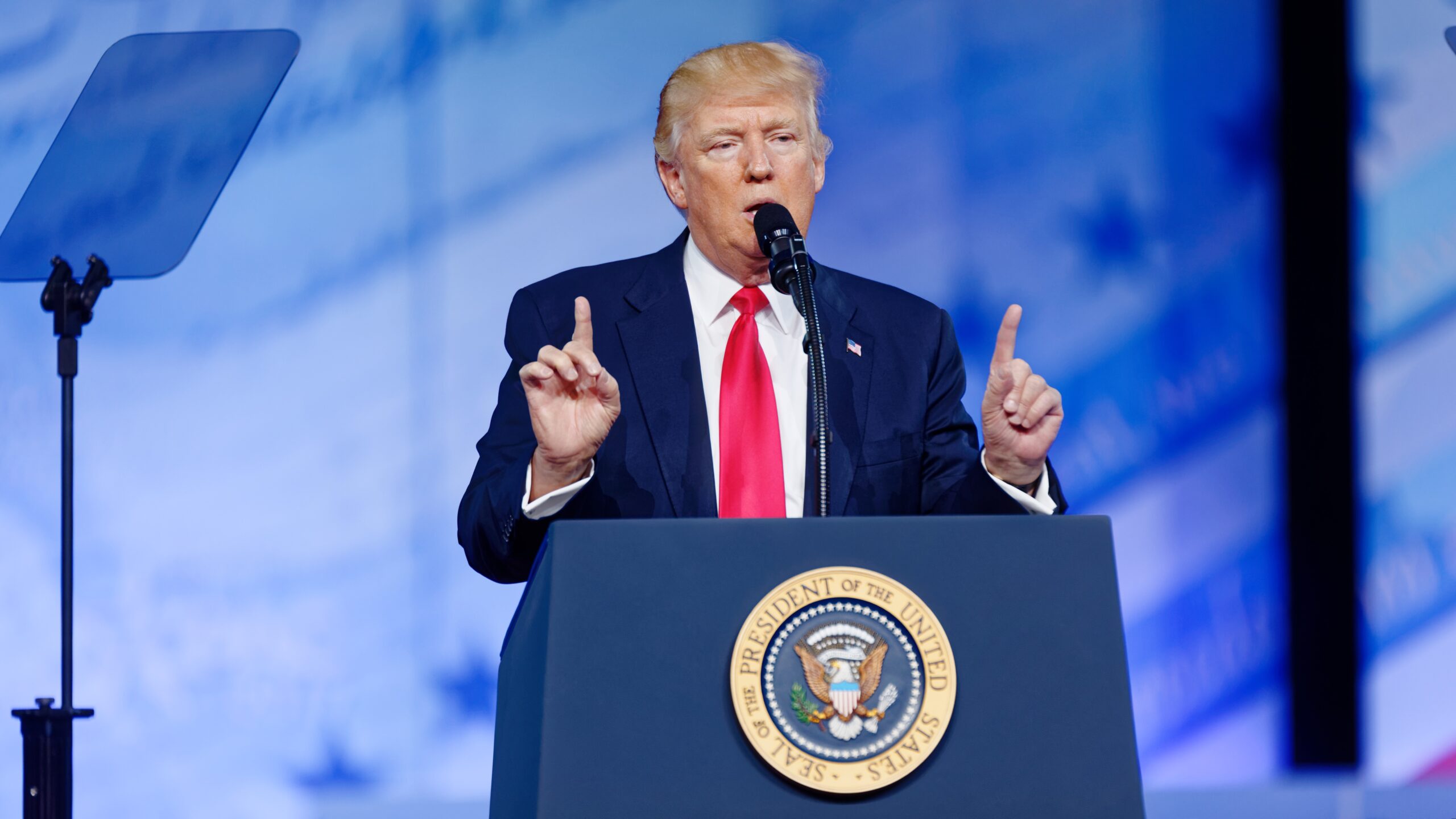
President Trump imposed a temporary global import surcharge after the Supreme Court struck down his broader tariff program on February 20, 2026, shifting the legal basis for trade barriers to a rarely used statute. The move started at 10% and was later raised to 15%, forcing many American businesses to recalculate costs on a wide range of imported goods while consumers could face higher prices on products from laptops to toys. The speed of the pivot and the legal uncertainty surrounding it have left importers, trading partners, and households scrambling to understand what comes next.
From Court Defeat to Section 122 in Hours
The Supreme Court’s decision to block Trump’s tariff authority removed the legal foundation for some duties that had been in place in recent months, according to contemporaneous reporting. Rather than accept the ruling as a constraint, the White House issued a presidential proclamation invoking Section 122 of the Trade Act of 1974, a provision designed to address “fundamental international payments problems.” That statute allows a president to impose an across-the-board import surcharge of up to 15% for a maximum of 150 days without congressional approval. The initial rate was set at 10%, effective for goods entered on or after February 21, and the White House framed it as a response to international payments pressures rather than as a tool of industrial policy.
Soon after, the administration raised the global import surcharge to 15%, hitting the statutory ceiling and signaling that it intended to test the outer limits of Section 122 from the outset. A separate executive action titled “Ending Certain Tariff Actions” directed the Secretary of Commerce, the Secretary of Homeland Security, and the United States Trade Representative to wind down the prior tariff regime while the new surcharge took effect. The result is a legal patchwork: old duties are being retired under court order while a new blanket charge applies to nearly all imports under a different law. For businesses that had spent months adjusting to one set of rules, the reset creates fresh compliance headaches and cost uncertainty, particularly for firms with complex supply chains that cross multiple borders before products reach U.S. ports.
What Consumers and Importers Actually Face
The most direct consequence for American households is higher prices. The Budget Lab at Yale estimates that tariffs through 2026 imply a 0.6% increase in consumer prices in the short run, assuming full passthrough of tariffs to consumers, which translates to roughly a $600 annual loss per household. That figure accounts for all U.S. tariffs and foreign retaliation implemented through February 2026, suggesting that the new surcharge layers additional pressure on top of existing trade frictions. Economists caution that the impact will be uneven: price-sensitive goods such as apparel and toys may see quicker increases, while higher-margin electronics could absorb some of the shock before costs filter through to retail shelves.
The gap between headline tariff rates and what consumers actually pay depends heavily on product-level exemptions. The Office of the United States Trade Representative formally extended 178 Section 301 exclusions through November 2025, covering specific product classes identified by ten-digit HTSUS codes and Chapter 99 notes. Those exclusions shielded certain Chinese imports from earlier duties, but it is unclear how they interact with the new Section 122 surcharge, which applies on a different legal track and is not tied to particular countries or products. Congressional Research Service data show that top U.S. imports from China include laptops, cellphones, batteries, and toys, categories where statutory rates often exceed actual rates because of exemptions. If the blanket surcharge layers on top of existing duties without new carve-outs, those consumer electronics and household goods could see meaningful price increases at retail, even as some niche industrial inputs remain protected by legacy exclusions.
Trading Partners Push Back
The international reaction has been swift and pointed. The European Union publicly stated that the United States must honor a trade deal, referencing an August 2025 EU–U.S. joint statement framework that had been negotiated as a path toward reducing bilateral trade friction, according to the Associated Press. The EU’s position is that a blanket surcharge applied under a different legal authority does not release Washington from commitments made under that earlier framework, including pledges to avoid new broad-based tariffs while talks on industrial subsidies and digital trade proceeded. If Brussels follows through on retaliation, American exporters in agriculture, machinery, and services could face reciprocal barriers at a moment when they can least afford them, especially in sectors that have only recently rebuilt market share after previous rounds of trade disputes.
Allie Renison, a former UK government trade adviser and director at SEC Newgate, offered a cautionary note for countries that might initially see the court ruling as positive. “While it may seem like a good day for” those outside the U.S., she said, the rapid pivot to a new legal mechanism creates uncertainty for global supply chains. Her point highlights a dynamic that most coverage has missed: the problem for foreign firms is not the tariff rate itself but the instability of the legal basis. A surcharge that can be imposed, escalated, and potentially extended within days makes long-term investment planning nearly impossible for companies that rely on U.S. market access. That volatility also complicates the work of trade negotiators, who must now factor in the risk that any future understanding with Washington could be upended by a sudden shift to another statutory authority.
The 150-Day Clock and What Follows
Section 122 contains a built-in expiration. The surcharge can last no more than 150 days unless Congress votes to extend it, putting a hard deadline on the current 15% rate. As that clock counts down, lobbyists for import-dependent industries are already pressing lawmakers to let the measure lapse, arguing that a temporary response to payments imbalances should not morph into a semi-permanent tax on trade. The administration, by contrast, has hinted that it may ask Congress to prolong the surcharge if it judges that external deficits and currency pressures remain problematic, setting up a political clash that will test the appetite on Capitol Hill for continued confrontation over tariffs. Legal scholars are also debating whether successive short-term surcharges could effectively circumvent the 150-day cap, a strategy that would almost certainly invite fresh court challenges.
The broader economic context will shape that debate. Investors are watching how the surcharge interacts with financial conditions, monitoring global market data for signs that higher import costs are feeding through to inflation expectations, bond yields, and corporate earnings forecasts. Central banks, too, must consider whether renewed trade frictions complicate their task, a question that has featured in recent briefings on monetary policy developments. If tariffs add to price pressures just as policymakers seek to anchor inflation, the case for extending the surcharge could weaken, particularly among lawmakers who prioritize macroeconomic stability over leverage in trade negotiations. Conversely, if the impact on headline inflation remains modest while the current-account deficit narrows, proponents may argue that the policy is delivering on its stated goals and deserves more time.
Business Strategy in a New Tariff Era
For corporate leaders, the new surcharge is less a one-off shock than a signal that U.S. trade policy may remain fluid for years. Boardrooms are dusting off contingency plans that were first drawn up during earlier tariff rounds, reassessing supplier networks, and exploring whether to diversify sourcing away from the most exposed countries. Companies that invested in trade expertise during the last cycle are now leaning on those teams again, and some are turning to external advisers and executive education programmes to deepen their understanding of how geopolitical risk intersects with supply-chain management. The ability to model different tariff scenarios and translate them into pricing, inventory, and investment decisions has become a core strategic competence rather than a niche legal function.
At the same time, firms are reassessing how they access specialist analysis and data on trade, finance, and regulation. Many are reviewing whether their current tools provide enough granularity on tariff lines, retaliation risks, and sector-specific impacts. As the 150-day window on the surcharge ticks down, the companies best positioned to navigate whatever comes next will be those that treat trade volatility not as an anomaly, but as a structural feature of the global economy requiring sustained attention and investment.
More From The Daily Overview
*This article was researched with the help of AI, with human editors creating the final content.

Grant Mercer covers market dynamics, business trends, and the economic forces driving growth across industries. His analysis connects macro movements with real-world implications for investors, entrepreneurs, and professionals. Through his work at The Daily Overview, Grant helps readers understand how markets function and where opportunities may emerge.

