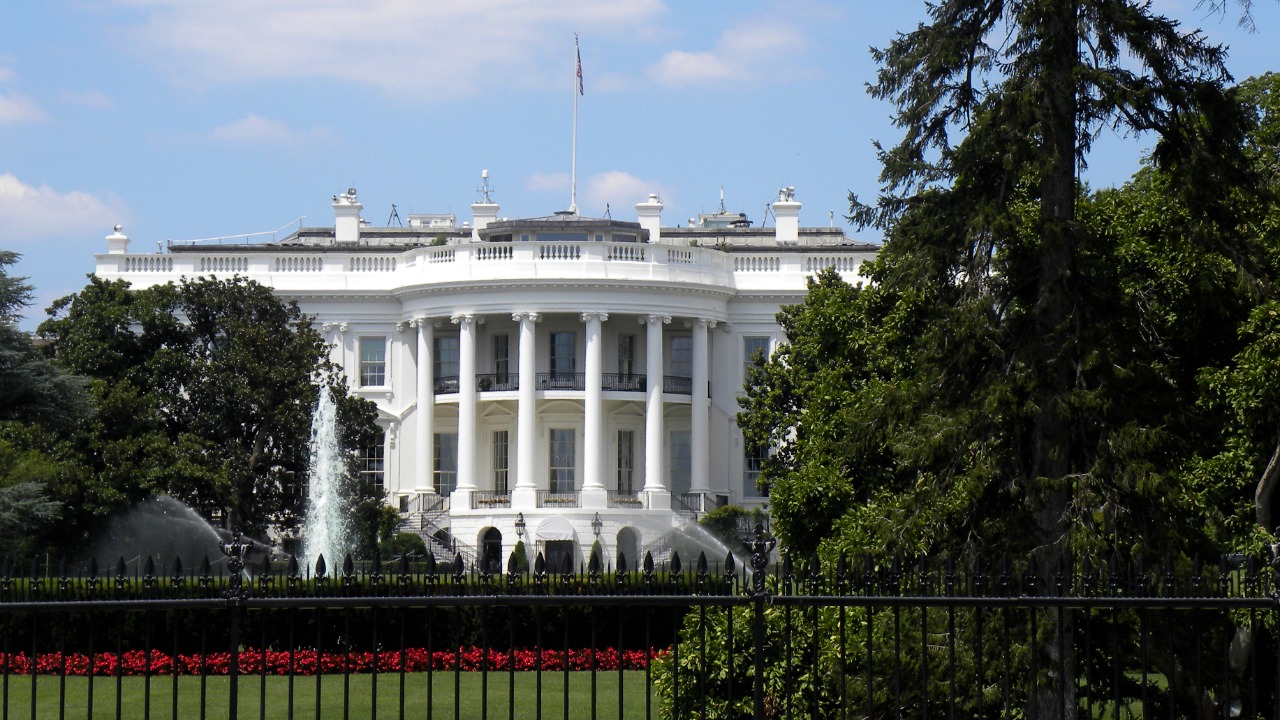
The White House is betting that weaker fuel economy rules will translate into cheaper new cars, arguing that cutting regulatory costs will let automakers lower sticker prices and put more drivers into newer vehicles. The promise is simple and politically potent: relax efficiency standards now, and families will save money at the dealership. The reality, according to industry data and environmental modeling, is far more complicated, with any price relief likely delayed and offset by higher fuel and health costs.
As President Donald Trump moves to roll back Biden-era efficiency targets, the administration is framing the shift as a win for safety, affordability, and American manufacturing. I see a policy fight that is really about who pays for efficiency technology, how quickly the fleet turns over, and whether the country is willing to trade long term fuel and climate savings for short term relief on monthly car payments.
White House promise: cheaper cars, safer roads
The core of the White House case is that today’s fuel economy rules are too aggressive, forcing automakers to load vehicles with costly technology that inflates prices and keeps drivers in older, less safe cars. President Trump has argued that his predecessor’s policy effectively required manufacturers to build vehicles with “expensive technologies that drove up prices” and, in his telling, handed an edge to Chinese and other foreign carmakers, a point he underscored when his team moved to take the gas pedal off of fuel economy standards and framed the change as a way to protect domestic industry from overseas rivals by easing regulatory pressure on U.S. companies, as described in one analysis of how Trump argued the rollback would help. Inside the administration, officials have repeatedly linked “reasonable” standards to lower prices and higher sales, casting the rollback as a consumer protection measure rather than a regulatory retreat.
Safety is the other pillar of the pitch. The National Highway Traffic Safety Administration, which writes Corporate Average Fuel Economy rules, has been central to the messaging that easing requirements will save lives by getting more people into newer cars with better crash protection. In a joint appearance with President Trump and Transportation Secretary Sean P. Duffy, NHTSA Administrator officials said that “Restoring reasonable fuel economy standards will also save lives and make our roads safer,” presenting the change as a way to align regulations with real world driving while still encouraging incremental efficiency gains, a claim that was highlighted when the administration rolled out its “New Freedom” plan and emphasized that Restoring reasonable fuel economy standards would improve safety. I read that as an attempt to reframe a climate and consumer cost debate into one about crash statistics and vehicle turnover, even as critics argue that the same newer cars could be built under stronger standards.
What the rollback actually changes in the rules
Behind the rhetoric, the policy shift is technical but significant. The National Highway Traffic Safety Administration is expected to propose reducing the fuel economy requirements from the more ambitious trajectory set under President Biden to a slower ramp, easing the miles per gallon improvements automakers must deliver across their fleets over the next several model years. According to reporting on the White House event, The National Highway Traffic Safety Administration is preparing to dial back the stringency of Corporate Average Fuel Economy targets, a move that would directly affect how quickly SUVs, pickups, and sedans must become more efficient and that was previewed when The National Highway Traffic Safety Administration was identified as the agency driving the rollback. In practice, that means automakers can sell more large vehicles with lower fuel economy without having to offset them as aggressively with hybrids, electric models, or ultra efficient compacts.
The administration’s own talking points describe the change as a “rollback” of Biden-era rules rather than a full freeze, but the direction is clear: weaker annual gains, more flexibility for manufacturers, and a regulatory environment friendlier to high margin trucks and sport utility vehicles. Trump officials have also signaled that they want to better “align fuel economy standards with market realities,” a phrase that reflects the dominance of crossovers and pickups in U.S. sales and that was echoed when GM said it supports the goals of NHTSA’s proposed CAFE rule and its intention to better align fuel economy standards with market demand across different vehicle classes or vehicle nameplates, a stance that surfaced when the company responded to the administration’s move to roll back Biden-era vehicle fuel efficiency rules. That alignment, however, also locks in a fleet mix that burns more gasoline per mile than what climate advocates and some state regulators had been pushing for.
Do weaker standards really cut sticker prices?
The White House argument hinges on the idea that if automakers spend less on fuel saving technology, they can charge less for each car, but the timing and scale of those savings are contested. Analysts who have looked at the cost curves for turbocharged engines, lightweight materials, and hybrid systems note that much of the technology needed to meet prior standards is already in production and amortized across global platforms, which means the marginal savings from easing rules now may be modest and slow to show up on dealer lots. One detailed look at the administration’s plan concluded that Trump Wants to trade fuel economy for cheaper cars, but it might not work as advertised because prices will not drop for years and consumers will spend more on gas in the meantime, a dynamic that was spelled out in an examination of how the rollback could leave drivers paying higher fuel bills over the next five years even if automakers eventually pass along some regulatory savings, as described in an assessment that noted that But It Might Not Work the way the White House predicts.
There is also the question of who pockets the benefit. Automakers have strong incentives to maintain prices on popular trucks and SUVs, using any cost reductions to boost margins rather than cut MSRPs, especially in a market where inventory remains tight in some segments and buyers have shown a willingness to finance larger vehicles over longer terms. The administration’s own framing, which emphasizes making large vehicles “more profitable than smaller cars,” hints at this tension, and reporting on the proposal has noted that the rules will increase Americans’ fuel consumption while making big models more profitable than smaller cars, a tradeoff that was highlighted when one analysis of the weaker vehicle mileage rules warned that the new standards would tilt the market toward larger, less efficient vehicles and that the rules will increase Americans fuel use even as they fatten automaker profits. In that light, the promise of cheaper cars looks less like a guarantee and more like a political sales pitch layered on top of a profit friendly regulatory change.
Fuel costs and the long tail of INCREASED FUEL CONSUMPTION
Even if some buyers see modest price relief, weaker standards almost certainly mean higher fuel bills over the life of the vehicle. Freezing or slowing fuel economy and greenhouse gas emissions standards leads directly to INCREASED FUEL CONSUMPTION, because each new car or truck burns more gasoline per mile than it would have under stricter rules, and that effect compounds as millions of vehicles enter the fleet. A detailed modeling exercise on the impacts of a Trump era rollback found that Freezing fuel economy and GHG emissions standards increases fuel consumption and emissions across Section 177 states and Canada, underscoring that the policy choice does not just affect national averages but also undermines the efforts of states that had adopted tougher benchmarks, a conclusion laid out in a technical report on how INCREASED FUEL CONSUMPTION would ripple through regional markets.
For households, that means any savings at the dealership could be erased at the pump, especially if gasoline prices rise over the next decade. A buyer choosing between a 30 mpg crossover and a 24 mpg version of the same model might not notice the difference in monthly payments, but over 150,000 miles of driving the less efficient vehicle can cost thousands of dollars more in fuel, a burden that falls hardest on commuters with long drives and on rural families who rely on pickups for work. When the administration touts cheaper cars without fully accounting for lifetime operating costs, it is effectively shifting the conversation from total cost of ownership to upfront price, even though the underlying policy is designed in a way that, as the modeling shows, leads to more fuel burned and higher aggregate spending on gasoline because Freezing GHG standards locks in a less efficient fleet.
Pollution, public health, and the 90 tons problem
Higher fuel consumption does not just hit wallets, it also worsens air quality and climate impacts. As vehicles burn more gasoline, they emit more carbon dioxide, nitrogen oxides, and particulate matter, pollutants that contribute to smog, respiratory illness, and premature deaths, especially in urban corridors and near major highways. One assessment of the White House rollback estimated that the weaker standards would mean an extra 90 tons a year of deadly soot particles and 4,870 additional tons a year of smog components such as nitrogen oxides and volatile organic compounds, a stark reminder that the regulatory dial the administration is turning affects real world pollution loads and that the decision to ease rules will, according to that analysis, add exactly 90 tons of fine particles and 4,870 tons of smog forming emissions each year.
Critics have seized on those figures to argue that the administration is effectively trading public health for marginal changes in vehicle pricing. Local reporting on the announcement captured environmental advocates warning of more pollution as Trump administration eases standards, with opponents pointing out that the transportation sector is already a leading source of greenhouse gases and that any backsliding makes it harder to meet climate goals and protect vulnerable communities from dirty air. When Trump rolled back fuel efficiency and economy standards for vehicles, critics warned of more pollution as the administration eases rules and highlighted that the move would increase gas consumption and worsen air quality, concerns that were amplified in coverage of how critics warn of more pollution and higher fuel use. For families living near congested freeways, the promise of a slightly cheaper SUV is cold comfort if it comes with more asthma attacks and smog alerts.
Industry split: NHTSA, automakers, and the CAFE tug of war
Inside the auto industry, the reaction to Trump’s rollback has been more nuanced than the White House talking points suggest. Some manufacturers, especially those heavily invested in trucks and large SUVs, welcome the relief from aggressive Corporate Average Fuel Economy targets that would have forced them to accelerate electrification or risk steep penalties. Others, including companies that have already sunk billions into electric platforms and advanced powertrains, worry that regulatory whiplash will make planning more difficult and could leave them straddling two incompatible strategies if a future administration tightens rules again. When Trump announced the roll back of Biden-era vehicle fuel efficiency rules, GM said it supports the goals of NHTSA’s proposed CAFE rule and its intention to better align fuel economy standards with market demand across different vehicle classes or vehicle nameplates, a carefully worded endorsement that signaled support for flexibility while still nodding to long term efficiency goals and that was reported as part of the broader story on how NHTSA’s proposed CAFE rule would reshape the market.
NHTSA itself is in a delicate position, tasked with balancing safety, consumer costs, and environmental mandates while operating under a president who has made deregulation a political priority. The agency’s technical staff understand that higher fuel economy generally correlates with lower emissions and lower fuel spending, yet the leadership is now arguing that slightly less efficient vehicles can still deliver net safety benefits if they are newer and equipped with advanced crash avoidance systems. That framing was evident when NHTSA Administrator officials stood alongside President Trump and Transportation Secretary Sean P. Duffy to promote the idea that restoring “reasonable” standards would save lives, even as environmental and consumer advocates counter that the same safety gains could be achieved under stronger rules that push automakers to pair modern crash tech with efficient powertrains. The tug of war over CAFE is no longer just a fight between regulators and industry, it is a contest inside the regulatory apparatus itself over how to define “reasonable” in an era of climate urgency.
Consumers, EVs, and the $7,500 question
For car buyers, the rollback lands in a market already undergoing a messy transition toward electrification. Sales of electric vehicles have fallen sharply since the $7,500 tax credits went away, forcing companies to pull back on some EV plans and rethink how quickly they can remake production lines at factories, a trend that has left dealers with more unsold battery powered models and raised questions about how much consumer appetite exists without strong incentives. Reporting on Trump’s effort to reduce car prices by rolling back gas mileage requirements noted that Sales of electric vehicles have fallen sharply since the $7,500 incentive disappeared, and that automakers are recalibrating their strategies as they weigh the cost of retooling plants against uncertain demand, a dynamic captured in coverage of how Sales of EVs have slumped without the $7,500 credit.
Weaker fuel economy rules cut in the opposite direction of those now expired incentives, reducing the regulatory push that had been nudging automakers toward more efficient and electric offerings. In the short term, that may mean more investment in conventional gasoline models and fewer new EV nameplates, especially in segments where buyers are price sensitive and charging infrastructure remains patchy. Over time, however, global trends and foreign regulations are likely to keep pressure on manufacturers to improve efficiency and electrify, regardless of U.S. CAFE levels, which raises the risk that American consumers could end up with a bifurcated market: cutting edge efficient models aimed at Europe and China, and cheaper, less efficient variants sold at home. The rollback might lower the bar domestically, but it does not change the fact that the rest of the world is moving toward stricter standards and that U.S. buyers could be left with fewer choices if companies decide to prioritize markets where policy is more predictable.
Trump’s evolving message on smaller cars and Why It Matters
There is an irony in the current White House push to relax fuel economy rules in the name of affordability, given that Trump has at times also embraced the idea of smaller, more efficient vehicles as a way to cut costs. In an earlier directive, Donald Trump issued an order to start producing smaller cars, with the administration arguing that compact models would prove more fuel efficient and affordable than larger vehicles, a stance that framed downsizing as a way to help consumers and the climate at the same time. That episode, captured in reporting that asked Why It Matters and explained that the administration believed compact cars would be better for climate, public health and affordability, shows that the president’s messaging on vehicle size and efficiency has not always been consistent, and that at least some advisers once saw stricter standards and smaller footprints as aligned with his populist economic pitch, a tension highlighted when coverage of the order to start producing smaller cars emphasized Why It Matters for climate, public health and affordability.
Today’s rollback moves in the opposite direction, making it easier for automakers to keep churning out large trucks and SUVs while facing less pressure to balance them with compact, efficient models. The shift reflects both market realities, where buyers have flocked to crossovers, and political calculations, as Trump courts voters in manufacturing states where big vehicles are a source of pride and jobs. Yet the earlier flirtation with smaller cars underscores that there is nothing inevitable about the current path, and that a different policy mix could have paired strong standards with targeted incentives to steer consumers toward efficient options without sacrificing choice. Instead, the administration has chosen to relax the rules and hope that market forces and modest price changes will deliver the affordability gains it has promised, even as its own past messaging acknowledged that smaller, more efficient cars can be a powerful tool for protecting both wallets and lungs.
Climate stakes and the road ahead
Stepping back from the technicalities of CAFE formulas and NHTSA rulemakings, the broader stakes of Trump’s rollback are climate and competitiveness. Transportation is one of the largest sources of greenhouse gas emissions in the United States, and any slowdown in efficiency gains makes it harder to meet national and international targets for cutting carbon pollution. When Trump proposed weaker vehicle mileage rules that cut climate policies, analysts warned that the move would significantly reduce future emissions reductions from the transportation sector and lock in higher fuel use for years, a concern that was front and center in coverage of how Trump proposes weaker vehicle mileage rules, cutting climate efforts. In a world where other major economies are tightening standards and investing heavily in clean transportation, a U.S. retreat risks ceding technological leadership and export markets to rivals who are racing ahead on batteries, motors, and lightweight materials.
From a consumer perspective, the question is not just whether the White House can deliver slightly cheaper cars in the near term, but whether those vehicles will leave drivers better or worse off over the full life of the loan. Higher fuel consumption, more pollution, and potential exposure to future policy reversals all factor into that calculus. As I weigh the evidence, the administration’s promise that weaker fuel economy rules will make cars cheaper looks, at best, incomplete. Any modest savings on the showroom floor are likely to be offset by higher gasoline bills, health costs tied to the extra 90 tons of soot and 4,870 tons of smog components, and the risk that U.S. automakers fall behind in a global race toward cleaner, more efficient transportation. The road ahead will be shaped not just by this White House, but by how quickly consumers, states, and industry decide that long term savings and climate stability matter more than short term regulatory relief.
More From TheDailyOverview
- Tennessee loses $2.6B megafactory and faces major layoffs
- Retired But Want To Work? Try These 18 Jobs for Seniors That Pay Weekly
- What to do with your pennies after the U.S. stops minting them
- Home Depot CEO warns of a troubling customer trend in stores

Grant Mercer covers market dynamics, business trends, and the economic forces driving growth across industries. His analysis connects macro movements with real-world implications for investors, entrepreneurs, and professionals. Through his work at The Daily Overview, Grant helps readers understand how markets function and where opportunities may emerge.

