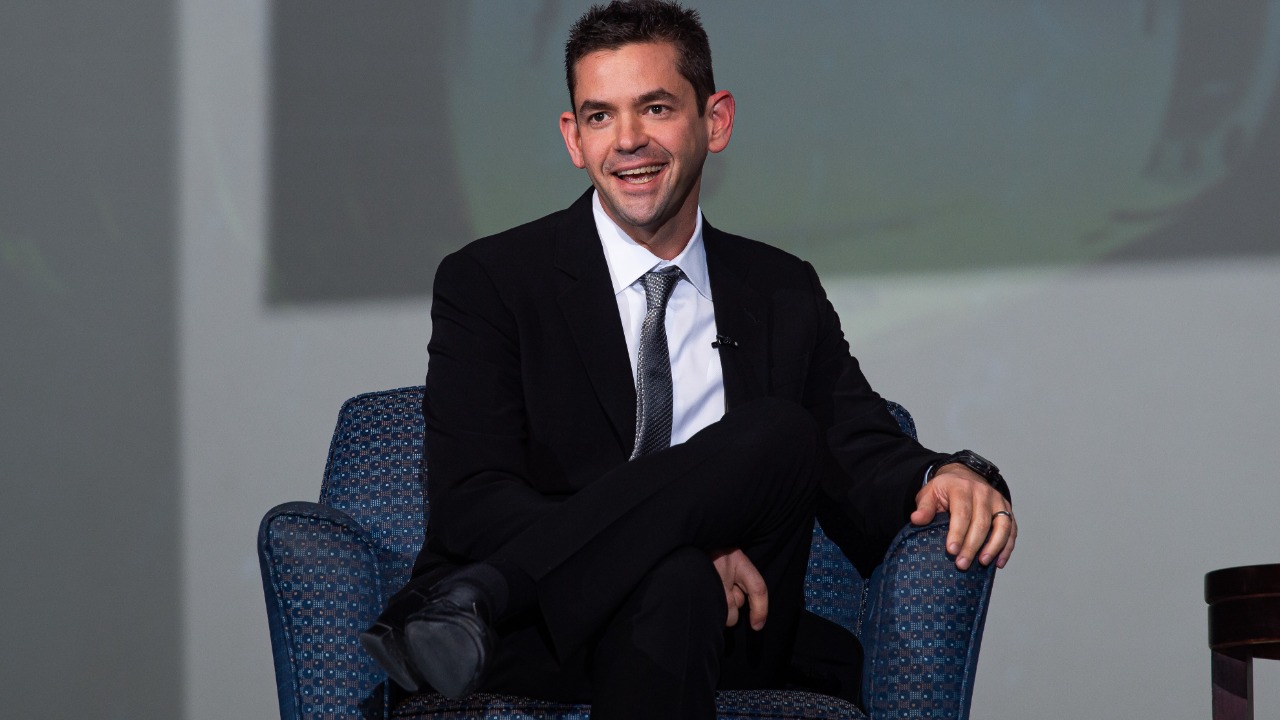
Jared Isaacman has gone from teenage entrepreneur to private astronaut to the person now steering the United States’ civilian space program. His rise to the top of NASA caps a career that blends Silicon Valley-style disruption, high performance aviation, and a personal bet that space should be more accessible, even as he inherits an agency facing deep budget cuts and political scrutiny.
Understanding who Isaacman is, and how he made his fortune before strapping into a SpaceX capsule, is essential to understanding what kind of NASA he is likely to build. His record in business, philanthropy, and commercial spaceflight offers a preview of how a billionaire test pilot might run a public agency that has long balanced scientific exploration with national prestige.
From teenage founder to billionaire payments mogul
Isaacman’s story starts not on a launchpad but in the world of credit card terminals and restaurant receipts. As a teenager he built what became a major payments processor, eventually founding and serving as chairman of Shift4, the company behind the point-of-sale systems used in hotels, stadiums, and small businesses across the country. The scale of that business, showcased on the official Shift4 site, is the foundation of the wealth that later allowed him to buy his own ticket to orbit.
His entrepreneurial reach did not stop with software and terminals. Isaacman also created Draken International, a company that provides advanced air combat training using fleets of fighter jets for the U.S. military and allied air forces, a role detailed in his Jared Isaacman biography. That combination of financial technology and tactical aviation put him in a rare category: a founder who could talk fluently about both interchange fees and aggressor squadrons, and whose net worth has been pegged in the billions. As of Dec 5, Forbes lists Isaacman’s net worth at $1.7 billion, down from his pre-pandemic high of $2.3 billion, according to reporting that tracks As of Dec valuations.
Test pilot credentials and the Inspiration4 leap
Long before he became a public figure in spaceflight, Isaacman was quietly building a second résumé in the cockpit. He is flight-qualified in multiple military jets and has flown in over 100 airshows, a level of experience that puts him closer to traditional test pilots than to typical space tourists. NASA’s own profile notes that he is an Honorary Fellow of the Society of experimental test pilots, underscoring how deeply he embedded himself in that world of high performance aviation and Honorary Fellow of the Society of records.
That background set the stage for his most visible leap: commanding Inspiration4, the first all-civilian orbital mission on SpaceX’s Dragon spacecraft. In 2021 he led a crew of non-professional astronauts into orbit in a privately funded mission that doubled as a massive fundraiser for St. Jude Children’s Research Hospital, a milestone that NASA later highlighted in its description of his role aboard Dragon. That flight, and the follow-on Polaris Program missions he bankrolled with SpaceX, turned Isaacman into the face of a new model of space exploration where private money and public infrastructure are tightly intertwined.
How a private astronaut became Administrator of NASA
Isaacman’s move from commercial crew capsule to government corner office is unprecedented in NASA’s history. The Administrator of NASA, formally the Administrator of the National Aeronautics and Space Administration, is appointed by the president and confirmed by the Senate to run the agency and serve as its chief public advocate. Official records now list Isaacman as the person holding that title, noting that he has been the agency’s top Administrator of the National Aeronautics and Space Administration since his confirmation.
His path to that job was not straightforward. President Trump initially tapped Isaacman to lead NASA early in his term, a move that immediately raised questions about putting a billionaire private astronaut in charge of a public science agency. Political turbulence followed, including a period when Trump withdrew Isaacman’s nomination before later reviving it, a sequence described in coverage of What to know about Jared Isaacman. Ultimately, the Senate confirmed him as the 15th NASA Administrator after extended debate, a step chronicled in detailed Senate coverage that emphasized both his commercial background and his astronaut credentials.
The swearing-in and what it signals for NASA’s future
Isaacman’s swearing-in ceremony crystallized how unusual his appointment is. He took the oath as the 15th NASA Administrator after the Senate vote, formally assuming leadership of the agency in a moment captured in broadcast segments that described him as a former astronaut and billionaire entrepreneur stepping into the role of new NASA Jared Isaacman chief. Local coverage of the event highlighted that he was sworn in as 15th NASA Administrator and that the ceremony was carried live for 2:48 minutes, with viewers prompted to “Open in Our App” to watch the Isaacman sworn proceedings.
Inside NASA, his arrival has been framed as both a continuity play and a break from tradition. Shift4 publicly celebrated his appointment, issuing a statement that framed his move from corporate founder to NASA Administrator as a natural extension of his lifelong focus on aviation and space, with the company’s investor site prominently noting how it Celebrates Jared Isaacman. That corporate embrace underscores a central tension of his tenure: he is now charged with regulating and partnering with the same commercial ecosystem that helped make him rich and famous.
A NASA chief facing cuts, controversy, and commercial opportunity
Isaacman is taking over NASA at a moment of financial and political strain. The administration’s 2026 budget proposes a historic 24% cut to overall NASA funding, a reduction that would slash its workforce and force hard choices about which missions survive and which are delayed or canceled. Reporting on the new budget describes how those cuts would ripple through centers across the country and reshape the agency’s priorities, framing the 24% figure as a defining challenge for NASA under his leadership.
At the same time, analysts are already gaming out how Isaacman might use his first weeks in office. One detailed roadmap sketches out what he could do in his first 20 days, from stabilizing key human spaceflight programs to rethinking how NASA balances aeronautics research with its higher profile exploration missions. That analysis even looks ahead to “Day 21: Consolidating aeronautics,” arguing that With NASA’s spaceflight program soaking up most of the attention, he will need to show he can keep the agency’s broader research portfolio on track and With NASA moving quickly.
Why Isaacman’s biography matters for the agency he now runs
Isaacman’s personal narrative is already shaping how the public understands his tenure. In interviews after his confirmation, he has described telling a kindergarten teacher that he wanted to be an astronaut, a childhood ambition that now intersects with his role as NASA chief and his public commitment to philanthropy, including pledges by wealthy donors to give away large portions of their fortunes to charity. That mix of early aspiration and later wealth is captured in profiles that follow Jared Isaacman from classroom dreams to the ninth floor of NASA headquarters.
His supporters argue that this background makes him uniquely suited to navigate a future where commercial partners, from SpaceX to small satellite startups, are central to NASA’s work. His critics counter that putting a billionaire private astronaut in charge of a public science agency risks blurring the line between public interest and private gain, especially as he works with companies that resemble the ones that made him rich. For now, what is clear is that Isaacman’s blend of payments technology, Draken International fighter jets, Dragon missions, and Senate confirmation drama has produced a NASA Administrator unlike any before him, one whose decisions will test whether a commercial space pioneer can also be an effective steward of a taxpayer-funded agency at a moment of profound change.
More From TheDailyOverview

Grant Mercer covers market dynamics, business trends, and the economic forces driving growth across industries. His analysis connects macro movements with real-world implications for investors, entrepreneurs, and professionals. Through his work at The Daily Overview, Grant helps readers understand how markets function and where opportunities may emerge.

