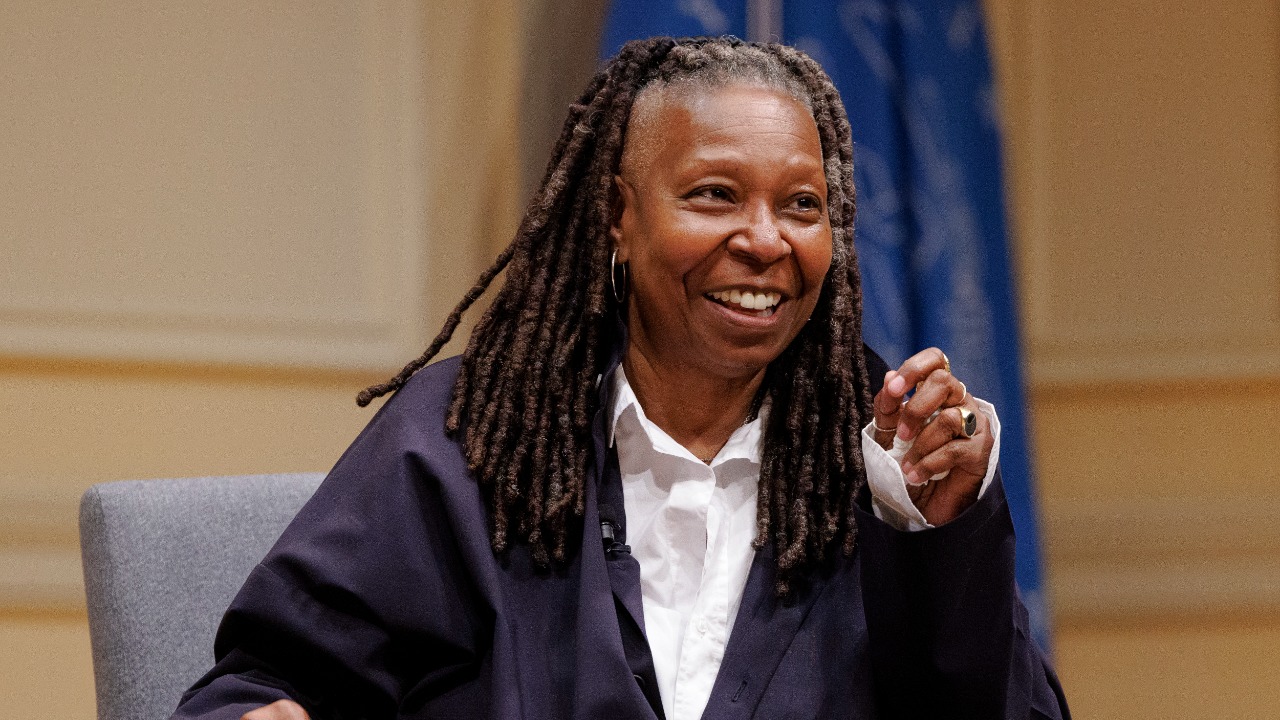
Whoopi Goldberg has never pretended to be a television host who shows up just for fun, and her latest on-air confession made that crystal clear. Asked whether she would still be sitting at The View table if money were no object, she said she would walk away, framing her daytime job as work she does to pay her bills rather than a hobby she would keep no matter what.
Her blunt answer did more than spark a viral sound bite. It pulled back the curtain on how one of daytime TV’s most recognizable figures thinks about labor, class and security, and it landed at a moment when viewers are already scrutinizing what it means to be “relatable” in an economy that has many Americans feeling squeezed.
Whoopi’s candid answer: ‘I work for a living’
When Whoopi Goldberg was pressed on whether she would remain on The View if she suddenly had unlimited wealth, she did not hedge or soften the blow. She kept it “100” and said that if she had more money, she would leave, making it plain that her long tenure in the moderator’s chair is tied to the reality that she, like anyone else, has to earn an income. That matter of fact response, delivered on Tuesday’s episode in front of a live audience, undercut any fantasy that her presence on the show is purely about passion or prestige.
Her remark fit with the way she often talks about herself as a working performer rather than an untouchable celebrity. In explaining that she would exit if she had enough financial cushion, she framed The View as a job she shows up to because she “work[s] for a living,” not a pastime she would keep doing in a hypothetical life of endless leisure, a point that echoed through coverage that noted how Whoopi Goldberg, The View and that simple line became the focus of the conversation.
Relating to working-class Americans from a daytime TV stage
What made the exchange resonate was not just the hypothetical of a star quitting a hit show, but the way Whoopi Goldberg tied her answer to the broader mood in the country. She acknowledged that she is having “a hard time” like many Americans, aligning herself with viewers who feel the strain of rising costs and uncertain paychecks. By saying outright that she is working for a living and would step back if she had enough money, she positioned herself as someone who understands the pressures that define everyday life for the audience that tunes in.
That framing matters because The View has long marketed itself as a place where co-hosts speak from different life experiences, and Goldberg’s comments underscored that her perspective is rooted in the idea of being a worker first. Reports highlighted how she explicitly related to the struggles of the working class and said she would quit if she had enough money, casting her as a veteran entertainer who still sees herself as part of the same economic story as the Americans watching at home.
‘If I had enough money, I’d quit’: what she actually said on Tuesday
On Tuesday, the exchange unfolded with the kind of offhand honesty that often produces the most revealing television. When the question of whether she would stay on The View if money were no object came up, Whoopi Goldberg did not treat it as a joke or a throwaway. She answered directly that if she had enough money, she would quit, making it clear that financial independence would change how she spends her time. That answer landed with extra force because it came from the show’s longest running permanent co-host, someone who has become synonymous with the program’s daily debates.
Her comment also reinforced how she sees her role in the context of a broader economic reality. By stressing that she is “working for a living,” she signaled that even a high profile television job is, at its core, a paycheck that keeps her in the workforce alongside everyone else. Coverage of that Tuesday episode emphasized that Whoopi Goldberg, The View, Tuesday and her hypothetical exit were all part of a larger point about how she identifies with people who do not have the luxury of treating work as optional.
Not fired, not fleeing, but frank about why she stays
Her willingness to say she would leave if she had more money inevitably fed into a swirl of online speculation about her future on the show, including rumors that she had already been pushed out. Those claims do not hold up. Reporting has made it explicit that Whoopi Goldberg Did Not Get Fired From The View Recent chatter to the contrary has been debunked, and she remains a central part of the panel that delivers fresh perspectives on a variety of themes each weekday. Her hypothetical about walking away if she were wealthier was not an announcement, it was a statement about motivation.
That distinction is important because it separates gossip from what she actually said about work and money. She did not threaten to quit or hint at a secret plan to bolt, she simply acknowledged that if she ever reached a point where she no longer needed the paycheck, she would choose a different way to spend her days. In doing so, she invited viewers to think about how many people, even those with public facing careers, are making similar calculations about their own jobs, weighing financial necessity against personal fulfillment while still showing up to work every morning.
Why her ‘100’ honesty hits a nerve in the Trump era
Part of why Goldberg’s comments traveled so widely is that they arrived in a political and cultural climate where authenticity is both demanded and doubted. When she kept it “100” about why she is still on The View, she was speaking in a media environment shaped by sharp partisan divides and a presidency that has turned daytime talk shows into regular arenas for political reaction. Her acknowledgment that she is there because she needs to work, not because she is endlessly enamored with the grind of live television, cut against the polished narratives that often surround long running TV personalities.
Her answer also landed in a moment when conversations about class and power are especially charged, with viewers scrutinizing who gets to opt out of work and who does not. By tying her own situation to the idea of working for a living, she implicitly contrasted herself with the image of untouchable elites who float above economic anxiety. Coverage of her remarks noted that Whoopi Goldberg kept it 100 when she was asked whether she would stay on the show and that the conversation unfolded against a backdrop that includes regular discussion of President Donald Trump and the political stakes that now permeate daytime TV.
More From TheDailyOverview

Cole Whitaker focuses on the fundamentals of money management, helping readers make smarter decisions around income, spending, saving, and long-term financial stability. His writing emphasizes clarity, discipline, and practical systems that work in real life. At The Daily Overview, Cole breaks down personal finance topics into straightforward guidance readers can apply immediately.
