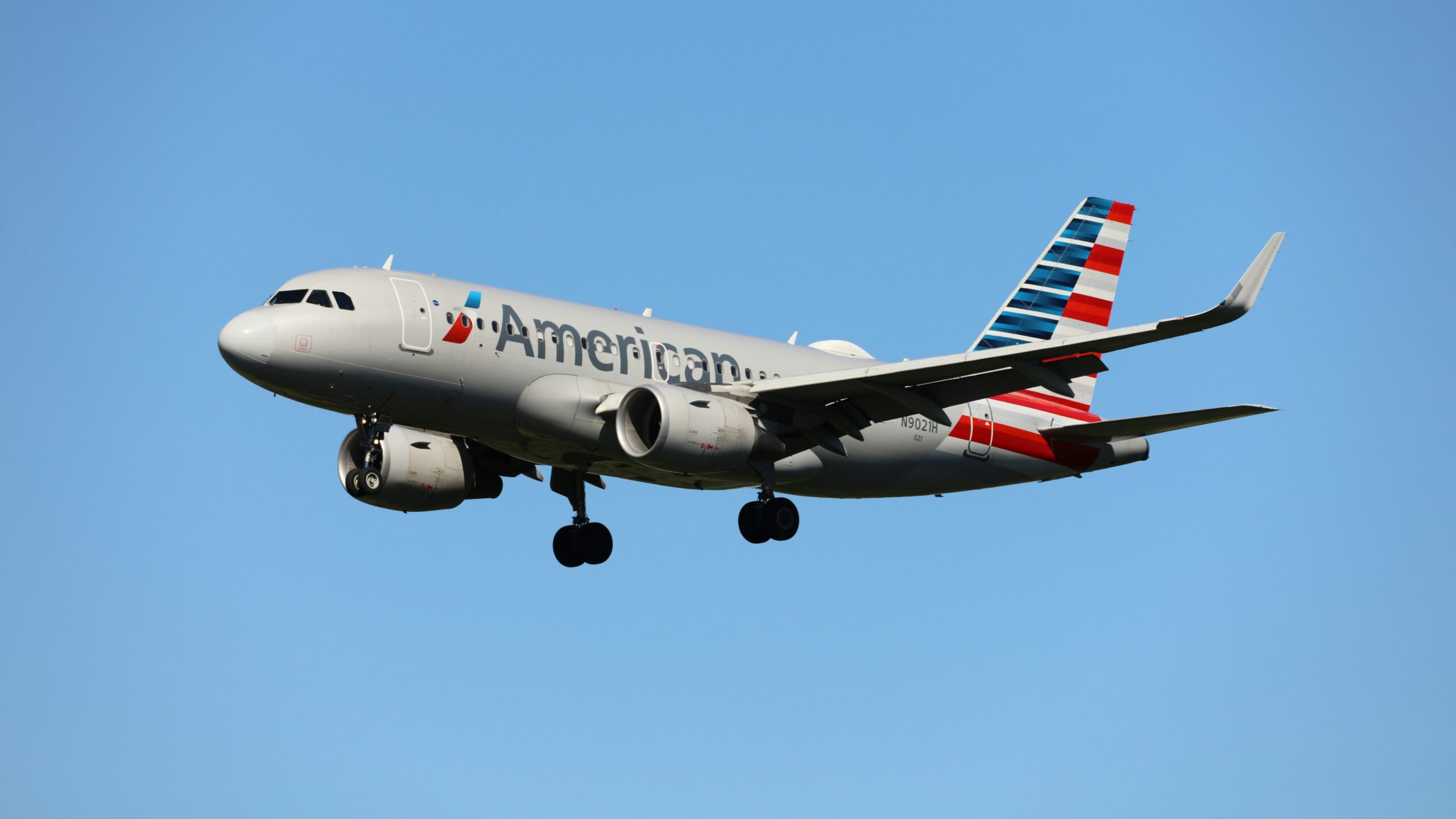
American Airlines closed 2025 with record revenue figures and a clear debt-reduction trajectory, yet its stock continues to trade at a discount to peers. The gap between the airline’s improving fundamentals and Wall Street’s cautious pricing suggests the market is still anchored to risks that may already be fading. A closer look at the company’s filings, fleet strategy, and labor stability reveals an investment case that is stronger than consensus estimates imply.
Record Revenue and a Shrinking Debt Load
The fourth quarter of 2025 delivered record Q4 revenue of $14.0 billion, capping a full year in which the airline generated $54.6 billion in total revenue. Those top-line results matter because they arrived alongside meaningful balance-sheet repair: the company reduced total debt by $2.1 billion during 2025 and has set a target of bringing total debt below $35 billion during 2026. For an airline that exited the pandemic era with one of the heaviest debt loads among U.S. carriers, the pace of deleveraging is notable. Management has also guided for more than $2 billion in free cash flow in 2026, which would provide additional capacity to retire obligations or reinvest in the fleet.
The forward earnings outlook reinforces the trajectory. American projects 2026 adjusted earnings between $1.70 and $2.70 per share, a range driven by premium market potential and a stable macroeconomic environment. If the airline lands near the midpoint, it would represent a significant step toward the kind of consistent profitability that historically supports higher equity valuations. The wide spread in that guidance range reflects honest uncertainty, not weakness. It accounts for variables like fuel prices and consumer demand that no airline can fully control.
Premium Strategy and Fleet Expansion
Where American’s story gets most interesting is in its long-term capital allocation. The company’s investor presentation outlines a plan to grow its international-capable fleet from 139 aircraft to 200 by the end of the decade, with a corresponding increase of more than 50% in lie-flat seats over the same period. That build-out targets the highest-margin segment of air travel, where business and premium leisure passengers pay fares that can be two to five times the price of a coach ticket. The strategic initiatives extend beyond seats: premium cabin upgrades, a fleet-wide Wi-Fi rollout, expansion of the Dallas/Fort Worth hub through re-banking, lounge construction, and updates to the loyalty and co-brand credit card programs all form part of a coordinated push to capture higher-yield revenue.
This premium pivot is not happening in a vacuum. Rivals have been investing heavily in similar upgrades, and the common criticism is that American is late to the game. But lateness can carry an advantage: the airline can study competitors’ missteps and calibrate its own rollout. More concretely, the fleet growth from 139 to 200 international-capable aircraft represents a roughly 44% expansion in wide-body capacity, which should allow American Airlines to add routes to markets where premium demand is growing fastest. If the company executes on this plan while maintaining its debt-reduction pace, it would simultaneously grow revenue per available seat mile and improve its credit profile, a combination that tends to attract institutional investors back to a stock.
Labor Peace at a Price Worth Paying
One reason Wall Street has been cautious about airline stocks broadly is rising labor costs. American addressed its largest open contract when flight attendants ratified a new agreement that included immediate wage increases of up to approximately 20.5%, plus retroactive pay. That is a significant cost increase, and the union contract documentation details new wage tables and boarding pay structures that will raise the airline’s unit costs for years to come. The contract came together following government mediation, and its ratification removed the risk of a disruptive labor action that could have grounded flights and eroded customer trust.
The cost of labor peace is real, but so is the cost of labor conflict. Airlines that enter prolonged disputes with flight attendants or pilots often see operational reliability decline, which damages premium revenue disproportionately because high-fare passengers are the quickest to switch carriers. By locking in a multi-year agreement, American gains predictability in its cost structure at a time when it is trying to convince investors that its earnings trajectory is durable. The wage increases will pressure operating margins in the near term, but the airline’s record revenue performance suggests it has pricing power sufficient to absorb much of that pressure, particularly as premium cabin capacity expands.
Short-Term Disruptions Do Not Change the Trend
Skeptics can point to real headwinds. The government shutdown earlier in the cycle caused an estimated revenue impact of approximately $325 million, while Winter Storm Fern led to thousands of flight cancellations and short-term operational chaos. Such events feed the narrative that airlines are perpetually one shock away from a profit warning. They also provide convenient justification for investors who prefer to avoid the sector altogether, arguing that cyclicality and exogenous risk will always cap valuations, no matter how strong the underlying fundamentals appear in a given year.
Yet the financial statements suggest these disruptions are being absorbed rather than derailing the broader trajectory. In an earlier annual report, management acknowledged similar weather and operational challenges but still delivered year-over-year improvements in revenue and debt reduction. The pattern has continued into 2025 and 2026 guidance: temporary shocks reduce quarterly earnings, but they have not prevented American from generating strong cash flow, paying down obligations, and investing in higher-yield assets like international-capable aircraft and premium lounges. For long-term investors, the key question is not whether the next storm or shutdown will occur, it will, but whether the balance sheet and network are now robust enough to handle those shocks without permanent damage.
Valuation, Risk, and the Case for Re-Rating
Despite the progress on revenue, deleveraging, and labor stability, American’s equity still trades at a discount to many peers on metrics such as forward earnings and enterprise value to EBITDAR. Part of that reflects a hangover from the pandemic era, when the company took on substantial debt to survive and diluted shareholders in the process. Part of it also reflects a perception that American’s network and cost structure are structurally weaker than those of its closest competitors. However, as the company executes on its plan to expand premium capacity, reduce gross debt toward the stated sub-$35 billion target, and stabilize labor relations, the rationale for a persistent valuation gap becomes less compelling.
None of this eliminates risk. American remains exposed to fuel price volatility, macroeconomic slowdowns, geopolitical shocks that affect international travel, and the ever-present possibility of new labor demands as contracts come up for renewal. The airline also has to prove that its premium investments will generate sustainable pricing power rather than simply matching industry standards. But the combination of record revenue, clear debt-reduction milestones, a growing portfolio of high-yield seats, and a more predictable cost base suggests that the business is fundamentally stronger than the stock price implies. If management continues to hit its financial and operational targets, the market may eventually have to re-rate American Airlines closer to peers, rewarding investors who were willing to look past short-term turbulence and focus on the underlying trajectory.
More From The Daily Overview
*This article was researched with the help of AI, with human editors creating the final content.

Grant Mercer covers market dynamics, business trends, and the economic forces driving growth across industries. His analysis connects macro movements with real-world implications for investors, entrepreneurs, and professionals. Through his work at The Daily Overview, Grant helps readers understand how markets function and where opportunities may emerge.