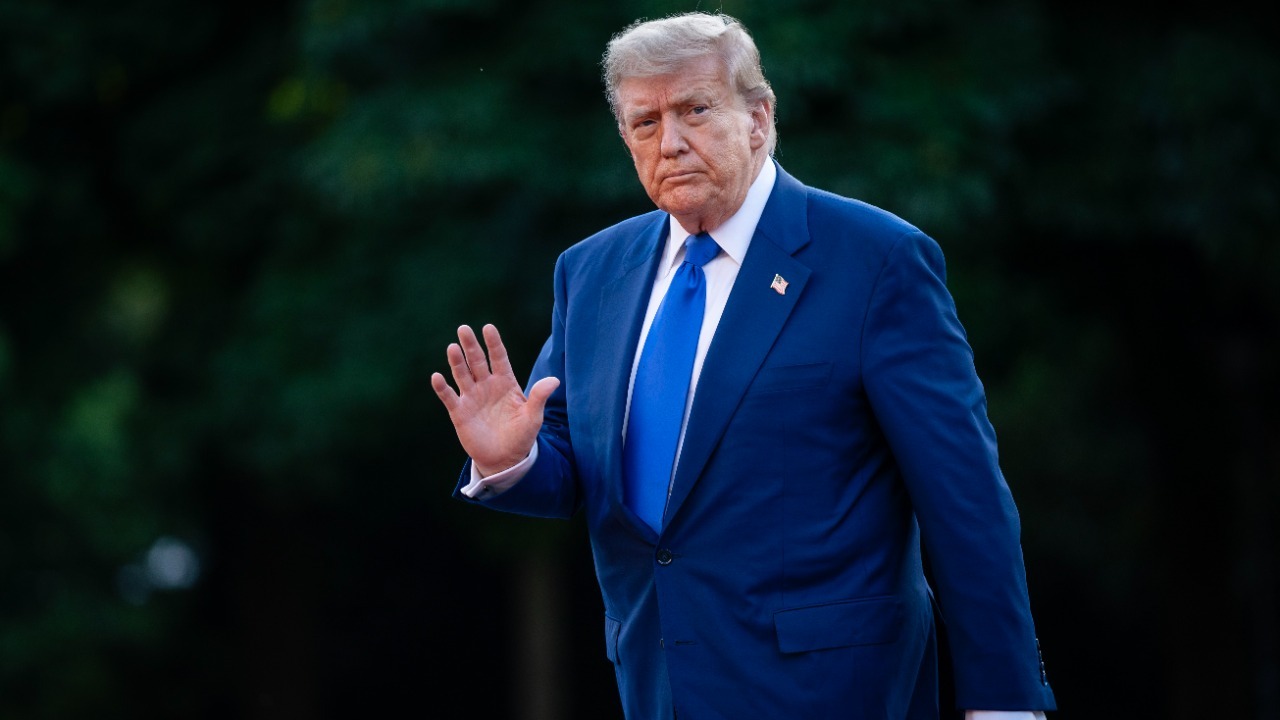
President Donald Trump has staked his economic agenda on sweeping import taxes that touch nearly every major trading partner, turning tariffs into his defining policy tool on trade and foreign affairs. The Supreme Court is now weighing whether his use of emergency powers to levy those duties went too far, but the structure of U.S. trade law, the Court’s own instincts and the practical fallout of a broad defeat all point in the same direction. I see a Court that may trim at the edges, yet is unlikely to detonate the centerpiece of Trump’s economic program.
Even as legal challenges mount from small businesses and U.S. states, the justices have signaled caution about rewriting the rules of presidential trade authority in one dramatic stroke. That caution, combined with the administration’s backup options and the conservative majority’s deference in national security and foreign policy, helps explain why Trump’s tariffs are more likely to be reshaped than erased.
The legal test: IEEPA, trade statutes and a cautious Court
At the heart of the case is President Trump’s decision to use the International Emergency Economic Powers Act, or Int, to impose global tariffs that go far beyond traditional sanctions. The U.S. Supreme Court is currently evaluating whether President Trump could rely on that emergency law to roll out sweeping duties, a question that has left importers and investors watching closely as the Supreme Court weighs whether those emergency powers were stretched beyond their text. Justices heard arguments in early November, and reporting on that session described conservative members pressing lawyers on how far the Court should go in second guessing a president’s judgment in a declared emergency.
Formally, the Constitution gives Congress the power to regulate foreign commerce and raise revenue, and a detailed survey of tariff law notes that Congress has delegated large slices of that authority to the executive branch under specific statutes. Those include Section 232, which lets presidents restrict imports on national security grounds, and Section 301, which targets unfair trade practices. The current dispute is narrower, focused on whether Trump could bypass those trade specific tools and instead rely on IEEPA to tax imports in a way that had not been attempted before, a question that has left the Court balancing statutory text against decades of deference in foreign economic policy.
Signals from the bench and the politics of restraint
When the justices heard arguments, conservative members appeared skeptical of the challengers’ invitation to sharply curtail presidential power in this space. According to one account, the government stressed that the tariffs are different from past uses of emergency law because they are a major part of Trump’s approach to foreign affairs, a framing that resonated with several justices who have often deferred to presidents in national security cases involving Trump. That tone did not guarantee victory for the administration, but it suggested a reluctance to write a sweeping opinion that would hamstring future presidents in crises that touch trade and security.
Outside the courtroom, analysts have read the Court’s slow pace as another sign of caution. The justices have issued other rulings while leaving the tariff case pending, and one assessment argued that the delay may signal a win for Trump because the Supreme Court appears to be searching for a narrow path that avoids detonating existing trade arrangements. A separate analysis noted that Trump might even emerge victorious if a majority of justices treat the dispute as a political exercise better left to elected branches, a view that reflects how the Court has sometimes sidestepped direct confrontations with presidents in contentious economic cases involving the Court.
Economic and political stakes of tearing up the tariffs
The breadth of Trump’s trade actions is central to why the justices may hesitate to strike them down outright. Trump hit nearly every foreign trading partner with tariffs, and the case now before the Court involves global duties that have become embedded in supply chains and pricing decisions across sectors, from autos to electronics, as described in detailed coverage of how the Justices are handling the dispute. The sweeping global tariffs that were first announced by Trump last April are being challenged by small businesses and 12 U.S. states, which argue that the duties have raised costs and distorted competition, but those same challengers acknowledge that unwinding the system overnight would be disruptive.
Trump himself has warned of a “complete mess” if the Supreme Court rejects his tariffs, pointing to the risk that courts could be asked to undo the taxes already collected and that trading partners might demand rapid renegotiation of deals built around the new regime. The sweeping global tariffs that were first announced by Trump last April are now so intertwined with revenue flows that one bank’s research arm has warned that a ruling against the administration could force the government to return revenues already received. That kind of fiscal and diplomatic shock is exactly the sort of chaos courts traditionally try to avoid, especially when other branches have tools to adjust policy prospectively.
Why even a loss on IEEPA would not end Trump’s tariffs
Even if the Court concludes that IEEPA was misused, Trump has multiple fallback options that would keep tariffs in place in some form. One detailed analysis of the case notes that the court is considering whether Trump can use an emergency law that had previously never been wielded to impose import taxes, but it also lays out alternative paths if that approach is rejected, including shifting duties onto more traditional trade statutes that Congress has already approved for tariff use by Trump. A separate briefing on Potential Alternative Tariff Authorities underscores that the Trump administration has already made frequent use of Section 301 of the Trade Act to target countries that engage in discriminatory trade practices, a reminder that the White House is comfortable moving between legal levers to preserve its core policy goals under the Trade Act.
Other statutes are also available. A breakdown of IEEPA tariffs alongside Section 232 tariffs and Section 301 tariffs explains that Section 232 allows restrictions on imports tied to national security, while Section 301 is aimed at unfair practices, and it notes that the aluminum, copper and steel measures that have dominated headlines are Section 232 tariffs, while many of the duties that have lasted for years on Chinese goods are longer term Section 301 tariffs under IEEPA. Another legal guide notes that Section 232 gives the president power to use tariffs to regulate the import of goods on national security grounds, and that What it permits under Section 232 g has already been used by multiple administrations to defend domestic industries, suggesting that Trump could repackage some IEEPA based duties under that more established Section.
Deference, administrative law and the Court’s appetite for disruption
There is also a broader institutional reason the Court may avoid a sweeping anti tariff ruling. A detailed analysis of the Administrative Procedure Act asks Which trade actions are subject to the APA, and which are exempt, and concludes that many presidential tariff moves sit in a gray zone where formal notice and comment is not required and judicial review is limited, especially when actions are framed as national security or foreign policy measures under the APA. That legal architecture reflects decades of congressional and judicial willingness to let presidents move quickly on trade when they claim urgent threats, and it would be a sharp break for the current Court to suddenly insist on a far more intrusive role.
More From TheDailyOverview

Julian Harrow specializes in taxation, IRS rules, and compliance strategy. His work helps readers navigate complex tax codes, deadlines, and reporting requirements while identifying opportunities for efficiency and risk reduction. At The Daily Overview, Julian breaks down tax-related topics with precision and clarity, making a traditionally dense subject easier to understand.

