House Speaker Nancy Pelosi has spent years brushing off accusations that her family’s stock trades benefit from her access to market-moving information. When she snapped “That’s ridiculous” at a television interviewer pressing her on insider trading claims, the exchange crystallized a long-running tension between public outrage and the limited facts actually on the record. The question is not just whether Pelosi broke the law, but whether the pattern of trades and her own reactions justify the intense suspicion that now trails her every financial disclosure.
I see two separate issues that need to be untangled. One is the emotional charge of a powerful lawmaker bristling at scrutiny, which was on full display as Pelosi grew visibly irritated when pressed about her portfolio. The other is the math: what we actually know about her family’s investments, how those numbers compare with typical market performance, and whether any of it crosses the line from savvy to suspect.
Pelosi’s flashpoint moment on camera
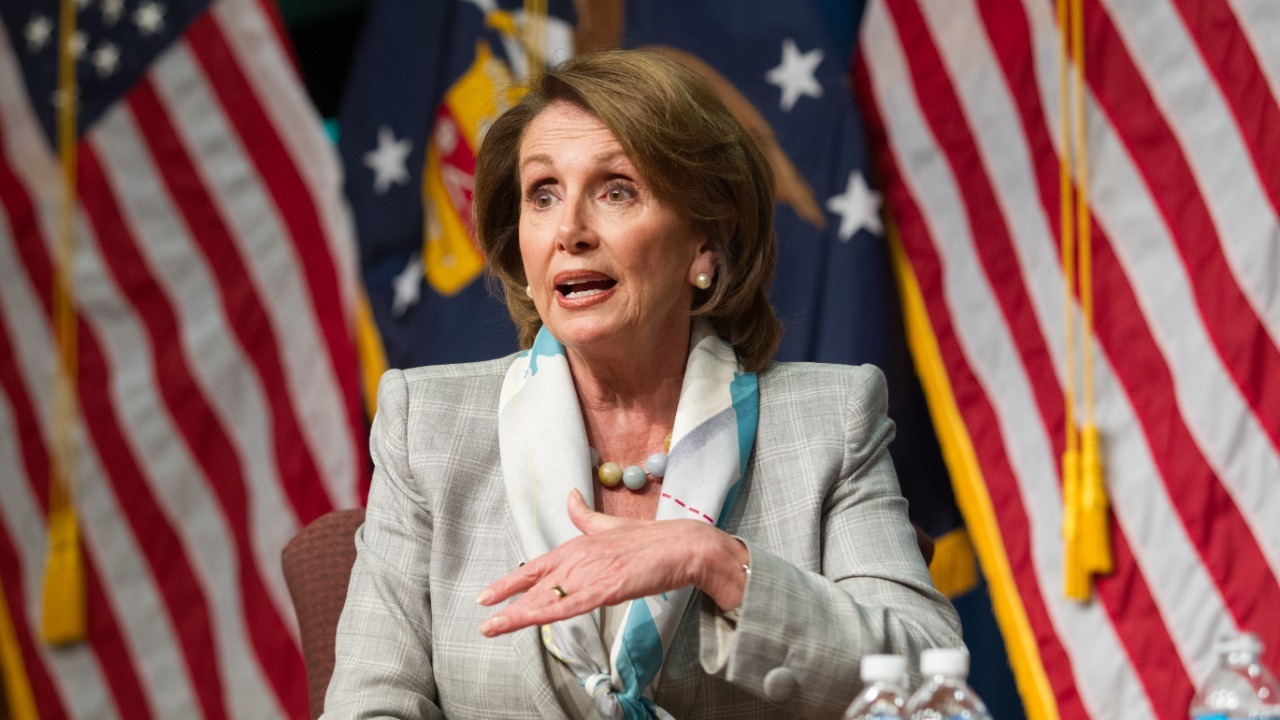
The latest flare-up began with a simple, pointed question about whether Pelosi or her husband had ever profited from information she learned in closed-door briefings. Instead of a measured explanation of her trading history, viewers saw a veteran politician stiffen, shift in her chair, and push back hard on the premise. In the clip, House Speaker Nancy Pelosi appears visibly uncomfortable as she is asked about insider trading, her body language tightening even as she insists that the allegations are baseless.
Her reaction matters because it feeds a narrative that she is “panicking” under pressure rather than calmly walking through the facts. In the televised exchange, she does everything she can to redirect, dismissing the question as unfair and leaning on her long tenure in public service as a shield. That defensive posture, captured in the on-air interview, has become a viral shorthand for critics who argue that if there were nothing to hide, she would simply welcome a full accounting of her trades.
Inside the clash with Jake Tapper
The tension escalated further in a separate interview when Nancy Pelosi sat across from Jake Tapper and was confronted directly with accusations that her family’s stock market success looks too good to be coincidence. Rather than treat it as a technical question about ethics rules, she reportedly “blows up,” challenging the framing and insisting that her critics are distorting her record. The exchange is described as heated, with Pelosi bristling at the suggestion that her husband’s trades might be piggybacking on her legislative briefings.
That moment, detailed by reporter Ryan King, has become a touchstone for those who see Pelosi as emblematic of a broader problem with congressional trading. The account notes that the controversy centers on whether her family’s portfolio has outperformed the market in ways that track closely with major policy debates, and it highlights how sharply she rejects that premise. The description of her confrontation with Jake Tapper underscores how personal the issue has become, with Pelosi treating the allegations as an attack on her integrity rather than a policy debate about how members of Congress should invest.
What “insider trading” actually means for lawmakers
To understand whether the outrage is justified, I need to separate the legal standard from the political optics. Insider trading, in the strict sense, involves buying or selling securities based on material, nonpublic information in violation of a duty of trust. For a member of Congress, that could mean acting on confidential briefings about an upcoming regulatory change or a looming crisis before the public or the market has any chance to react. The law does not ban lawmakers from owning stocks, but it does bar them from exploiting privileged information for personal gain.
At the same time, the rules that govern congressional trading are riddled with gray areas. Disclosures are filed after the fact, not in real time, and they often list broad ranges instead of precise dollar amounts. That makes it difficult for outside observers to reconstruct exactly when a trade was placed or how much was at stake. When critics accuse Pelosi of insider trading, they are usually pointing to patterns that look suspicious in hindsight, such as timely options bets or sector-specific moves that line up with committee work, rather than presenting a smoking gun that would satisfy a prosecutor.
Do the numbers really look unusual?
The heart of the debate is whether Pelosi’s family has consistently beaten the market in a way that suggests more than luck or skill. Her husband’s trades in technology and high-growth companies have drawn particular scrutiny, especially when they coincide with major legislative pushes on antitrust, infrastructure, or semiconductor subsidies. Critics argue that the timing of some of these moves appears uncannily aligned with policy developments that were being hashed out in private before they became public.
Yet even the sharpest critics often rely on anecdotal examples rather than a comprehensive, audited track record. Without full access to brokerage statements, it is hard to know how many losing trades offset the headline-grabbing winners, or whether the overall performance is truly extraordinary compared with a simple index fund. The figure 52, cited in some commentary as a shorthand for the number of particularly well-timed trades or the percentage of winning positions, is frequently invoked to suggest a pattern, but it is not, on its own, proof of a crime. What it does show is how hungry the public is for a clean, numerical answer to a question that is inherently murky.
The ethics gap and why Pelosi’s response matters
Even if every trade in the Pelosi portfolio were ultimately cleared as legal, the controversy exposes a glaring ethics gap. Voters increasingly believe that members of Congress should not be allowed to trade individual stocks at all, precisely because it is impossible to fully separate their public duties from their private financial interests. When a powerful figure like Pelosi reacts with visible irritation instead of acknowledging that the rules might be too lax, it reinforces the perception that Washington is out of touch with that concern.
Her dismissive “That’s ridiculous” response may play well with loyal supporters who see the allegations as partisan attacks, but it does little to reassure skeptics who want structural reform rather than personal assurances. By framing the issue as an insult to her character, Pelosi sidesteps the broader question of whether the system itself invites conflicts of interest. Until lawmakers embrace stricter guardrails, including potential bans on individual stock trading or mandatory blind trusts, the numbers behind their portfolios will continue to be scrutinized, and every defensive outburst on camera will only deepen the suspicion that the game is rigged in their favor.
More From TheDailyOverview

Grant Mercer covers market dynamics, business trends, and the economic forces driving growth across industries. His analysis connects macro movements with real-world implications for investors, entrepreneurs, and professionals. Through his work at The Daily Overview, Grant helps readers understand how markets function and where opportunities may emerge.