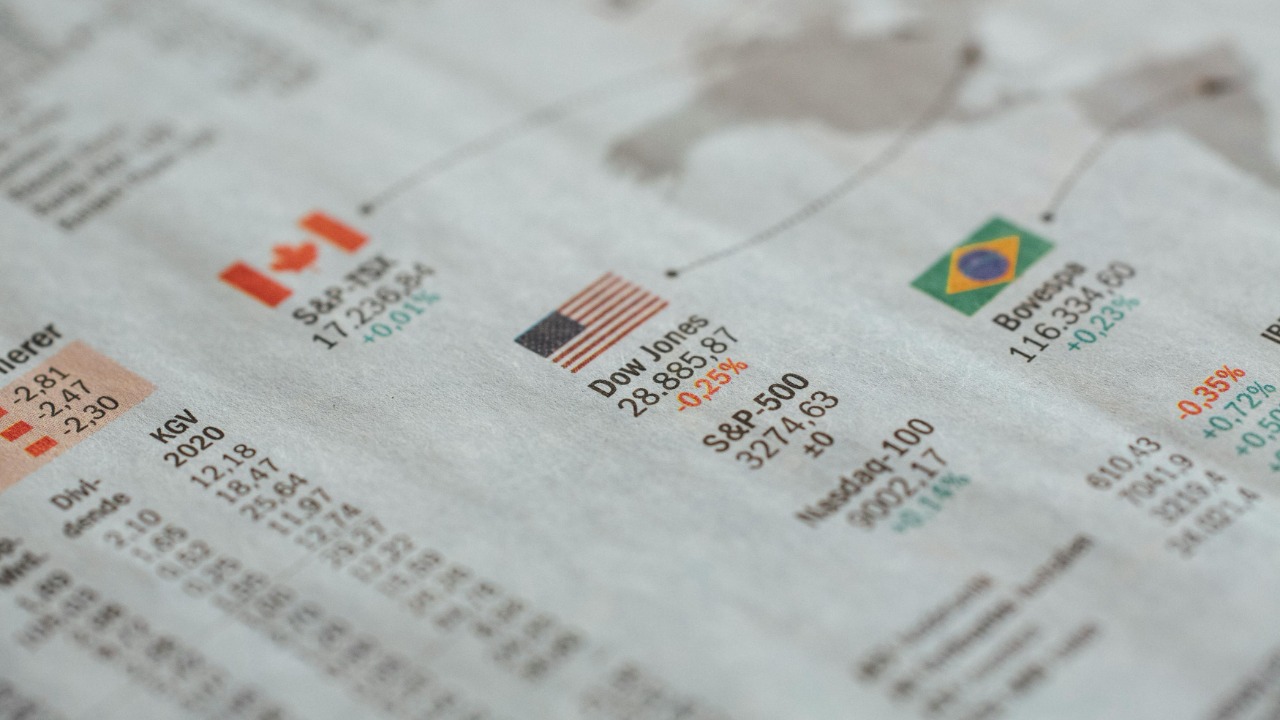
Wall Street is heading into 2026 with a rare mix of optimism and unease, and that tension alone is a warning sign for the S&P 500. Earnings forecasts, artificial intelligence enthusiasm and a resilient economy are all supportive, yet the same forces are inflating valuations and compressing the margin for error. When growth looks solid but risks are multiplying under the surface, corrections tend to arrive not as shocks, but as overdue resets.
I see several ingredients coming together that could make a pullback in 2026 more likely than investors currently assume. From stretched pricing and concentrated leadership to shifting inflation dynamics, geopolitical flashpoints and the possibility of an AI bubble, the backdrop looks more fragile than headline indexes suggest.
Why a healthy economy can still coexist with a market correction
The starting point for any 2026 call is that the macro backdrop is not obviously recessionary. Forecasts for the United States and the broader world point to continued expansion, which is exactly why many investors feel comfortable staying fully invested in the S&P 500. Yet history shows that corrections often happen when growth is fine, not when it is falling apart, because strong data can encourage overconfidence and push valuations to levels that are hard to sustain.
Several major outlooks for next year highlight this tension. One global house describes its Economic Outlook for 2026 as “Moderate Growth With” a “Range of Possibilities,” noting that inflation is slowing but excess capacity is only gradually absorbed. Another forecast from a U.S. focused firm expects an acceleration, with analysts there saying they “anticipate” real growth running at or just above 4 percent and highlighting that they expect economic growth to pick up in 2026. A large Australian bank, looking at the world as a whole, similarly projects that the Global economy is set to pick up in 2026, even as it flags that risks remain. Put together, these views describe a backdrop where growth is decent, but not so strong that it can easily justify any price investors are willing to pay for stocks.
Valuations, momentum and the four “ingredients” for a pullback
When I look at the S&P 500 today, the bigger concern is not the economy, but the price investors are paying for exposure to it. After a strong run through 2024 and into 2025, the index is trading at levels that embed aggressive assumptions about earnings, interest rates and the durability of the AI boom. That combination leaves little room for disappointment, which is exactly the setup that has preceded past corrections.
One detailed analysis argues that the “4 ingredients” for a major setback in the S&P 500 have already arrived, pointing to momentum driven highs, heavy reliance on expected rate cuts, narrow leadership and elevated valuations. That piece, published on Nov 2, 2025, notes that the rally has been powered less by broad based earnings strength and more by investors crowding into a handful of winners. When markets lean so heavily on momentum and policy hopes, even a modest shift in expectations around the Federal Reserve or corporate profits can trigger a sharp repricing.
What history says about bull markets and the odds of a setback
Historical patterns do not guarantee anything, but they do offer a useful reality check on how long bull markets typically last and how often they stumble. Looking at past cycles, the S&P 500 has a tendency to keep climbing once a new uptrend is established, yet it also tends to experience corrections along the way rather than moving in a straight line. That nuance is often lost when investors focus only on whether the next year will be “up” or “down.”
One recent study of past returns concludes that there is a 71% chance the current bull market will continue into 2026, while also warning that the odds of a meaningful pullback are far from trivial. The authors, writing on Nov 29, 2025, frame it this way: Based on historical data, the market continues to rise in most years after a strong run, but corrections of 10 percent or more are common even within ongoing bull phases. In other words, the probability that the S&P 500 is higher at the end of 2026 does not rule out a rough stretch along the way.
Inflation’s next move and what it means for multiples
Inflation is another hinge point for 2026, and here the signals are mixed. On one side, global forecasters expect price pressures to keep easing, which would support lower interest rates and higher equity valuations. On the other, some projections for the United States point to a modest reacceleration, which could force the Federal Reserve to stay cautious and cap how much investors are willing to pay for each dollar of earnings.
One international policy group, highlighted in an Oct 19, 2025 “Fact of the Week,” notes that Fact of the Week is that “Inflation Is Expected” to “Rise” to 3 “Percent” in the “United States” in 2026, even as inflation in other advanced economies is projected to decrease. A large asset manager, in its Nov 23, 2025 outlook, similarly says that Key global inflation is forecast to remain above central bank targets, even if it is lower than the peaks of 2022. If U.S. inflation does drift back toward 3 percent while global price growth stays sticky, the S&P 500’s current multiples could look stretched relative to a world where investors had been counting on a clean return to 2 percent.
AI enthusiasm, earnings hopes and the risk of a bubble
Artificial intelligence has been the defining story of this bull market, and it will likely remain central in 2026. The technology is already reshaping capital spending plans, from cloud infrastructure to chip manufacturing, and it has powered a handful of mega cap stocks to towering valuations. The question for the S&P 500 is whether earnings can catch up fast enough to justify those prices, or whether the market has moved too far ahead of the fundamentals.
Several outlooks lean heavily on AI to explain why growth and profits could surprise on the upside. One global investment firm, in a Nov 23, 2025 note, highlights that “Global” growth is proving resilient, with the boom in AI helping to offset problems stemming from tariffs and other headwinds. A separate analysis of Wall Street forecasts points out that S&P 500 earnings are expected to accelerate in 2026, even as the index “has rarely been so expensive.” And a well known economist, writing on Nov 25, 2025, warns that “Business” confidence could take a hit if concerns about an AI bubble lead to a large equity price correction, noting that such a scenario would be especially damaging if it coincided with persistent, above target inflation, as outlined in his Business focused outlook for the U.S. economy in 2026. When valuations are this rich and so much of the story rests on one technology theme, the risk of a sentiment reversal is hard to ignore.
Geopolitics, policy shocks and why institutional investors are nervous
Beyond earnings and inflation, the geopolitical backdrop is another reason I expect more volatility in 2026. Trade tensions, regional conflicts and shifting alliances have already disrupted supply chains and commodity markets over the past few years. With several flashpoints unresolved and new ones emerging, it would not take much for risk premiums to rise, especially if investors have grown complacent after a long stretch of relatively calm markets.
Institutional allocators are already positioning for that possibility. A survey published on Nov 24, 2025 reports that large asset owners are bracing for a 2026 market pullback amid rising geopolitical and AI related risks, with “Investors” increasingly concerned about volatility and the resilience of the traditional 60:40 mix. The same report notes that many expect 2026 to favor active strategies, arguing that Institutional Investors Brace for a world where “Active management provides the discipline” to navigate shocks and build greater resilience into portfolios. When the biggest players in the market are openly preparing for turbulence, it is a sign that the benign conditions of the past few years may not last.
Wall Street targets: bullish headlines, fragile assumptions
Official price targets for the S&P 500 through 2026 look bold on the surface, but the assumptions behind them are anything but conservative. Some strategists see room for the index to climb significantly from current levels, driven by AI fueled productivity gains, margin expansion and a soft landing for the economy. Yet those same forecasts often acknowledge that even small deviations from the base case could lead to very different outcomes.
One widely discussed projection, published on Nov 26, 2025, lays out a “Key Points” summary in which a major bank predicts the S&P 500 could reach a surprising target in 2026, with an even bigger 8,000 “what if” scenario if everything breaks right. The “Forecast” hinges on AI driven productivity, benign inflation and steady policy support. That is an appealing story, but it is also a narrow one. If inflation runs closer to 3 percent than 2, if AI spending proves more cyclical than expected, or if geopolitical tensions flare, the path to those lofty numbers becomes much harder, and the risk of a correction on the way there grows.
Sector rotations, crowded trades and the rise of active strategies
Even if the S&P 500 manages to grind higher over the next year, I expect the journey to be bumpier and more uneven beneath the surface. The dominance of a handful of mega cap growth names has left many sectors under owned, while others look crowded to the point where any disappointment could trigger a rush for the exits. That kind of internal rotation is often where corrections start, as weakness in a few leaders spills over into the broader index.
Some strategists argue that this environment will reward more selective approaches. A Nov 23, 2025 U.S. outlook notes that investors can Get Joe Brusuelas “Market Minute” economic commentary every morning, and that “During” the coming period they expect growth to be solid but uneven across industries, which naturally favors stock pickers over broad beta. Another analysis from late November highlights that while the S&P 500 is having a strong year in 2025, investors who own the “Vanguard Growth ETF” are doing even better, with “Key Points” in that piece arguing that this fund could outperform again in 2026 “in 2025” style if growth leadership persists. Those kinds of divergences suggest that index level returns may mask significant churn underneath, and that a correction could be sharper in the most crowded corners of the market.
How investors can prepare if 2026 brings a reset instead of a crash
Putting all of this together, I see 2026 as a year where a correction in the S&P 500 is more likely than a full blown crisis, but also more likely than a perfectly smooth continuation of the current bull run. The economy looks reasonably healthy, AI is driving real investment and earnings should grow, yet valuations, inflation uncertainty, geopolitical risks and concentrated leadership all argue for a more cautious stance. In that kind of environment, the goal is not to time the exact top, but to make sure portfolios can withstand a 10 to 20 percent pullback without forcing painful decisions at the worst moment.
For individual investors, that means stress testing allocations against scenarios where inflation runs hotter than expected, AI enthusiasm cools or a geopolitical shock hits risk assets. It also means reconsidering how much of a portfolio is tied to the same crowded trades that have powered the index higher, and whether there is room for more diversified exposure across sectors, styles and geographies. As several 2026 outlooks emphasize, from the Range of Possibilities flagged in one “Moderate Growth With” scenario to the Global AI driven resilience described in another, the future is unlikely to match any single forecast exactly. That is precisely why I believe the S&P 500 is vulnerable to a reset in 2026, and why preparation, not prediction, should be the priority now.
More From TheDailyOverview
- Tennessee loses $2.6B megafactory and faces major layoffs
- Retired But Want To Work? Try These 18 Jobs for Seniors That Pay Weekly
- What to do with your pennies after the U.S. stops minting them
- Home Depot CEO warns of a troubling customer trend in stores

Elias Broderick specializes in residential and commercial real estate, with a focus on market cycles, property fundamentals, and investment strategy. His writing translates complex housing and development trends into clear insights for both new and experienced investors. At The Daily Overview, Elias explores how real estate fits into long-term wealth planning.

