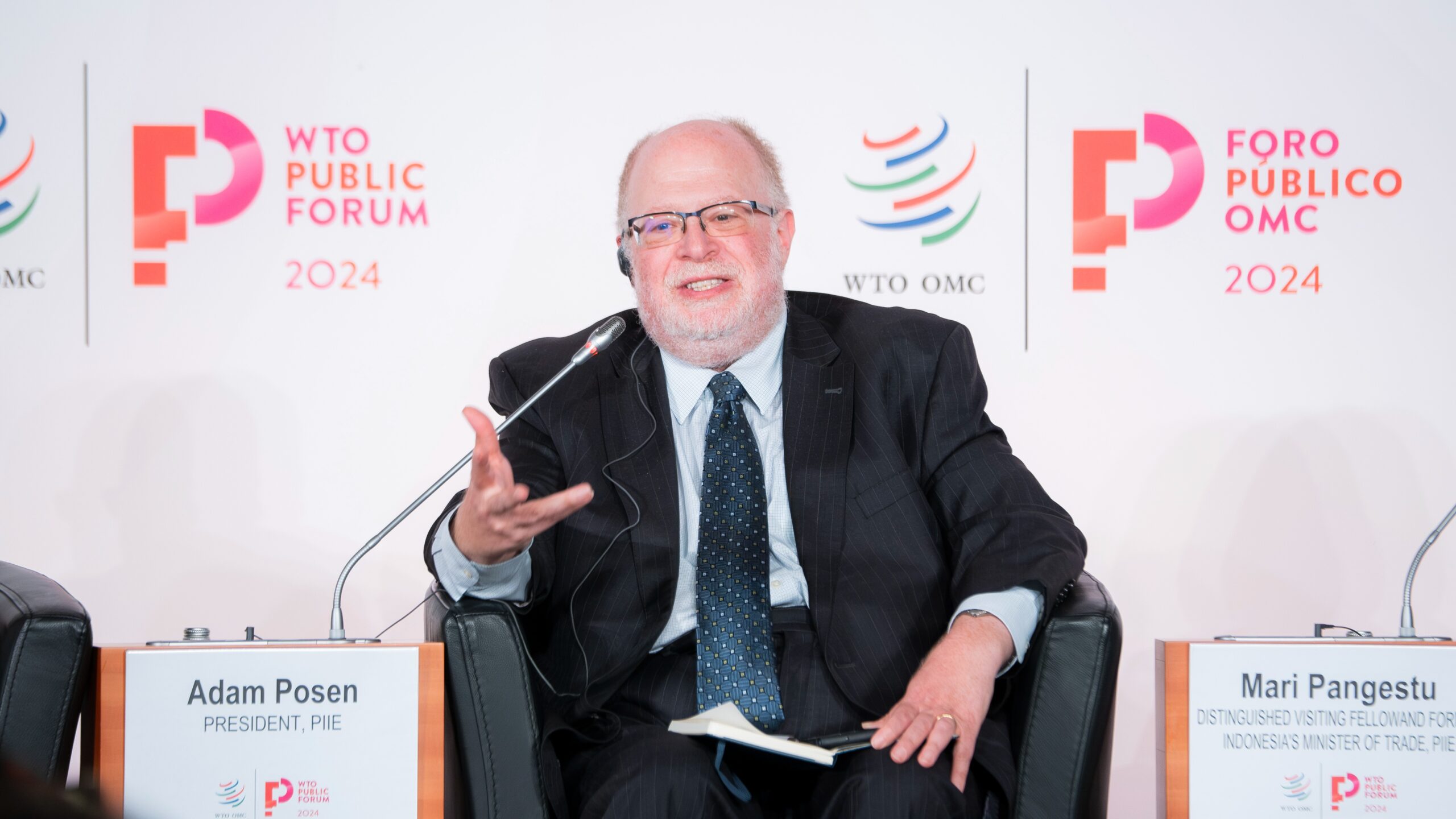
Adam Posen, president of the Peterson Institute for International Economics, is warning that U.S. inflation could hit 4% by the end of 2026, a level that would double the Federal Reserve’s target and reverse much of the progress made since the post-pandemic price surge. His argument rests on a collision of forces: tariffs that have yet to fully pass through to consumers, a tightening labor supply, and fiscal spending that shows no sign of slowing. The prediction arrives at an awkward moment for the Fed, which spent late 2025 cutting interest rates on the assumption that inflation was cooling steadily.
December Data Showed Persistent Price Pressures
The Fed’s preferred inflation measure, the personal consumption expenditures price index, rose 0.4% in December 2025 on a month-over-month basis, according to the Bureau of Economic Analysis. That reading was notably hotter than the pace consistent with the Fed’s 2% annual target, and it came alongside a personal saving rate of just 3%, suggesting households were stretching budgets to maintain spending levels even as prices climbed. For policymakers who had been hoping that earlier rate hikes would cool demand, the data underscored how resilient consumer spending remained.
That spending pattern matters because it signals demand has not weakened enough to pull inflation lower on its own. When consumers keep buying despite rising costs, businesses face less pressure to absorb expenses or cut prices. The December figures offered a snapshot of an economy still running warm, even after more than two years of elevated interest rates designed to cool it. They also provided the backdrop for Posen’s warning: if inflation is still firm before the full impact of tariffs and fiscal policy arrives, the risk is that price growth could reaccelerate rather than glide gently back to target.
Rate Cuts and the Fed’s “Uneven” Outlook
Against that backdrop, the Federal Open Market Committee voted at its December 9-10 meeting to lower its target range to 3.50%-3.75%, effective December 11, 2025. The cut reflected confidence among policymakers that inflation was on a downward path, but the decision also loosened financial conditions at a time when price pressures had not fully subsided. Cheaper borrowing costs tend to stimulate spending and investment, which can add fuel to inflation if supply constraints persist. In markets, lower policy rates typically translate into easier credit, higher equity valuations, and stronger demand for interest-sensitive sectors such as housing and autos.
By the time officials gathered again on January 27–28, 2026, the tone had shifted. Minutes from that meeting, reported by the Financial Times, showed Fed officials warning that progress toward their 2% inflation goal would be “uneven.” That language was carefully chosen. It acknowledged that the path ahead was not a straight line and that new risks, particularly from trade policy, could push prices higher before they moved lower. The gap between the December rate cut and the January caution captures the central tension in Posen’s argument: the Fed may have eased too soon, allowing financial conditions to loosen just as underlying inflation forces were gathering strength.
Posen’s Case: Tariffs, Labor, and Fiscal Impulse
Posen’s prediction that inflation will reach 4% by the end of 2026 is built on three reinforcing channels. First, tariffs imposed over the past year have not yet been fully reflected in consumer prices. For much of 2025, companies tried to avoid raising prices to cover higher expenses tied to tariffs, according to reporting from early 2026, instead squeezing margins and searching for cost savings. That absorption strategy has limits. As profits come under pressure, businesses will eventually pass those costs along, and Posen expects that delayed passthrough to accelerate in the months ahead, turning what looked like a temporary buffer into a fresh wave of price increases.
Second, a slowdown in immigration has constrained the labor supply at a time when demand for workers remains solid. Fewer available workers mean employers must offer higher wages to fill positions, and those wage increases feed into the cost of services from restaurants to hospitals. In a services-heavy economy, rising labor costs can be particularly sticky, keeping core inflation elevated even if goods prices stabilize. Third, federal fiscal spending continues to pump money into the economy. Infrastructure projects, industrial policy initiatives, and ongoing social programs all support demand, especially when they are financed with deficits rather than offsetting tax increases. When the government spends aggressively while the labor market is tight and tariffs are raising input costs, the combined effect can be sharply inflationary. Posen’s view is that these three forces will interact and compound rather than cancel each other out, pushing inflation toward the 4% mark even if growth slows modestly.
Why Some Economists Push Back
Not everyone shares Posen’s alarm. A Financial Times analysis of the case for higher inflation in 2026 laid out several counterarguments. One centers on artificial intelligence: if AI-driven productivity gains accelerate across industries, businesses could produce more goods and services per worker, offsetting some of the wage and tariff pressures Posen describes. Productivity growth is the classic disinflationary force because it allows the economy to expand without proportional increases in costs. If firms can automate routine tasks and redeploy workers to higher-value activities, they may be able to absorb higher wages and import costs without passing them fully on to consumers.
A second line of skepticism questions whether tariff effects will actually compound as Posen expects. Some economists argue that tariff-driven price increases are one-time level shifts rather than ongoing inflationary impulses, meaning they raise the price level once but do not keep pushing it higher year after year. On this view, once prices adjust to the new tariff regime, inflation should settle back down unless there are repeated rounds of new trade barriers. A third counterpoint is that the Fed retains the tools to respond. If inflation does begin climbing toward 4%, the committee can halt or reverse its rate cuts, tightening financial conditions quickly enough to restrain demand. Policy tracking tools already show markets assigning a meaningful probability to a pause in easing or even renewed hikes, suggesting investors believe the central bank will not simply tolerate a major overshoot for long.
Market Signals and the Policy Trade-Off Ahead
Financial markets are already reflecting this debate over the inflation path. Bond yields, equity valuations, and currency moves embed expectations about future price growth and interest rates, and shifts in those expectations can be seen in real time through global market data. If investors come to believe that Posen’s 4% scenario is likely, longer-term yields would be expected to rise as bondholders demand compensation for higher inflation, while sectors sensitive to borrowing costs could underperform. Conversely, if the consensus leans toward the more benign view that productivity and policy will keep inflation contained, markets may continue to price in a gentle easing cycle and relatively stable long-term rates.
For the Fed, the policy trade-off is delicate. Moving too slowly to counter a renewed inflation pickup risks unmooring expectations and forcing a more painful tightening later, as occurred in the 1970s. Moving too aggressively risks choking off an expansion that, despite higher prices, has delivered solid job gains and income growth for many households. The “uneven” language in the January minutes suggests officials are trying to keep their options open, acknowledging upside risks without committing to a specific path. Whether Posen’s warning proves prescient or overly pessimistic will depend on how quickly tariff passthrough accelerates, how tight the labor market remains, how forceful fiscal policy continues to be, and, crucially, how willing the Fed is to pivot again if the inflation outlook deteriorates.
More From The Daily Overview
*This article was researched with the help of AI, with human editors creating the final content.

Grant Mercer covers market dynamics, business trends, and the economic forces driving growth across industries. His analysis connects macro movements with real-world implications for investors, entrepreneurs, and professionals. Through his work at The Daily Overview, Grant helps readers understand how markets function and where opportunities may emerge.

