Donald Trump has not just embraced crypto as a policy priority, he has personally tied his fortune and his presidency to it. His family’s digital asset empire, centered on World Liberty Financial and a web of foreign deals, now sits on top of a regulatory regime his own appointees control. If this latest conflict of interest detonates, it will not be a niche scandal, it could shatter already fragile trust in the entire blockchain experiment.
The core risk is not only that Trump profits from the rules he sets, but that the market now assumes he will rescue it if things go wrong. That moral hazard, layered on top of opaque foreign money and weakened oversight, is exactly the kind of combustible mix that can turn a speculative boom into a systemic crisis.
The president who rewrote the crypto rulebook in his own image
Trump’s journey from crypto skeptic to crypto champion was not a conversion story, it was a business plan. According to House Democrats, Trump did not simply ride a bull market, he helped create the conditions for it by gutting oversight and pushing a permissive “In Crypto Act of 2025” that loosened constraints on digital asset firms. A separate Democratic memo describes how Trump reversed his earlier anti‑crypto stance, then quickly stacked his Administration with crypto allies who would be friendly to his preferred industry structure.
Those policy choices coincided with a personal windfall. One Democratic analysis says crypto has already made Trump about $1.2 billion richer, and a broader analysis from House Oversight Democrats concludes that President Trump and his family are exploiting digital currencies with essentially no limit on, and no visibility into, who is paying them. That same document finds that President Trump and his relatives may have amassed as much as $9.72 billion in crypto‑linked wealth, including paper gains, by using the American presidency to supercharge their holdings.
World Liberty, foreign money and the national security fuse
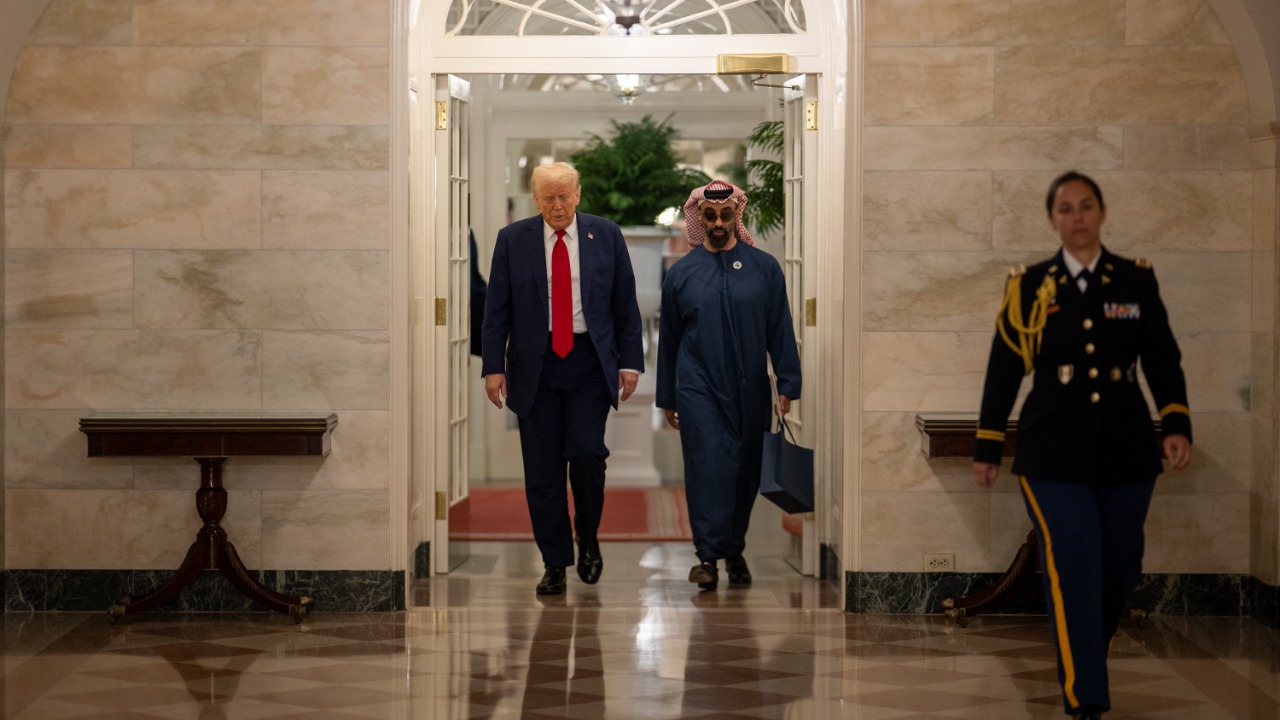
At the center of this storm sits World Liberty, the Trump family’s flagship crypto venture. One report notes that World Liberty has emerged as perhaps the most lucrative of the Trump family’s business ventures, raising ethical and national security concerns because of its foreign entanglements. A separate account describes how a $500 million deal with an Emirati royal has prompted questions inside the White House about whether UAE money is buying influence through Trump’s crypto firm.
The foreign exposure runs deeper than a single check. One investigation reports that the investment in World Liberty was one of two large transactions involving the Trumps and the Emirati government, with the firm’s valuation reaching roughly $1.5 billion on paper. Another analysis notes that World Liberty would eventually spawn another product that gave Tahnoon and his investment companies some value, even though the deal made little financial sense for the Emiratis on its face, suggesting geopolitical motives.
Regulators on mute while Trump’s crypto empire grows
What turns these conflicts into a systemic threat is the way regulators have stepped back just as Trump’s exposure has grown. A letter from House Democrats accuses The SEC of declining its responsibility to enforce securities laws against crypto companies and their leaders, effectively signaling that the toughest cops on the beat are standing down. Another Democratic analysis argues that President Trump and his family are exploiting digital currencies with almost no transparency, a pattern that is only possible in a lax enforcement environment.
At the same time, Trump’s own regulators are racing to recast the rulebook. In a joint op‑ed, they argue that must act quickly to upgrade rules and regulations to accommodate blockchain technology and digital assets, warning that if the United States fails to provide clarity, innovation will migrate elsewhere. In a companion piece, they add that If we fail to provide clarity or regulate with a heavy hand, we either drive business offshore or encourage risk, a framing that casts aggressive oversight as the bigger danger even as Trump’s personal stake in the sector deepens.
From seized Bitcoin to bailout expectations
Trump has also fused federal balance sheets with crypto markets in ways that are hard to unwind. Earlier in his second term, he transformed roughly 207,000 seized Bitcoin, collected over years of criminal forfeitures, into a government‑held national reserve asset, effectively turning the United States into a large, involuntary crypto whale. A separate account of that decision notes that Trump framed the move as proof that Bitcoin belongs alongside Treasuries and gold, a symbolic elevation that further intertwines public finances with private speculation.
Markets have taken the hint that the Oval Office is now a backstop. One analysis warns that Donald Trump and his family are now so deeply enmeshed with crypto that a loss of confidence could quickly morph into calls for the Oval Office to step in. When Trump nominated a new Federal Reserve chair, one report noted that Trump reshaped expectations for interest rates on Friday, a key driver of crypto prices, prompting traders to dump cryptocurrencies and shift into safer assets.
Why a Trump‑centric crash could poison the whole sector
The structural risk is that crypto’s credibility is now bound up with one polarizing political figure. A detailed report titled Why This Matters notes that Trump’s crypto holdings create direct exposure to regulatory decisions made by his own appointees, and that a single shift at The SEC could change crypto policy overnight. A separate Democratic analysis underscores how concentrated that exposure is by documenting the billions in paper wealth President Trump and his family have accumulated through digital assets while in office.
That concentration magnifies every new scandal. When senators Elizabeth Warren and Elissa Slotkin raised alarms about foreign crypto deals, they pointed to Witkoff, who retains a financial interest in World Liberty Financial, the Trump family crypto firm, while his son brokered a $2 billion foreign investment. They warned that these arrangements must not undermine national security, a concern that echoes broader reporting on World Liberty Financial and its planned portfolio of RWA products, which would make tokenized real‑world assets accessible for 24/7 trading.
More From The Daily Overview
*This article was researched with the help of AI, with human editors creating the final content.

Grant Mercer covers market dynamics, business trends, and the economic forces driving growth across industries. His analysis connects macro movements with real-world implications for investors, entrepreneurs, and professionals. Through his work at The Daily Overview, Grant helps readers understand how markets function and where opportunities may emerge.

