The union of SpaceX and xAI has been framed as a sci‑fi play to put artificial intelligence in orbit, but the real story is far more earthbound. By folding a cash‑hungry chatbot startup into a highly profitable rocket company at a combined valuation of $1.25 trillion, Elon Musk is effectively using his strongest asset to rescue his weakest and to set up a lucrative stock market debut.
Rather than a pure technology vision, the structure of this deal looks like a financial safety net for xAI and a way to supercharge SpaceX’s path to an IPO, even as Musk talks up orbital AI data centers and million‑satellite constellations. I see a bailout wrapped in a moonshot, with investors being asked to buy into both at once.
The biggest merger ever, built around a fragile AI startup
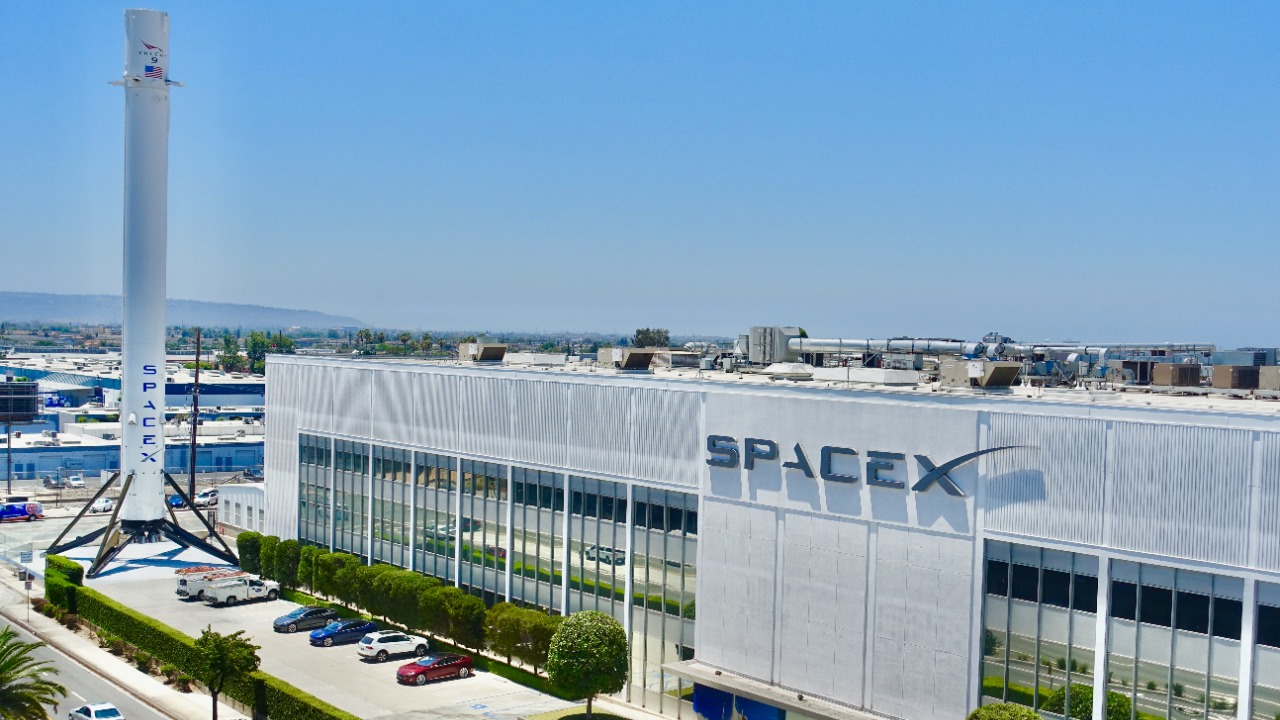
On paper, the combination of SpaceX and xAI is staggering, with multiple reports putting the merged entity’s value at $1.25 trillion, the largest corporate merger ever. Musk’s rocket maker SpaceX is acquiring xAI outright, creating a single group that controls launch vehicles, the Starlink satellite network, and the Grok chatbot that xAI has been racing to scale. That headline number reflects how investors already value SpaceX as a near‑monopoly in commercial launch and satellite broadband, not the still‑nascent AI business.
Underneath that record valuation sits a much more fragile reality at xAI. Reporting describes xAI as burning through cash to train and run Another large language model, with Grok positioned as a rival to OpenAI’s ChatGPT and similar systems. The startup has limited revenue and faces intense competition, which makes its standalone prospects uncertain. By contrast, Musk’s rocket maker SpaceX, as one report notes, has acquired xAI at a time when it is already preparing a major liquidity event for investors, with plans for an IPO of SpaceX later this year highlighted in a separate Elon Musk‑focused analysis.
SpaceX’s profits and the quiet bailout logic
The financial contrast between the two companies is stark, which is why I see this as a bailout bet as much as a strategic merger. Meanwhile, SpaceX generated an estimated $8 billion profit on $15‑16 billion in revenue in 2025, a margin that would be the envy of any aerospace or telecom incumbent, according to one detailed Meanwhile breakdown. So the acquisition gives xAI access to a powerful internal cash engine, while letting Musk move capital around his empire without going back to outside investors for another dilutive AI funding round.
Other reporting is even more blunt, describing how SpaceX effectively bails out xAI in a mega‑deal that also raises questions for Tesla shareholders. That analysis notes how closely intertwined Musk’s ventures have become, with Tesla, SpaceX, and xAI all depending on his personal brand and overlapping pools of investors. When one of those bets, in this case Grok and its supporting infrastructure, starts to look capital constrained, the temptation to lean on a more mature business like SpaceX becomes hard to resist.
From Twitter data to rockets: how xAI ended up under SpaceX
xAI did not start life as a standalone AI lab in the traditional sense. It began as a segment of X, the platform formerly known as Twitter, after Twitter was acquired by Musk in 2022, using the social network’s firehose of posts as training data for its models. That origin story matters because it shows how deeply xAI is tied to Musk’s broader media and data ambitions, rather than being an independent research shop with its own governance and investor base. Folding it into SpaceX now continues that pattern of moving assets between Musk‑controlled entities as strategy and financing needs evolve.
SpaceX on Monday confirmed it is taking over xAI, merging rockets, satellites, and media under one roof in a way that few other technology groups could match. SpaceX has acquired xAI, the company announced on Monday, merging two of Elon Musk’s most ambitious companies into what is now the most valuable private tech group in the world. For Musk, who already controls Tesla and X, this consolidation tightens his grip on both the infrastructure of the internet and the AI systems that will increasingly run on top of it.
Orbital AI data centers are the sizzle, not the steak
Much of the public fascination with the deal has focused on the idea of AI data centers in space, a concept Musk himself has floated. SpaceX has already filed plans for a million‑satellite orbital AI data center megaconstellation, with filings describing how Starship launches could loft vast numbers of compute‑heavy satellites into orbit. The same reporting notes that Starship’s next test launch is expected by March, after a year in which five launches saw the first three end in explosions, underscoring how experimental the underlying hardware still is.
Analysts trying to guess Musk’s motives have suggested that the SpaceX‑xAI tie‑up could help him build data centers in space by bringing rockets, Starlink satellites, and AI models under one corporate structure. One such assessment argues that the combination would bring Musk’s rockets, Starlink satellites, and Grok together, making it easier to finance and deploy orbital infrastructure without having to go and raise more from external backers. I see that as the visionary narrative that helps justify the valuation, even if the near‑term reality is that most AI training and inference will remain in terrestrial data centers for years.
The IPO calculus and investor risk
Behind the scenes, the merger also reshapes the path to a SpaceX IPO. Earlier coverage of the planned deal noted that SpaceX was seeking an $800 level of fresh capital in private markets, with a Quick Summary of how the megamerger would consolidate Musk’s empire. Investors anticipate that a public SpaceX would provide a capital safety net to supercharge xAI’s growth in a market where it currently trails larger rivals, as one Investors‑focused report puts it. In other words, the IPO is not just about rewarding early SpaceX backers, it is also about giving xAI a long‑term funding pipeline.
That logic is echoed in more skeptical analysis of the numbers and questions behind Musk’s mega‑merger, which points out that the combination of SpaceX and xAI will create a rocket‑and‑AI giant, but also that But it complicates the SpaceX I.P.O. For public market buyers, the risk is clear: they will not just be purchasing a dominant launch and satellite operator, they will also be underwriting a high‑burn AI lab whose economics are far less proven.
More From The Daily Overview
*This article was researched with the help of AI, with human editors creating the final content.

Grant Mercer covers market dynamics, business trends, and the economic forces driving growth across industries. His analysis connects macro movements with real-world implications for investors, entrepreneurs, and professionals. Through his work at The Daily Overview, Grant helps readers understand how markets function and where opportunities may emerge.