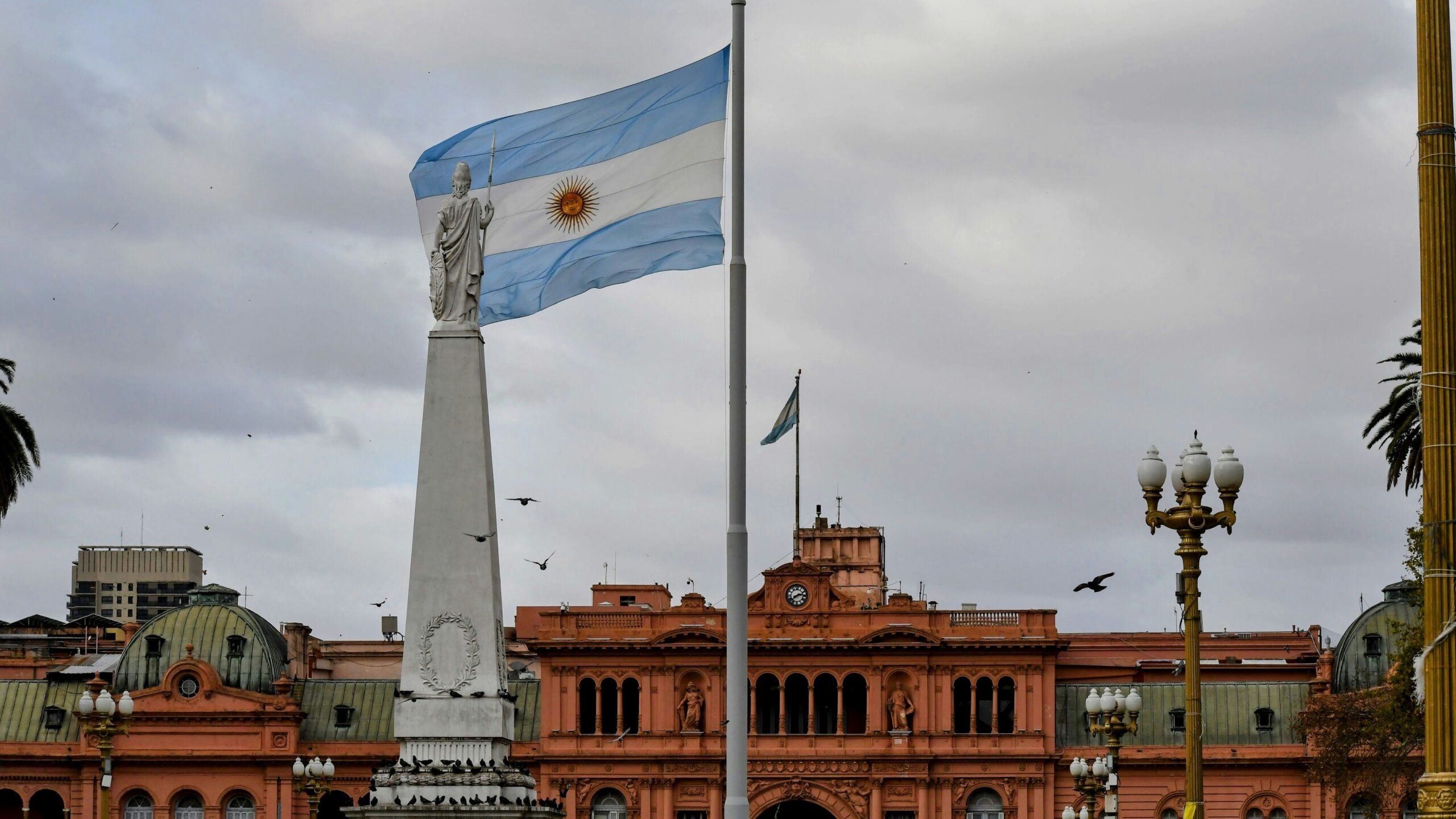
When an economy unravels, it is not abstract charts that collapse but paychecks, savings, and the basic ability to buy food or fuel. I look at seven countries where fear is surging and where an ordinary person could go broke in a full-blown collapse, as inflation, currency crashes, and policy failures combine into a brutal stress test for households.
1) Fear is surging in Argentina, where hyperinflation and currency devaluation are driving economic panic.
Argentina has become a textbook case of how fast a middle-class life can disintegrate when prices spin out of control. Annual inflation has hit roughly 250%, a level that makes it one of the worst inflation crises globally and turns salaries into wasting assets within weeks. Reporting on Argentina shows how a country that was once among the world’s wealthiest democracies slid into chronic inflation and political instability, eroding trust in every official promise. In practical terms, rent contracts are constantly repriced, supermarket tags change several times a month, and families rush to convert pesos into anything that might hold value.
That scramble has pushed people toward dollars, property, and even digital tools that help them hedge against devaluation. An evaluation of inflation hedges in Argentina and Turkey notes how savers are experimenting with new ways to escape their own currencies. For anyone paid in pesos, the risk is clear: a sudden policy shock or deeper collapse could wipe out bank balances and pensions almost overnight. Hyperinflation exceeding 200% annually has already made everyday purchases feel unaffordable, so a further breakdown would leave households choosing between food, medicine, and utilities, with little hope of rebuilding savings.
2) Fear is surging in Turkey, with skyrocketing inflation and policy missteps fueling collapse risks.
Turkey illustrates how policy choices can accelerate a currency crisis into a broader panic. Inflation has surged above 70%, and even aggressive central bank rate hikes have struggled to restore confidence in the lira. According to analysis of central bank interventions, repeated attempts to defend the currency have not stopped its rapid devaluation, leaving households exposed to imported price shocks on energy, food, and medicine. When inflation runs this hot, shopkeepers shorten payment terms, landlords demand frequent rent resets, and small businesses find it almost impossible to plan beyond a few months.
In that environment, fear spreads quickly from financial markets into daily life. The same evaluation that tracks Argentina and Turkey highlights how residents increasingly look for ways to hedge against inflation and currency risk, a sign that trust in official policy is fraying. For an ordinary worker paid in lira, a deeper collapse could mean wages that no longer cover basic groceries, foreign-currency debts that balloon in local terms, and savings that evaporate as the exchange rate slides. The risk is not just volatility but a tipping point where the lira’s credibility breaks, forcing a painful reset that would leave many people effectively broke.
3) Fear is surging in Lebanon, amid a banking crisis and sovereign default that has eroded savings.
Lebanon’s crisis shows what happens when a banking system and the state collapse together. Since 2019, the Lebanese pound has lost around 90% of its value, and banks have imposed de facto capital controls that leave depositors unable to freely access their own money. Reporting on frozen accounts describes how families who once saw bank deposits as safe now face strict withdrawal limits and arbitrary exchange rates. The government’s sovereign default deepened the shock, because it exposed how closely intertwined state finances and commercial banks had become.
For ordinary Lebanese, the result is a slow-motion confiscation of wealth. Salaries paid in local currency buy far less each month, while dollar deposits are effectively trapped or converted at unfavorable rates. People who planned to use savings for education, healthcare, or retirement have watched those plans disintegrate, and some have resorted to protests or even armed bank sit-ins to demand access to their funds. In a full collapse scenario, the remaining value in the banking system could be wiped out, leaving a cash-based economy where only those with physical dollars or remittances can cope, and everyone else is pushed toward poverty.
4) Fear is surging in Venezuela, due to ongoing hyperinflation and oil-dependent economy breakdown.
Venezuela is often cited as one of the starkest modern examples of hyperinflation destroying an economy from the inside. Years of price surges that reached millions of percent have obliterated the bolívar’s usefulness, forcing widespread dollarization and barter. Coverage of Venezuela after Maduro highlights the massive challenges tied to hyperinflation, the collapse of oil revenues, and attempts to reform state oil company PDVSA. When the main export earner fails, the government loses the foreign currency it needs to import food, fuel, and medicine, amplifying the human cost of monetary chaos.
At the same time, political experiments such as the Petro cryptocurrency have not restored trust. One detailed look at the “resource curse” in Venezuela even frames the crisis as a case study for UPSC candidates, underscoring how deeply oil dependence and governance failures are intertwined. For households, the implications are brutal: salaries paid in local currency lose value within days, pensions are almost meaningless, and basic goods are either unaffordable or unavailable. In a renewed collapse, any remaining pockets of stability could vanish, leaving people reliant on informal dollar cash, remittances, or humanitarian aid just to survive.
5) Fear is surging in Zimbabwe, from repeated currency collapses and hyperinflation episodes.
Zimbabwe’s experience shows how repeated currency failures can permanently scar public trust. The country’s most infamous hyperinflation episode reached an almost unimaginable 89.7 sextillion percent, a figure cited in assessments of multiple currency introductions that followed. Authorities have cycled through the Zimbabwean dollar, foreign currencies, and new local units in an effort to stabilize prices, but each reset has reminded citizens how quickly their savings can be wiped out. Banknotes with absurd denominations became symbols of a system that no longer functioned for ordinary people.
Even after the most extreme phase of hyperinflation ended, chronic instability and poverty persisted. Businesses struggle to price goods when they are unsure which currency will be legal tender next year, and workers often demand payment in U.S. dollars or commodities rather than local money. For a typical household, that means constant uncertainty about rent, school fees, and medical costs. If another full-scale collapse hits, anyone still holding assets in a fragile local currency could see them reduced to scrap paper, while those without access to dollars or hard assets would be pushed even deeper into hardship.
6) Fear is surging in Sri Lanka, following a debt crisis and fuel/food shortages leading to defaults.
Sri Lanka’s recent turmoil underscores how a sovereign debt crisis can quickly spill into street-level desperation. In 2022, the country defaulted on about $51 billion in external debt, a landmark failure that coincided with foreign reserves falling close to zero. Without enough hard currency to pay for imports, authorities struggled to secure fuel, cooking gas, and key foods, triggering long queues and rolling blackouts. Those shortages fed mass protests that toppled political leaders and exposed how fragile the underlying economic model had become.
For families, the crisis translated into soaring prices and outright scarcity. Public transport became unreliable when fuel ran out, farmers faced higher costs for fertilizer and diesel, and small businesses could not keep generators running during power cuts. With reserves depleted, the risk of another shock remains: a renewed collapse in tourism or export earnings could again choke off foreign currency, forcing harsher import controls. In that scenario, wages paid in local rupees would buy even less, and many households could find themselves unable to afford basic staples, let alone service debts or save for the future.
7) Fear is surging in Egypt, with currency crashes and subsidy cuts sparking widespread instability.
Egypt rounds out the list as a country where currency turmoil and fiscal strain are colliding with social pressures. The Egyptian pound has been devalued by more than 50% in 2024, according to assessments of the pound’s crash and rising debt burdens. Each devaluation instantly raises the local price of imported wheat, fuel, and industrial inputs, which is especially painful in a country that relies heavily on food imports. At the same time, subsidy reforms have pushed up the cost of electricity and fuel, eroding the safety net that once cushioned low-income households from global price swings.
These pressures create a volatile mix of economic anxiety and political risk. For an Egyptian family paid in local currency, a further collapse could mean rent and food bills that outpace wages, while small businesses face higher borrowing costs and shrinking demand. Analysts warn that widespread bankruptcy is a real threat if debt servicing crowds out social spending and investment. In a worst-case scenario, another sharp devaluation or abrupt subsidy cut could trigger a wave of defaults, deepen poverty, and leave many citizens effectively broke in a system where formal jobs and savings already feel precarious.
More From TheDailyOverview

Grant Mercer covers market dynamics, business trends, and the economic forces driving growth across industries. His analysis connects macro movements with real-world implications for investors, entrepreneurs, and professionals. Through his work at The Daily Overview, Grant helps readers understand how markets function and where opportunities may emerge.

