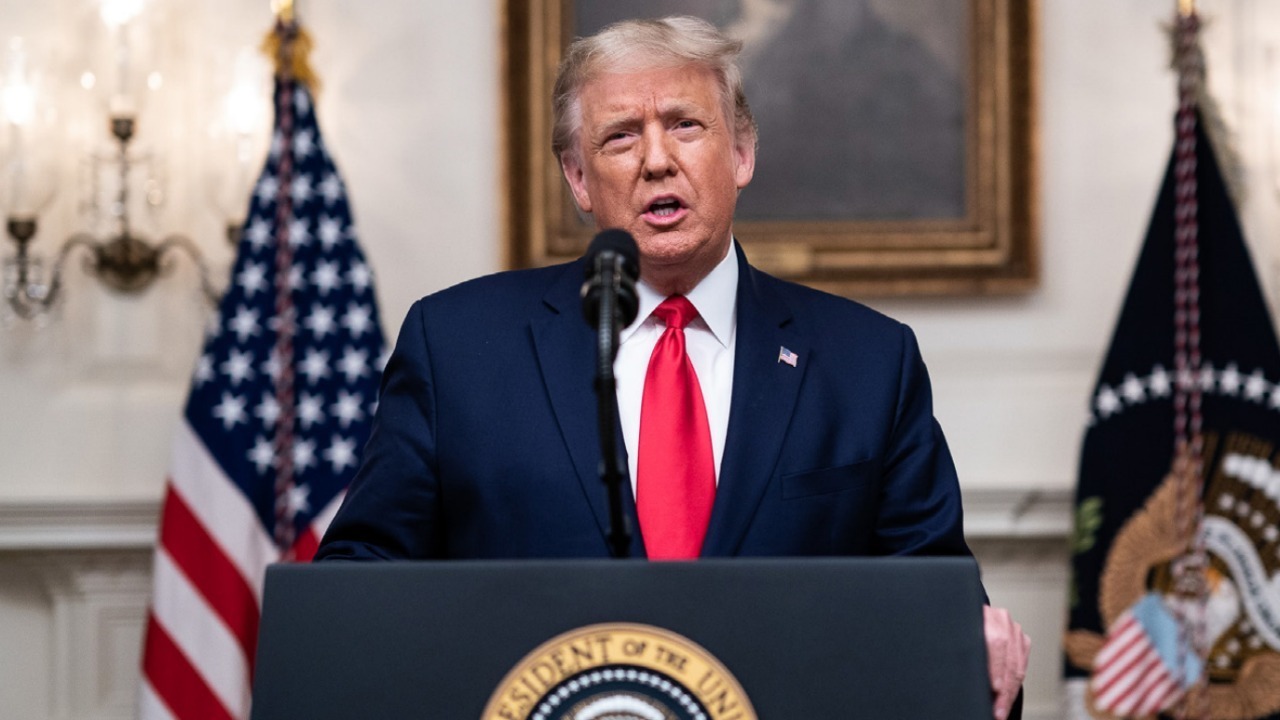
The White House threat to “sue” CBS over its handling of a presidential interview is more than a sharp exchange between a press office and a network. It is a warning shot that signals how aggressively the current administration is prepared to police its image and challenge traditional media gatekeeping. At stake is not only one broadcast, but the ground rules that will govern how President Donald Trump and the press coexist in his new term.
The flashpoint: a lawsuit threat before the cameras rolled
The confrontation began behind the scenes, before viewers saw a single frame of the interview with President Donald Trump. According to detailed accounts, White House press secretary Karoline Leavitt privately warned CBS that Mr. Trump would “sue” if the network edited the sit-down in a way the administration considered misleading. The message was not a vague complaint about bias, but a specific legal threat aimed at shaping how CBS News packaged and presented the conversation with the president.
That warning landed in a media environment already primed for conflict. The White House has framed its relationship with major outlets as a contest over narrative control, and CBS, with its flagship political programs and national reach, is a prime arena for that fight. The network’s decision to proceed with its own editorial judgment, while still absorbing the threat, underscored how much pressure now surrounds any high-profile interview with President Donald Trump, especially when the administration signals it is ready to escalate disputes into courtrooms rather than confine them to the usual war of words.
A history of grievance: from “60 M” to the new term
The legal saber rattling did not come out of nowhere. In 2024, Mr. Trump actually followed through and sued CBS over the editing of a “60 Minutes” interview, a move that turned a routine broadcast into a test case for how far a president might go in punishing coverage he dislikes. That earlier clash over “60 M” created a template, showing both the White House and the network that litigation was not just a rhetorical flourish but a real possibility when the president felt aggrieved by how his words were cut and framed.
Karoline Leavitt’s recent warning to CBS News fits squarely into that pattern. The exchange, captured in the Karoline Leavitt Exchange, made explicit that the administration sees legal action as a standing option against outlets whose coverage displeases him. By invoking the possibility of another lawsuit before the interview even aired, the White House signaled that what happened with “60 Minutes” was not an aberration but a precedent it is prepared to invoke again.
Inside the CBS standoff: editing, timing and leverage
At the core of the dispute is a basic editorial question: who decides what viewers see from a presidential interview, and in what form. CBS News planned to record an extended conversation with President Donald Trump, then edit it into a segment that would fit the constraints of a prime-time broadcast. That is standard practice in television news, where raw interviews often run far longer than the airtime available. The White House, however, treated that routine editing process as a potential act of distortion, warning that any cuts it deemed unfair could trigger a lawsuit.
The network’s choices around timing and length became part of the tension. Reporting indicates that CBS intended to air a shorter version of the interview on its main political program, while also making a longer cut available on digital platforms the same evening, running 13 minutes in total. The White House, according to one detailed account, saw those decisions as leverage points and pressed for assurances that the president’s answers would not be selectively trimmed. The resulting standoff, described in coverage of how The White House warned CBS, turned a standard production workflow into a high-stakes negotiation over control.
From press room to courtroom: a new media status quo
What makes this episode so consequential is not only the threat itself, but the way it formalizes a new playbook for dealing with critical coverage. In earlier eras, presidents might have complained publicly about perceived bias or frozen out particular reporters. President Donald Trump and his team are going further, treating litigation as a regular tool of media management rather than a last resort. Karoline Leavitt’s warning that Mr. Trump would “sue” CBS if displeased with the edit was framed as a matter-of-fact consequence, not an extraordinary step, which suggests the administration sees legal pressure as part of the normal repertoire of press strategy.
That approach has ripple effects far beyond one network. Other outlets watching the CBS clash will inevitably ask whether inviting the president for an interview now carries an implicit legal risk if the final product angers the White House. The possibility that a routine editing decision could be second-guessed in court may encourage some producers to err on the side of airing longer, less curated conversations, or to avoid certain contentious topics altogether. The detailed reporting on how Mr. Trump would if unhappy with the broadcast captures how this legalistic posture is reshaping the incentives on both sides of the camera.
High stakes for press freedom and public trust
The clash with CBS is unfolding against a broader backdrop of eroding trust in institutions, including both the presidency and the press. When a White House threatens to sue a network over editing choices, it risks blurring the line between legitimate complaints about accuracy and attempts to intimidate independent scrutiny. Viewers who already suspect that major outlets are either too hostile to President Donald Trump or too deferential to him may see the dispute as confirmation of their worst assumptions, regardless of how the interview was actually cut. That perception problem is compounded when legal threats are delivered privately, then surface later, feeding a sense that the real battle over information is happening out of public view.
At the same time, the episode forces news organizations to confront how transparent they are willing to be about their own processes. One response to the new legal pressure could be to release more raw material, including extended or unedited interviews, so audiences can judge for themselves whether a shorter broadcast fairly reflects what was said. Another could be to double down on clear standards for how presidential interviews are edited, and to explain those standards more openly when disputes arise. The detailed accounts of the CBS confrontation, including the broader context of CBS News and its handling of the Trump interview, highlight how much is riding on whether networks can maintain both editorial independence and public confidence under direct political fire.
More From TheDailyOverview

Grant Mercer covers market dynamics, business trends, and the economic forces driving growth across industries. His analysis connects macro movements with real-world implications for investors, entrepreneurs, and professionals. Through his work at The Daily Overview, Grant helps readers understand how markets function and where opportunities may emerge.