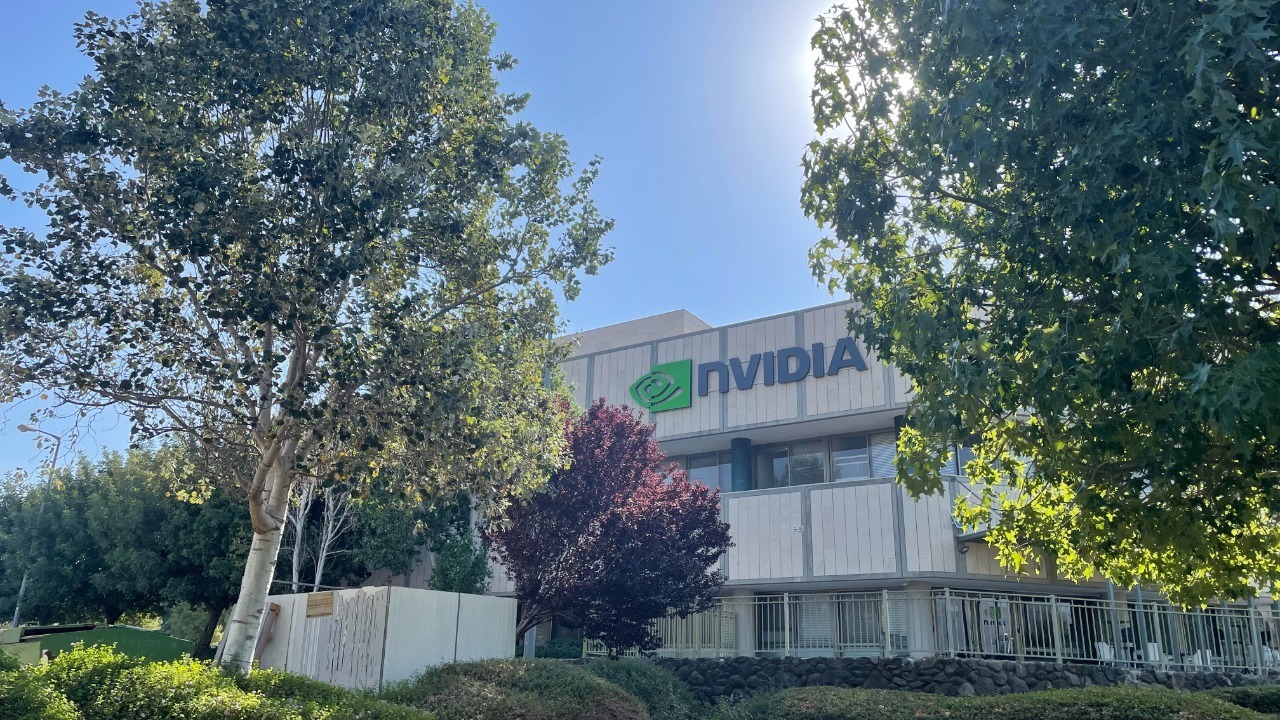
Nvidia has become the defining stock of the artificial intelligence boom, and its rise has been so steep that a collapse back into double digits feels almost unthinkable. Yet history is littered with market darlings that looked untouchable right before they broke. To judge whether Nvidia could trade under $100 in 2026, I need to weigh the company’s extraordinary fundamentals against the brutal lessons of past bubbles and the specific forecasts now circulating on Wall Street.
The story that emerges is not one of an imminent wipeout, but it does suggest that investors buying at today’s levels are betting against history as much as they are betting on chips. The odds of Nvidia revisiting $100 look low if current growth holds, but the path of a hyper‑popular stock in a crowded AI trade is rarely smooth, and the downside scenarios are more complex than a simple crash-or-soar narrative.
What the 2026 price targets are really saying
Most professional forecasts for Nvidia in 2026 are not just above $100, they are several times that level. One detailed prediction argues that Nvidia stock has the potential to keep climbing as demand for its accelerators stretches into the middle of 2026, implying a valuation that assumes the AI build‑out is still in full swing. Another forecast framed as a Prediction goes further, contending that Nvidia Stock Is Going to Soar Past $300 in 2026, explicitly calling out $300 or more in 2026 as a plausible outcome if current trends persist.
Even more conservative voices are still far from the sub‑$100 camp. A widely cited NVDA Stock Forecast from Dan Ives of Wedbush, a permabull on tech stocks, pins $250 as the base case target for Nvidia by 2026, framing that level as a realistic anchor rather than a blue‑sky scenario. When I line up these projections, the message is consistent: the analyst community is debating how high Nvidia can go, not whether it will crater to a fraction of its current price.
Fundamentals that make a sub‑$100 quote hard to justify
Underneath the hype, Nvidia’s financial engine is still accelerating. In Q3 fiscal year 2026, ending in Oct, the company reported that revenue rose 62% year over year to $57 billion, a figure highlighted in the Key Data Points for NASDAQ: NVDA. That kind of growth on such a massive base is rare, and it reflects not just gaming or consumer GPUs, but a data center franchise that has become the backbone of modern AI infrastructure.
The scale of that data center business is underscored by Money proof that Nvidia Data Center revenue is now tens of billions annually, with $57 billion in Q3 alone, driven by demand for systems like the DGX supercomputer. Another analysis of where Current Overview suggests Nvidia could be by 2025, 2026, 2030 notes that projections for 2026 assume continued revenue expansion through mid‑decade, particularly from data center customers that are still racing to deploy generative AI. With this backdrop, a stock price under $100 would imply either a collapse in margins, a structural loss of AI leadership, or a broader market shock that reprices the entire sector.
The historical risk: when dominance breeds doubt
History’s harshest lessons tend to arrive when a company looks most invincible, and Nvidia is now squarely in that zone. A recent overview of how Nvidia Enters 2026 With Dominance, but Also Doubt captures the tension: Nvidia has transformed into a leading supplier of AI chips, yet investors are increasingly asking how long that dominance can last as rivals and customers explore alternatives. The same pattern has played out before, from Cisco in the dot‑com era to smartphone leaders that eventually ceded ground once their markets matured.
One detailed look at whether history has to say Nvidia could fall below $100 in 2026 leans on the track record of past chip cycles, where periods of explosive demand were followed by inventory gluts and sharp corrections. That analysis notes that the successor to Blackwell Ultra could eventually reset expectations if customers slow orders or shift to in‑house designs, a reminder that even the most advanced architecture has a finite window of peak pricing power. The lesson is not that Nvidia is doomed, but that investors should be wary of extrapolating today’s margins indefinitely.
Could a bull market unwind really take Nvidia to double digits?
Any path to Nvidia trading under $100 would almost certainly require a broader market reversal, not just company‑specific missteps. The question of whether Nvidia stock fall below $100 in 2026 is already being framed against the backdrop of Wall Street’s powerful rally, where the third year of the bull market saw The Dow Jones Industrial Average, S&P 500, and Nasdaq Composi all push higher. For Nvidia to break into double digits, that tide would likely need to turn, dragging down valuations across high‑growth tech and compressing the multiples investors are willing to pay for AI exposure.
Another analysis of whether Nvidia stock crash in 2026 highlights a more nuanced risk: the company is growing quickly, but it is posting record profit margins that could reverse if AI infrastructure supply finally matches demand. If hyperscalers like Amazon Web Services or Microsoft Azure slow their capital spending, or if alternative accelerators gain traction, Nvidia’s earnings could flatten even without a recession. In that scenario, the stock might de‑rate sharply from peak multiples, but the combination of still‑elevated profits and a diversified product line makes a plunge below $100 look more like a tail‑risk than a base case.
What I am watching: growth, forecasts and the data behind the hype
To gauge whether Nvidia can avoid the fate of past high‑flyers, I am watching three threads that run through the current research. First is the argument that the market is still underestimating Nvidia’s growth potential for 2026, supported by Key Points that emphasize the company’s massive backlog and the possibility of increased chip supply unlocking more revenue. Second is the longer‑term view of where Nvidia stock could be in five years, which stresses that the company has already been a multibagger and could still deliver more upside if AI spending continues at anything like today’s pace.
Finally, I pay close attention to how forecasts are built and the data they rely on. The projections for 2026 that see Nvidia stock trading far above $100 are grounded in assumptions about sustained AI capex, robust data center demand and continued leadership in core products like H100 and its successors. Those assumptions are informed by market data that platforms such as Google Finance help aggregate, but they are not guarantees. If AI infrastructure spending slows faster than expected, or if regulatory or geopolitical shocks hit the semiconductor supply chain, the same models that justify targets like $250 or $300 could be revised sharply lower. For now, though, the weight of evidence points to volatility and potential drawdowns, not a routine trip back to sub‑$100 levels.
More From The Daily Overview

Silas Redman writes about the structure of modern banking, financial regulations, and the rules that govern money movement. His work examines how institutions, policies, and compliance frameworks affect individuals and businesses alike. At The Daily Overview, Silas aims to help readers better understand the systems operating behind everyday financial decisions.

