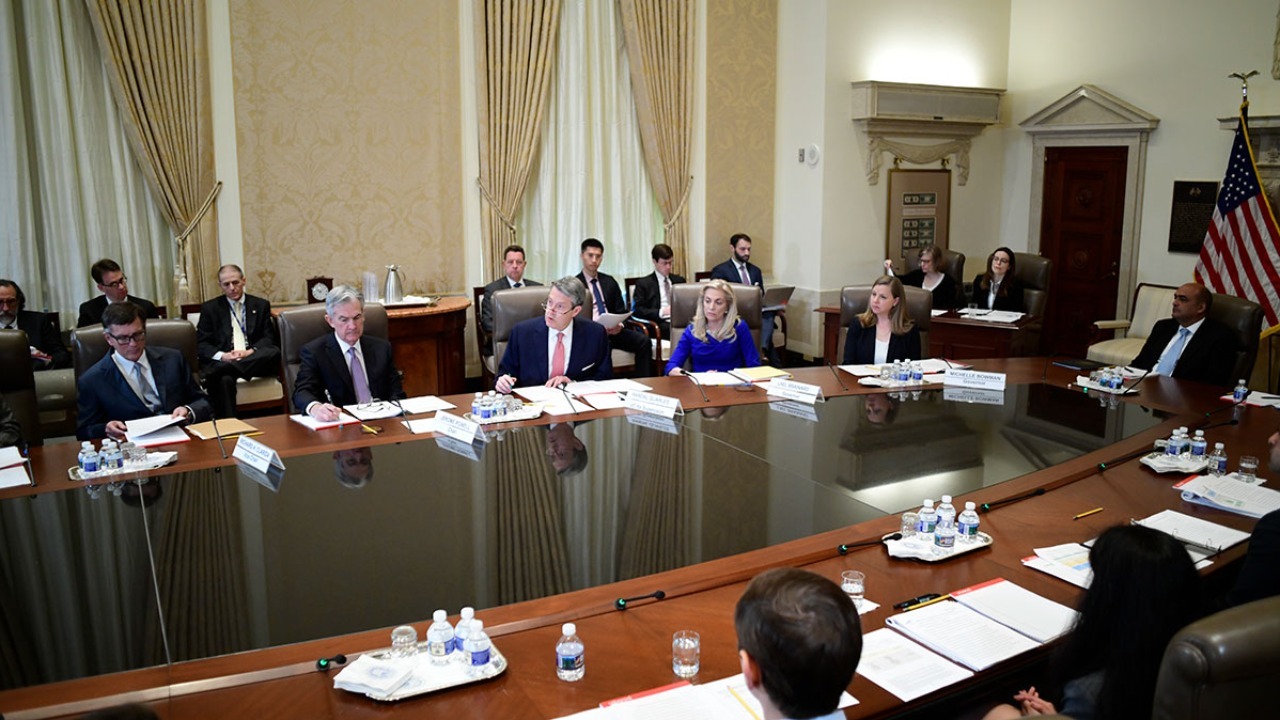
Financial markets are already betting that the Federal Reserve will be easing policy again in 2026, but the people who actually set or model rates are sending a cooler message. The emerging consensus from central bankers and Wall Street economists is that any relief is likely to be limited, slow, and highly conditional on inflation behaving. If you are planning big borrowing or investment decisions around a rapid pivot to cheap money, you should think carefully before assuming that happens.
The core tension is simple: investors see slowing inflation and expect a return to the low-rate world of the late 2010s, while several influential forecasters and Fed officials see an economy that still looks too strong to justify aggressive cuts. That gap between hope and hard guidance is why I do not expect 2026 to deliver the sweeping rate reductions many households and businesses are quietly penciling in.
Markets want cuts, but the Fed’s own signals are cautious
In futures markets, traders are pricing in a path where the federal funds rate drifts lower over the next two years, with some expecting at least two quarter-point moves in 2026. Those expectations reflect a belief that inflation will glide back to target and that the Fed will feel comfortable normalizing policy toward something closer to its pre-pandemic average. Yet Jan Feroli, a prominent private-sector economist, has warned that this optimism is misplaced, arguing that the probability of multiple cuts in 2026 is far lower than markets imply and that investors are underestimating how stubborn inflation and growth can be in a tight labor market, a view captured in his prediction.
The Federal Reserve’s own projections point in the same direction of restraint. In its so‑called dot plot, the central bank has signaled that policymakers collectively see only a very small number of moves in 2026, with the most recent summary of economic projections indicating just one additional adjustment after a series of reductions already delivered. That guidance came after the Fed cut rates for the third time in 2025, yet officials still projected only one more rate cut the following year, a stance laid out in the dot plot that underscores how reluctant they are to promise a rapid easing cycle.
Three big reasons experts see a higher-for-longer 2026
When I look at the macro backdrop, the case for patience rests on three pillars that many analysts now highlight. First, the unemployment rate is not rising, it is falling, which means the labor market is still generating enough jobs to keep wage pressures alive. Second, inflation remains well above the Fed’s 2 percent target on key measures, so officials are wary of declaring victory too soon. Third, political pressure from President Donald Trump for faster cuts is meeting resistance inside the central bank, which is determined to protect its independence and avoid the perception that it is easing simply to satisfy the White House, a dynamic that shows up in the Three Reasons To framework that emphasizes The Unemployment Rate Is Falling and Inflation Remains Well Above Target alongside Trump’s Push.
Those factors feed into a broader skepticism among economists about the scale of any 2026 easing. Some experts now argue that the Federal Reserve will either keep its key policy rate unchanged throughout that year or trim it only marginally, because the balance of risks still tilts toward inflation rather than recession. One summary of these views notes that while markets are eager for relief, the probability of deep cuts in the near term is “pretty weak,” a judgment that reflects how the Key Takeaways from recent commentary stress that Some analysts see the Federal Reserve staying on hold if price pressures do not cool more decisively.
What the Fed and big asset managers actually project
Official communications from the rate‑setting Federal Open Market Committee point to a gentle downward slope, not a cliff. Policymakers have indicated that they expect to move interest rates lower in 2026, but not substantially, and that the federal funds rate is likely to remain above the ultra‑low levels that prevailed before the pandemic. The message from the Federal Open Market is that, Currently the policy stance is still restrictive and officials are prepared to keep higher rates in place to constrain prices if inflation does not fall as projected.
Large asset managers, who build bond and ETF strategies around these expectations, are echoing that cautious tone. One major fixed income team has said that the most likely path for Fed policy in 2026 is for the central bank to bring rates down from current levels, but only gradually, and that investors should prepare for a world where yields remain structurally higher than in the decade after the global financial crisis. Their Fed outlook highlights several Key considerations, including the risk that inflation surprises on the upside again and the need for portfolios to balance rate sensitivity with credit exposure rather than simply betting on a rapid return to zero.
Economic growth is still too solid to justify aggressive easing
Another reason I do not expect sweeping cuts in 2026 is that the real economy is holding up better than the pessimists predicted. Recent macro forecasts argue that growth will defy the slowdown narrative, with output expanding at a pace that, while not a job boom, still counts as solid by historical standards. One projection even suggests that overall activity could post what looks like a 5.1 percent increase when measured in nominal terms, a sign that demand remains robust enough to keep pressure on capacity and prices, as highlighted in an economic forecast that emphasizes how the outlook defies slowdown fears.
Fed officials themselves are acknowledging that the balance of risks has shifted, but not in a way that screams emergency. In a recent speech on The Economic Outlook and Monetary Policy, one policymaker noted that one way to interpret the recent rate cuts is that the Committee had become a little more worried about the employment side of its mandate, based on discussions with District contacts, yet that concern has not translated into a conviction that a deep downturn is imminent. That nuance matters, because it suggests the Committee is fine‑tuning policy rather than preparing to slash rates in response to a crisis, which in turn limits how far it is likely to go in 2026.
Why some banks now see zero cuts, and what that means for you
Perhaps the starkest challenge to market optimism comes from big banks that have ripped up earlier forecasts of multiple cuts. Analysts at JPMorgan, for example, now predict no rate cuts in 2026 and even flag the possibility of a hike if growth and inflation stay firm. Their call rests on evidence that job and GDP growth remain strong enough that the Fed will not feel compelled to ease, and that the central bank might instead keep policy tight to prevent a renewed inflation surge, a scenario laid out in a forecast that ties the outlook directly to GDP and labor market data.
For households and businesses, the practical takeaway is to plan for a world where borrowing costs stay elevated relative to the 2010s, even if they edge down from today’s peaks. That means homebuyers looking at 30‑year mortgages on a 2026 Toyota RAV4 Hybrid in the driveway should budget for rates that are still several percentage points above the rock‑bottom deals of a few years ago, and small firms using credit lines to finance inventory or invest in software like QuickBooks or Shopify should stress‑test their cash flows against a scenario where the Fed barely moves. Some experts have already cast doubt on the expectation that the Federal Reserve will cut its key interest rate in 2026, and when I weigh those warnings against the still‑solid data, I see a near term in which the odds of a big policy pivot are, as one summary put it, pretty weak, a judgment reflected in the Key signals coming from Some of the most closely watched Fed watchers.
More From The Daily Overview

Silas Redman writes about the structure of modern banking, financial regulations, and the rules that govern money movement. His work examines how institutions, policies, and compliance frameworks affect individuals and businesses alike. At The Daily Overview, Silas aims to help readers better understand the systems operating behind everyday financial decisions.

